Another Way to Say Hello in English: 15 Friendly & Polite Greetings
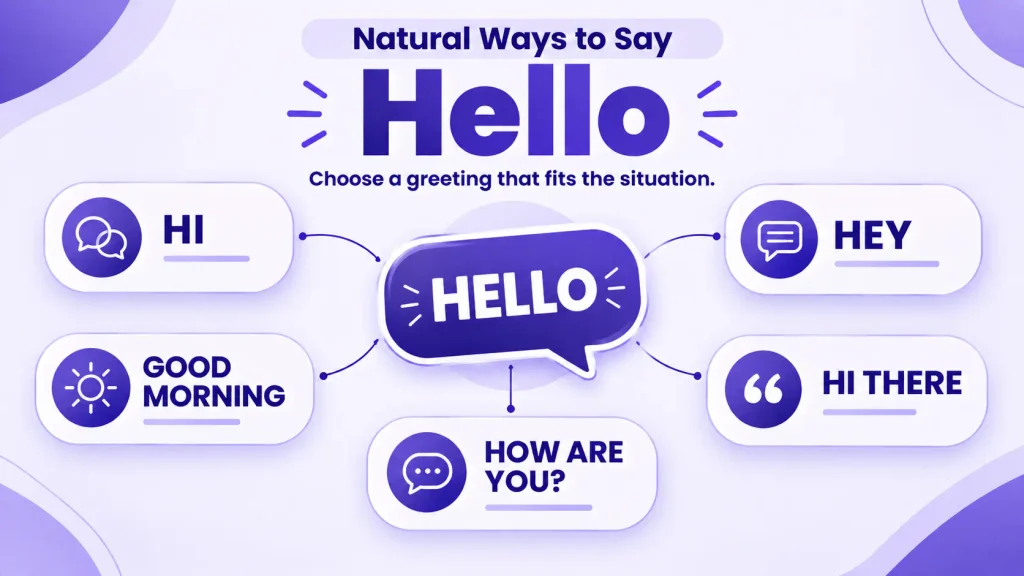
If you want another way to say hello in English, common choices include hi, hey, hi there, good morning, good afternoon, good evening, how are you?, how’s it going?, what’s up?, and nice to meet you. The best greeting depends on who you’re talking to, the time of day, and how formal the situation is. “Hello” itself is a standard greeting used when meeting someone, starting a phone conversation, or getting someone’s attention.
Key Takeaways
- Hi is one of the simplest and most natural alternatives to “hello.”
- Hey sounds more casual and relaxed.
- Good morning, good afternoon, and good evening work well when you want a time-specific greeting.
- How are you? and How’s it going? can function as greetings and conversation starters.
- Nice to meet you is useful when you are meeting someone for the first time.
- What’s up? is informal and works best with friends or people you know well.
- Choose your greeting based on the relationship, setting, and level of formality.
What Does “Hello” Mean?
“Hello” is a standard English greeting used when you meet or address someone. It can also begin a telephone conversation or be used to get someone’s attention. Cambridge Dictionary lists these as established uses of the word in American English.
For example:
“Hello, Sarah. It’s nice to see you.”
You don’t always need to use the same greeting. In everyday American English, hi and hey are common alternatives, while phrases such as good morning or nice to meet you fit particular situations.
10 Natural Ways to Say Hello in English
1. Hi
Hi is probably the easiest replacement for “hello.” It is friendly, simple, and commonly used in everyday conversations. Cambridge Dictionary describes it as an informal greeting, usually used with people you know.
Best for: Casual conversations, friends, coworkers, acquaintances, and everyday interactions.
Example:
“Hi, Maria! How have you been?”
Tip: Use “hi” when you want to sound friendly without being overly casual.
2. Hey
Hey is a relaxed alternative to “hello” and “hi.” It is especially common in conversations with friends and people you know.
Best for: Friends, family, casual conversations, and informal messages.
Example:
“Hey, Mike! Are you free this afternoon?”
Tip: “Hey” is more casual than “hello,” so it may not be the best choice for every formal situation.
3. Hi there
Hi there adds a little more warmth to the simple greeting “hi.” It can sound friendly and welcoming.
Best for: Casual conversations and friendly interactions.
Example:
“Hi there! How can I help you?”
Tip: It works particularly well when you are greeting someone whose name you don’t know.
4. Good morning
Good morning is a polite, time-specific greeting normally used in the morning.
Best for: Workplaces, classrooms, meetings, stores, and everyday conversations.
Example:
“Good morning, everyone. Thanks for joining the meeting.”
Tip: It is a useful choice when you want something more polished than “hey” without sounding overly formal.
5. Good afternoon
Good afternoon is another polite greeting that refers to the time of day.
Best for: Professional conversations, customer interactions, meetings, and formal or polite situations.
Example:
“Good afternoon, Mr. Wilson. How are you today?”
Tip: This is especially useful when greeting someone you don’t know well or when you want to maintain a professional tone.
6. Good evening
Good evening is a polite greeting generally used later in the day or evening.
Best for: Formal occasions, professional settings, events, and polite everyday interactions.
Example:
“Good evening, everyone. Thank you for coming.”
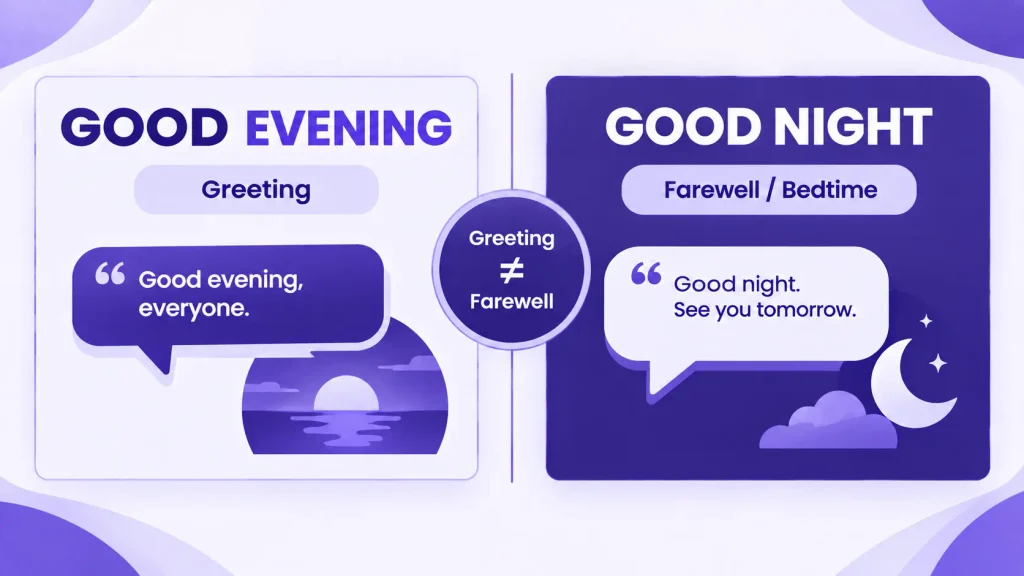
Tip: Don’t confuse it with good night. “Good evening” can be a greeting, while “good night” is generally used when saying goodbye or going to bed.
7. How are you?
How are you? can function as both a greeting and a question about someone’s well-being. In everyday conversation, it often follows “hello” or “hi.”
Best for: Friends, coworkers, acquaintances, and polite everyday conversations.
Example:
“Hi, James. How are you?”
Tip: When it is used as a routine greeting, a brief response such as “I’m good, thanks. How are you?” is perfectly natural.
8. How’s it going?
How’s it going? is a casual way to greet someone while asking how things are going.
Best for: Friends, coworkers you know, classmates, and relaxed conversations.
Example:
“Hey, Alex! How’s it going?”
Tip: This is more conversational than simply saying “hello,” so it works best in informal settings.
9. What’s up?
What’s up? is a very informal greeting commonly used with friends and other people you know.
Best for: Friends, close coworkers, texting, and casual conversations.
Example:
“Hey! What’s up?”
Tip: Despite being phrased as a question, “What’s up?” often works simply as a greeting. You don’t necessarily have to give a detailed answer.
10. Nice to meet you
Nice to meet you isn’t a direct synonym for “hello,” but it is a natural greeting when you are introduced to someone for the first time.
Best for: First meetings, introductions, interviews, networking, and professional situations.
Example:
“Hi, I’m Daniel. Nice to meet you.”
Tip: Use it when meeting someone for the first time rather than as a general greeting for someone you already know.
Quick Comparison: Which Greeting Should You Use?
| Alternative | Tone | Best Context |
| Hi | Friendly, casual | Everyday conversations |
| Hey | Very casual | Friends and familiar people |
| Hi there | Friendly | Casual or welcoming situations |
| Good morning | Polite | Morning conversations and work |
| Good afternoon | Polite | Professional or daytime settings |
| Good evening | Polite/formal | Evening conversations and events |
| How are you? | Friendly/polite | Everyday conversations |
| How’s it going? | Casual | Friends and familiar coworkers |
| What’s up? | Very casual | Friends and informal conversations |
| Nice to meet you | Polite | First introductions |
Formal vs. Casual Ways to Say Hello
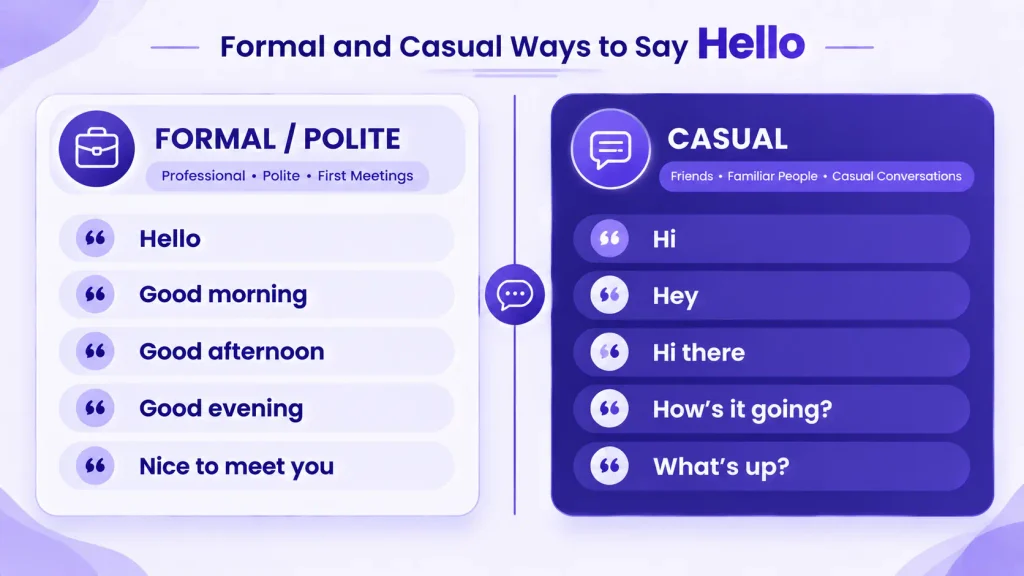
The right greeting depends on the situation.
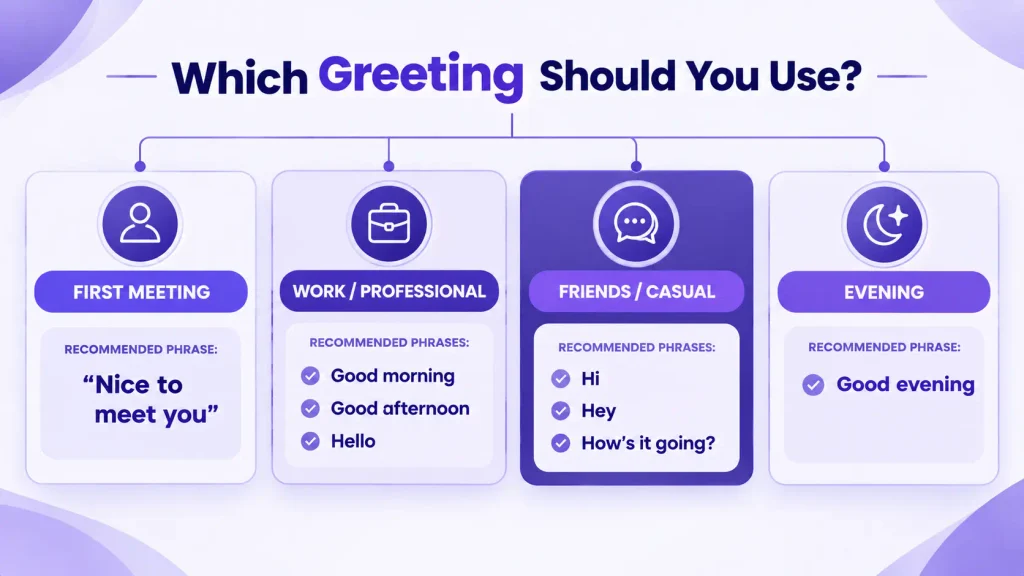
Formal or professional
Use these when speaking with a client, interviewer, teacher, manager, customer, or someone you don’t know well:
- Hello
- Good morning
- Good afternoon
- Good evening
- Nice to meet you
- It’s nice to meet you
Example:
“Good morning, Ms. Carter. It’s nice to meet you.”
Casual
Use these with friends, classmates, family members, or people you know well:
- Hi
- Hey
- Hi there
- How’s it going?
- What’s up?
Example:
“Hey, Jake! How’s it going?”
The difference is mainly about tone and context, not whether one expression is grammatically correct.
How to Say Hello in a Text or Online Message
Written greetings can be slightly different from spoken greetings.
For a professional email, you could write:
- Hello, Mr. Brown,
- Hi Sarah,
- Good morning, John,
For a casual text, you might write:
- Hey!
- Hi!
- Hey there!
- Hi, how are you?
- What’s up?
If you’re unsure about the level of formality, “Hi” is often a useful middle ground. It is friendly without being as casual as some forms of “hey.”
Common Mistakes When Choosing a Greeting
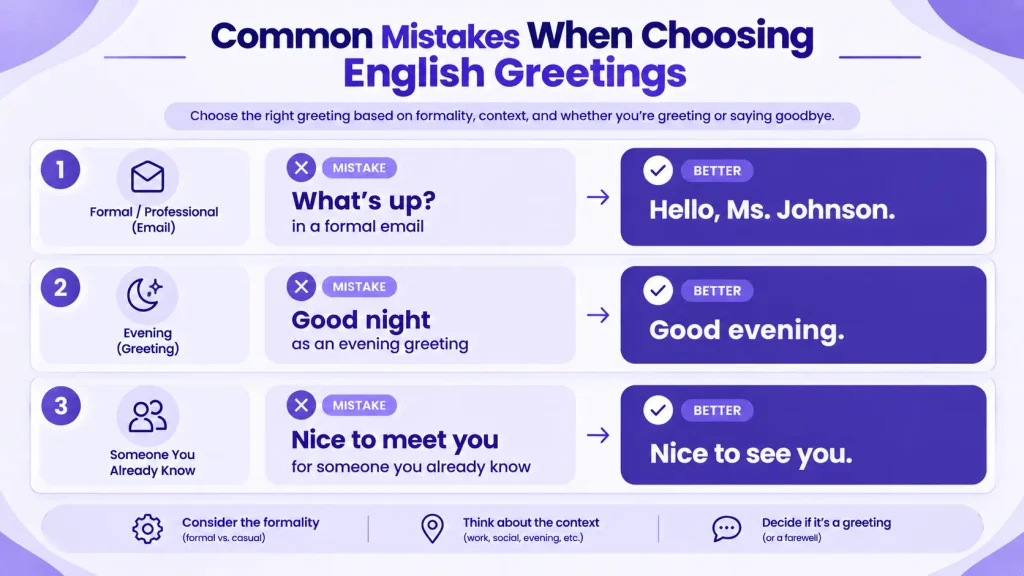
Using “What’s up?” in a formal email
“What’s up?” is casual, so it may sound too relaxed when writing to a client, professor, interviewer, or senior professional.
Instead, try:
“Hello, Ms. Johnson.”
or
“Good morning, Ms. Johnson.”
Using “Good night” as a greeting
“Good night” is generally associated with leaving or going to bed. If you are meeting someone in the evening, “Good evening” is the more natural greeting.
Treating “Hey” as appropriate everywhere
“Hey” is common and natural, but it is informal. It works well with friends and familiar people but may not be the best opening for a formal business message.
Using “Nice to meet you” with someone you already know
“Nice to meet you” is normally associated with a first introduction. If you’ve met the person before, “Nice to see you” is usually more appropriate.
FAQs About Another Way to Say Hello in English
What is the most common alternative to “hello”?
Hi is one of the most common alternatives. It is short, natural, and widely used in everyday English.
What is a casual way to say hello?
Hey is a common casual greeting. You can also use hi there, how’s it going?, or what’s up?, depending on how informal the conversation is.
What is a polite way to say hello?
Hello, good morning, good afternoon, and good evening are all useful polite greetings. The appropriate choice depends on the time and situation.
What can I say instead of hello in a professional setting?
Try Hi [Name], Hello [Name], Good morning [Name], or Good afternoon [Name]. For a first meeting, “Nice to meet you” can also work naturally.
Is “Hey” more casual than “Hi”?
Yes. Both are common greetings, but hey generally has a more relaxed and informal tone than hi.
Can “How are you?” be another way to say hello?
Yes. “How are you?” can function as a greeting, although it is also literally a question about someone’s well-being. The surrounding context determines how it is understood.
What is a good greeting for a first meeting?
“Nice to meet you” is a natural choice when meeting someone for the first time. You can combine it with “hello” or “hi,” such as: “Hi, I’m Emma. Nice to meet you.”
Final Thoughts
There are many natural ways to say hello in English, but the best choice depends on the situation. Hi is a simple everyday option, hey is more casual, and good morning, good afternoon, and good evening add a polite time-specific touch. For first introductions, nice to meet you works especially well.
The goal isn’t to replace “hello” every time. Instead, learning different greetings helps you choose words that match the person, setting, and tone of the conversation.

Role: Language Editor
Caleb Mercer is a Language Editor at RepublicsPress, focusing on grammar, sentence structure, professional writing, and English usage. He helps ensure that language guides are clear, accurate, natural, and easy to follow.