

Another Way to Say Out of Control: 10 Natural Alternatives
If you’re looking for another way to say “out of control,” the best choice depends on what has become difficult to control. Natural alternatives include “unmanageable,” “uncontrolled,” “chaotic,” “unruly,” “unrestrained,” “out of hand,” “running wild,” “spiraling out of control,” “off the rails,” and “unchecked.” Some are stronger, more formal, or more specific than others.
Key Takeaways
- “Unmanageable” works well when something is difficult or impossible to handle.
- “Chaotic” emphasizes disorder and confusion rather than control itself.
- “Out of hand” is a natural conversational alternative for situations or behavior.
- “Unruly” is especially useful for people, crowds, groups, or behavior.
- “Unrestrained” fits emotions, actions, spending, growth, and other things lacking limits.
- “Spiraling out of control” suggests that a situation is becoming progressively worse.
What Does “Out of Control” Mean?
“Out of control” describes a person, situation, activity, or process that is no longer being effectively managed, restrained, or directed. It can describe physical situations, behavior, emotions, events, or problems.
For example:
- The crowd became out of control.
- Her emotions were out of control.
- The fire was out of control.
- Costs are getting out of control.
The phrase is broad, so the best replacement depends on what exactly is happening. “Unruly” may fit a crowd, while “unmanageable” may better describe a workload. “Unrestrained” can work for emotions or behavior, while “unchecked” is often better for growth or a problem that continues without effective limits. These distinctions matter because the alternatives are not interchangeable in every sentence.
10 Natural Alternatives to “Out of Control”
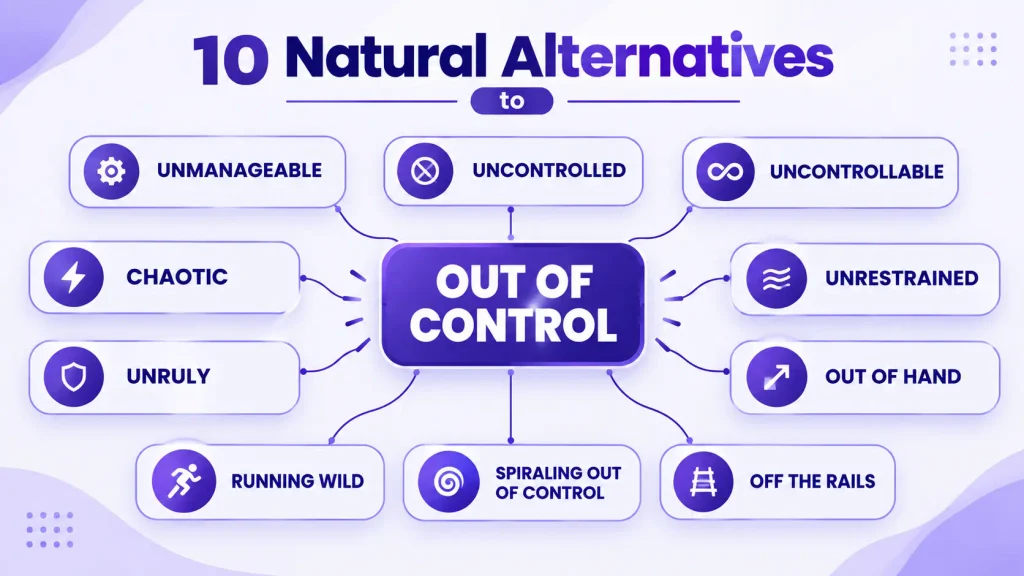
1. Unmanageable
“Unmanageable” describes something that has become too difficult to control, organize, or deal with.
Best for: situations, workloads, problems, behavior, responsibilities
Example:
The team’s workload became unmanageable after several employees left.
This is one of the closest alternatives when you want to emphasize that something is difficult to handle rather than simply chaotic.
2. Uncontrolled
“Uncontrolled” means not being controlled, regulated, or restrained.
Best for: situations, fires, behavior, growth, reactions, processes
Example:
The fire spread rapidly because it remained uncontrolled for several hours.
This is a relatively neutral and direct replacement. It often works in formal or professional writing.
3. Uncontrollable
“Uncontrollable” means unable to be controlled or restrained.
Best for: emotions, laughter, behavior, physical reactions, forces
Example:
He burst into uncontrollable laughter during the presentation.
There is a subtle difference between “uncontrolled” and “uncontrollable.” Something can be uncontrolled because nobody is managing it, while something uncontrollable suggests that it cannot be controlled effectively.
4. Chaotic
“Chaotic” emphasizes confusion, disorder, or a lack of structure.
Best for: situations, events, workplaces, environments, schedules
Example:
The office became chaotic after the computer system went down.
Use “chaotic” when disorder is the main idea. It isn’t always a perfect synonym for “out of control.” A situation can be disorganized without being completely beyond control.
5. Unruly
“Unruly” describes people or behavior that are difficult to control or discipline.
Best for: crowds, children, students, groups, behavior
Example:
The teacher struggled to settle the unruly students.
“Unruly” usually has a stronger connection to behavior and discipline than “out of control.” Merriam-Webster’s thesaurus also distinguishes “unruly” as suggesting a lack of discipline or difficulty with discipline.
6. Unrestrained
“Unrestrained” means not held back, limited, or controlled.
Best for: emotions, behavior, spending, expression, growth
Example:
The celebration was filled with unrestrained excitement.
This word can be more formal than “out of control.” It can also be neutral or even positive depending on the context, such as “unrestrained enthusiasm.” Merriam-Webster lists senses involving something not being under control or being free from restraint.
7. Out of Hand
“Out of hand” is a common idiomatic alternative, especially when a situation or behavior becomes difficult to control.
Best for: situations, arguments, parties, behavior, problems
Example:
The discussion got out of hand after several people started arguing.
It sounds natural in everyday American English and is often a good choice for conversational writing. “Out of hand” can also have another meaning—rejecting or dismissing something immediately—so context matters.
8. Running Wild
“Running wild” suggests that someone or something is behaving freely without sufficient control or restraint.
Best for: people, animals, behavior, rumors, imagination, problems
Example:
Rumors were running wild across the office.
This is more vivid and conversational than “out of control.” It can also sound more dramatic, so it isn’t always appropriate for formal writing.
9. Spiraling Out of Control
“Spiraling out of control” is useful when a problem is getting progressively worse.
Best for: conflicts, costs, problems, situations, emotions
Example:
The disagreement quickly spiraled out of control.
This phrase is different from simply saying “out of control” because it emphasizes a worsening process. It suggests that one development leads to another until the situation becomes increasingly difficult to manage.
10. Off the Rails
“Off the rails” is an informal idiom for something that has gone badly wrong or departed from its intended direction.
Best for: plans, projects, conversations, situations, behavior
Example:
The project went off the rails after the original deadline was missed.
It is more figurative and conversational than “uncontrolled,” so it works especially well in informal speech, commentary, and workplace conversations.
Quick Comparison
| Alternative | Main Meaning | Tone | Best Context |
| Unmanageable | Too difficult to handle | Neutral | Problems, workloads, situations |
| Uncontrolled | Not being controlled | Neutral/Formal | Processes, behavior, situations |
| Uncontrollable | Cannot be controlled | Neutral | Emotions, reactions, forces |
| Chaotic | Disordered and confusing | Neutral | Situations, events, environments |
| Unruly | Difficult to discipline | Neutral | People, crowds, behavior |
| Unrestrained | Not held back | Neutral/Formal | Emotions, actions, spending |
| Out of hand | Difficult to control | Casual | Situations, arguments, behavior |
| Running wild | Free from normal control | Casual | Behavior, rumors, problems |
| Spiraling out of control | Becoming progressively worse | Neutral | Problems, conflicts, costs |
| Off the rails | Going badly wrong | Casual/Idiomatic | Plans, projects, situations |
Which Alternative Should You Use?
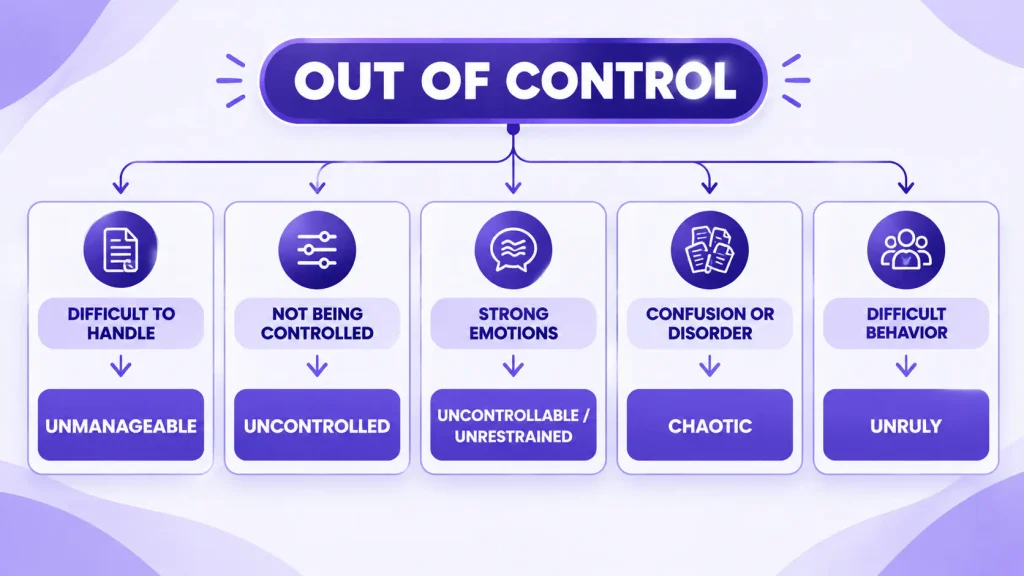
The right phrase depends on what you mean by “out of control.”
For a difficult situation
Use unmanageable:
The workload has become unmanageable.
For something not being controlled
Use uncontrolled:
The fire remained uncontrolled for several hours.
For strong emotions
Use uncontrollable or unrestrained:
She was overcome by uncontrollable laughter.
He showed unrestrained anger.
For a confusing situation
Use chaotic:
The evacuation became chaotic.
For badly behaved people
Use unruly:
The unruly crowd refused to leave.
For casual conversation
Use out of hand or running wild:
The party got out of hand.
The kids were running wild.
For a situation that keeps getting worse
Use spiraling out of control:
The argument quickly spiraled out of control.
For a project or plan that has gone wrong
Use off the rails:
The project went off the rails after the budget was cut.
“Out of Control” vs. “Out of Hand”
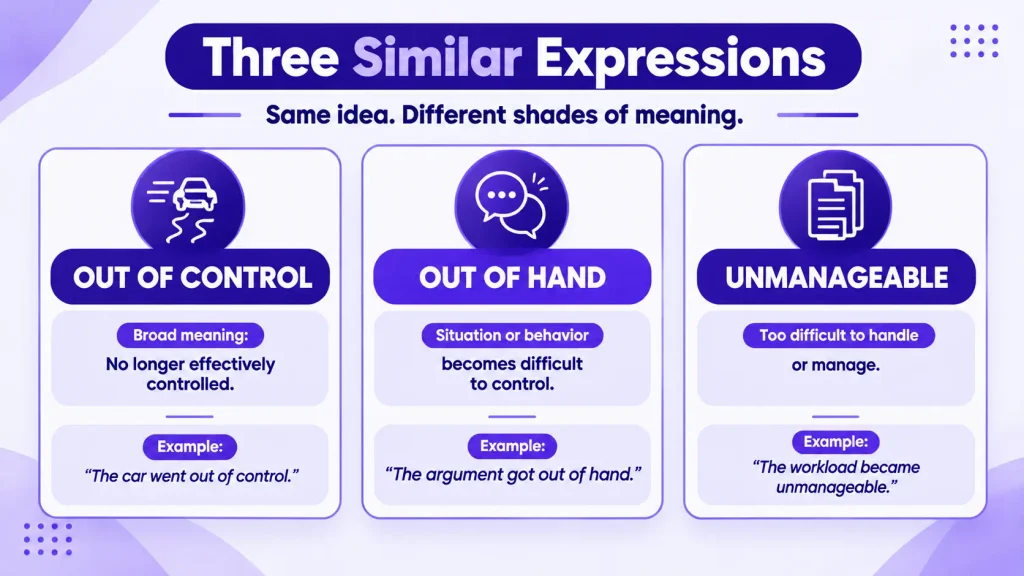
These phrases are closely related, but they aren’t always identical.
“Out of control” is broader. It can describe a fire, vehicle, emotion, person, crowd, or situation.
The car went out of control.
“Out of hand” is more commonly used for situations, events, arguments, or behavior that have become difficult to manage.
The argument got out of hand.
So, if you’re describing a physical object such as a car, “out of control” is usually the more natural choice. If you’re describing a disagreement or social situation, “out of hand” often sounds more natural.
“Uncontrolled” vs. “Uncontrollable”
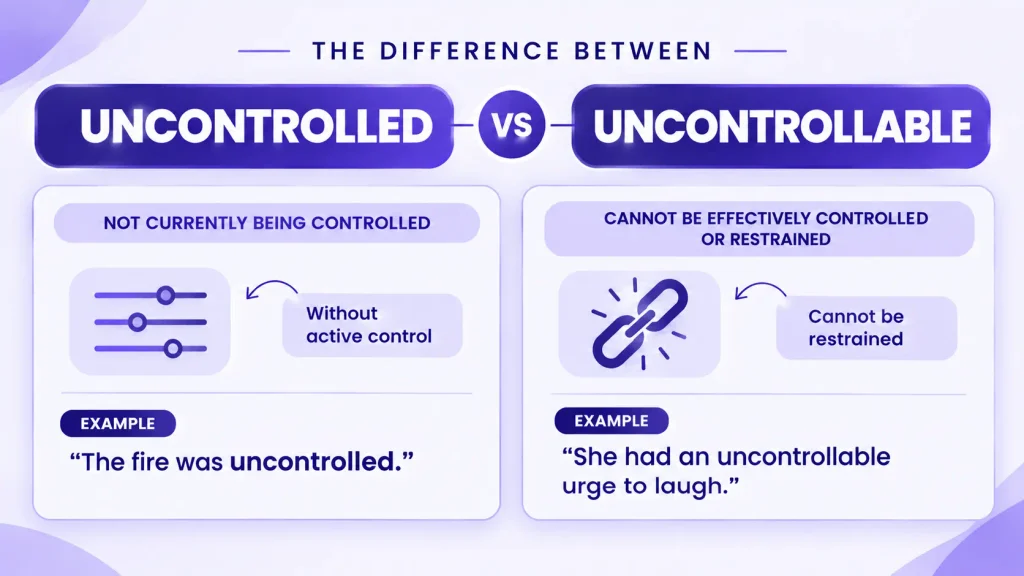
These two words are easy to confuse.
Uncontrolled means something is not currently being controlled.
The fire was uncontrolled.
Uncontrollable means something cannot be controlled or is extremely difficult to restrain.
She had an uncontrollable urge to laugh.
The distinction is small but useful, especially in formal or academic writing.
Common Mistakes to Avoid
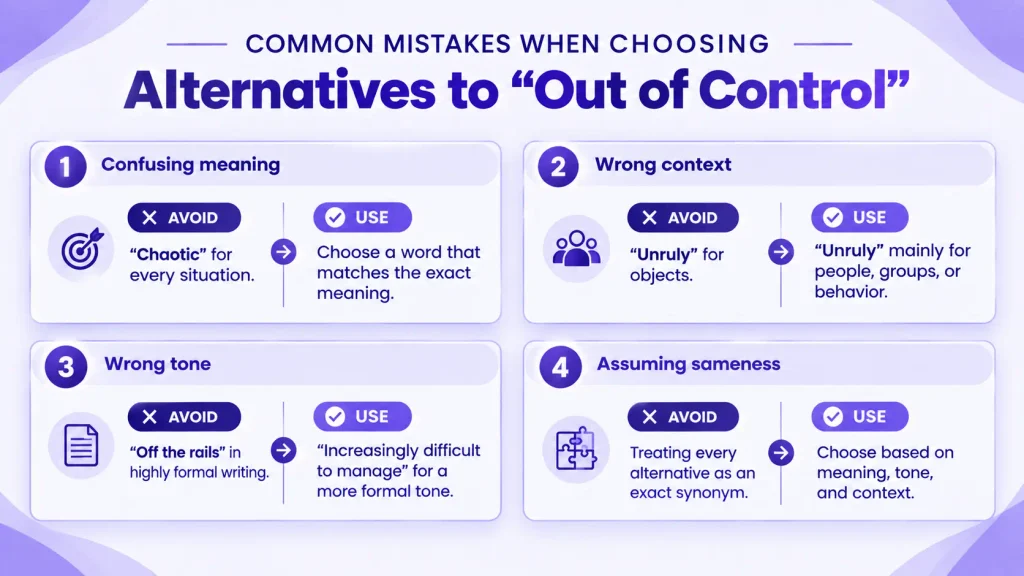
Using “chaotic” for every situation
“Chaotic” focuses on disorder and confusion. It doesn’t always mean that something is literally impossible to control.
Instead of:
The machine was chaotic.
Use a more precise word such as:
The machine was malfunctioning.
Using “unruly” for objects
“Unruly” generally works best for people, groups, or behavior.
The unruly crowd blocked the entrance.
It would sound unusual to describe a computer or car as “unruly.”
Using “off the rails” in formal writing
“Off the rails” is a vivid idiom, but it is relatively informal.
For a formal report, consider:
The project became increasingly difficult to manage.
instead of:
The project went off the rails.
Assuming every alternative has exactly the same meaning
“Out of control,” “unmanageable,” “chaotic,” and “unrestrained” overlap, but each emphasizes something different. Choosing the most precise word makes your writing clearer.
FAQs
What is a professional way to say “out of control”?
“Unmanageable,” “uncontrolled,” or “increasingly difficult to manage” can work well in professional writing. The best choice depends on whether you’re describing a situation, process, workload, or behavior.
What is a stronger word for “out of control”?
“Uncontrollable” can sound stronger because it suggests that something cannot be effectively restrained. “Unmanageable” can also convey that a situation has become extremely difficult to handle.
What is a casual way to say “out of control”?
“Out of hand,” “running wild,” and “off the rails” are natural casual alternatives, depending on the situation.
What is another way to say “the situation is out of control”?
You could say:
- The situation is becoming unmanageable.
- The situation is getting out of hand.
- The situation is becoming chaotic.
- The situation is spiraling out of control.
- The situation is increasingly difficult to manage.
Is “out of hand” the same as “out of control”?
They can mean nearly the same thing when describing a situation that is difficult to control. But “out of hand” also has a separate meaning: rejecting or dismissing something immediately.
Often, yes, when the meaning is that something has become too difficult to handle or control. It is especially useful for problems, workloads, responsibilities, and situations.
What is another way to say “things are getting out of control”?
Natural options include “things are getting out of hand,” “things are becoming unmanageable,” and “things are spiraling out of control.” The last option most strongly suggests that the situation is worsening.
Final Thoughts
“Out of control” is a flexible phrase, so the best alternative depends on the exact situation. Use unmanageable for something difficult to handle, chaotic for disorder, unruly for difficult behavior, unrestrained for a lack of limits, and out of hand for a situation that has become difficult to manage. For a problem that is getting progressively worse, spiraling out of control is especially precise.

Role: English Content Writer
Maren Whitlock writes practical English language content for RepublicsPress, with a focus on vocabulary, word alternatives, everyday expressions, and clear communication. Her articles are designed to make difficult or confusing language easier to understand, with simple explanations and useful examples readers can apply in real situations.