Another Way to Say “In the Past”
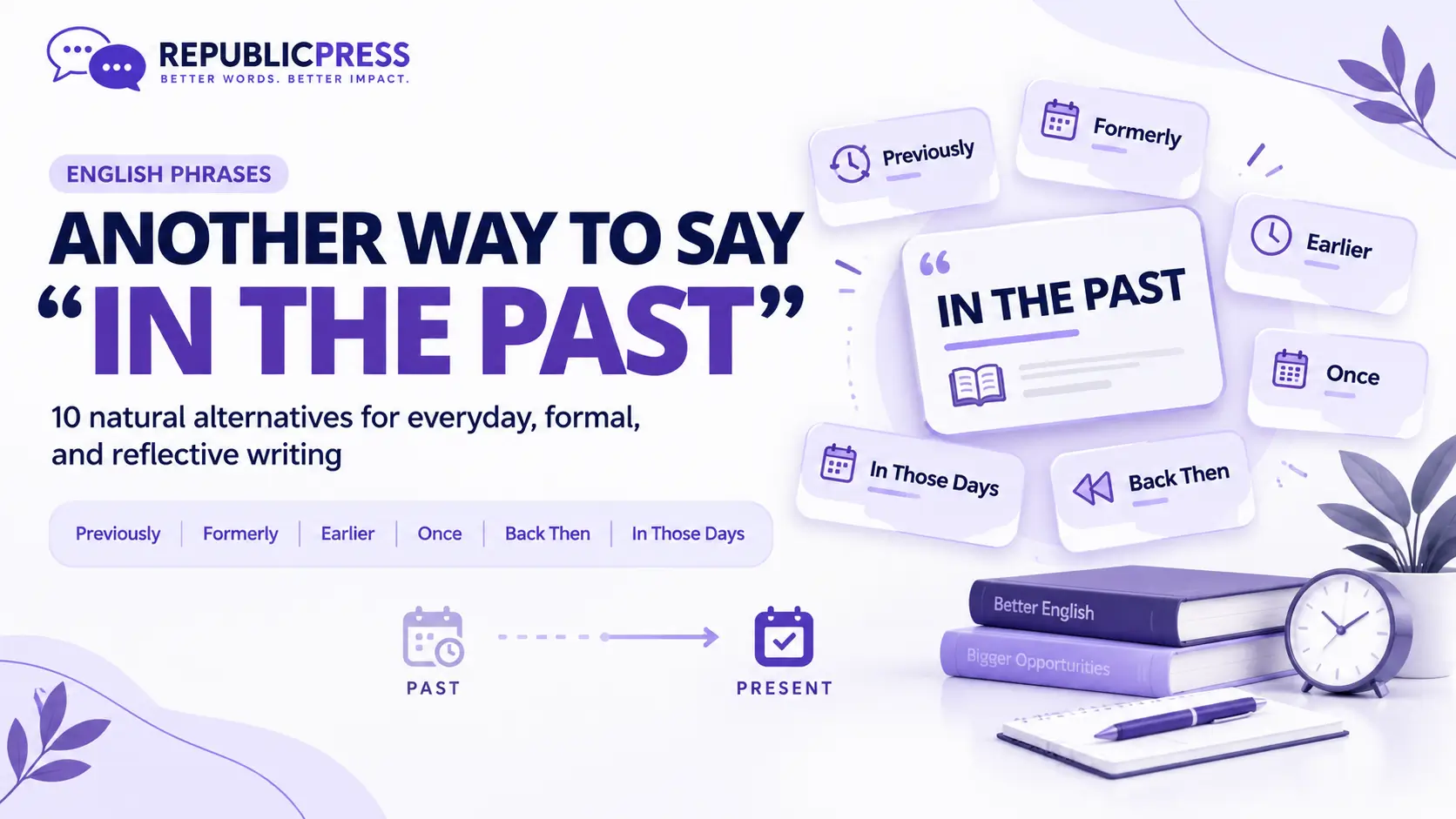
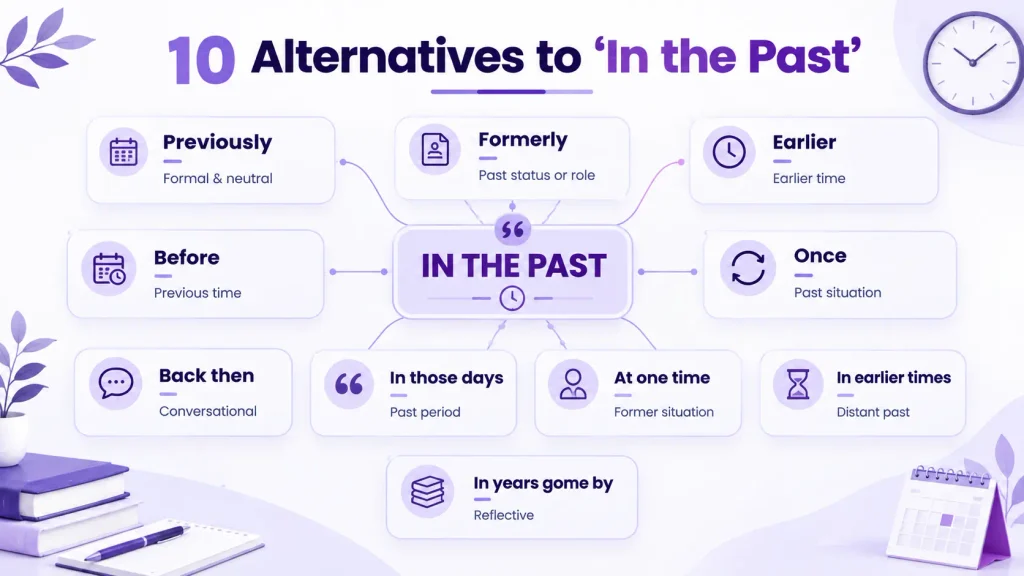
Direct answer: Common ways to say “in the past” include previously, formerly, earlier, before, once, back then, at one time, in those days, in earlier times, and in years gone by. The best choice depends on whether you want a formal, neutral, conversational, historical, or nostalgic tone.
Key Takeaways
- Previously is a natural choice for professional, academic, and neutral writing.
- Formerly works especially well when something had a different name, role, owner, or status in the past.
- Earlier is useful when comparing one point in time with another.
- Back then and in those days sound natural in everyday conversation.
- Once and at one time can suggest that a past situation is no longer true.
- In years gone by and in earlier times are more literary or reflective.
- Not every alternative is interchangeable with “in the past.” Context matters.
What Does “In the Past” Mean?
“In the past” refers to a period before the present time or before the time being discussed. It can describe something that happened, existed, or was true earlier. Cambridge Dictionary defines it as referring to a period before and up to, but not including, the present.
For example:
In the past, people relied more heavily on printed newspapers.
You can replace the phrase with a different expression depending on the sentence:
Previously, people relied more heavily on printed newspapers.
Back then, people relied more heavily on printed newspapers.
The meaning is similar, but the tone and emphasis are different.
10 Natural Ways to Say “In the Past”
1. Previously
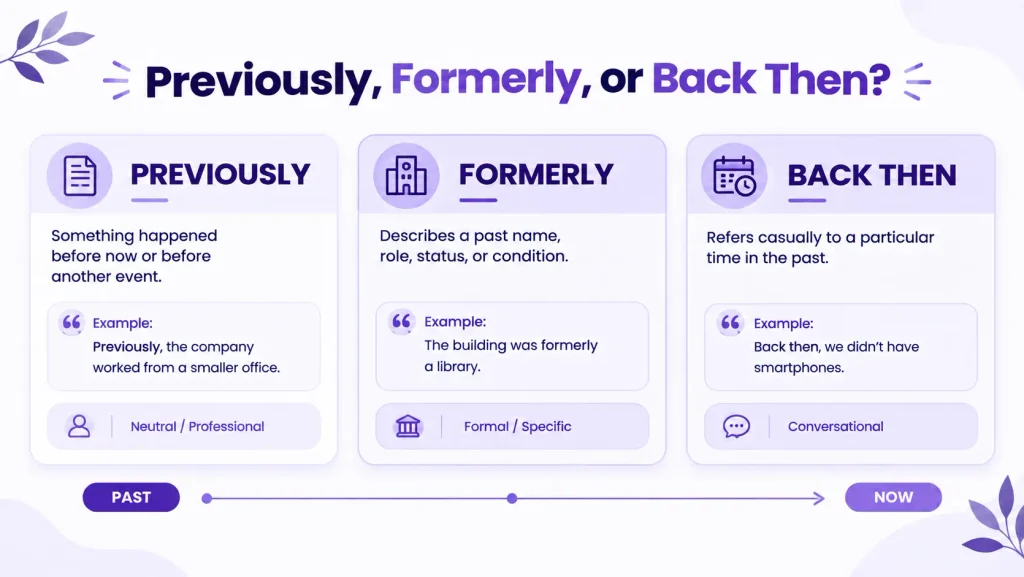
Previously means at an earlier time or before the time being discussed. It is one of the closest alternatives to “in the past” and works well in professional, academic, and general writing.
Example:
She previously worked as a teacher.
Best for: Professional, academic, formal, and neutral writing.
Usage tip: Use previously when you want to emphasize that something happened before another event or situation.
2. Formerly
Formerly means that something was true or existed in the past but is different now. It is especially useful when discussing former names, positions, owners, or uses. Oxford gives examples such as something being “formerly known as” another name.
Example:
The building was formerly used as a bank.
Best for: Formal, historical, and professional writing.
Usage tip: Formerly often implies a change from the past to the present, so it isn’t always a perfect substitute for every use of “in the past.”
3. Earlier
Earlier refers to a time before the present moment or before another time being discussed.
Example:
I had met her earlier.
You can also use it to compare two periods:
Earlier, the company had only five employees.
Best for: Everyday, professional, and academic writing.
Usage tip: Earlier often works better when the reference point is clear. If you mean a broad period of history, “in the past” may be more natural.
4. Before
Before is a simple and flexible alternative when the context already makes the time relationship clear.
Example:
I had seen that movie before.
Or:
Things were very different before.
Best for: Everyday conversation and straightforward writing.
Usage tip: Before can refer to a specific earlier event rather than the broad idea of the past, so sentence structure matters.
5. Once
Once can mean “at some time in the past,” especially when something was true before but is no longer true.
Example:
This building was once a small family restaurant.
Best for: Neutral, narrative, historical, and descriptive writing.
Usage tip: Once often creates a contrast between past and present:
She was once a professional athlete, but now she teaches.
6. Back Then
Back then refers to a particular time in the past being discussed. It is natural in conversational American English. Cambridge defines it as referring to a particular time in the past.
Example:
Back then, we didn’t have smartphones.
Best for: Casual conversation, personal stories, and informal writing.
Usage tip: Use back then when the reader or listener can identify which past period you mean.
7. In Those Days
In those days refers to a particular period in the past, often one that is being contrasted with the present.
Example:
In those days, people spent more time talking face-to-face.
Best for: Conversational, narrative, and reflective writing.
Usage tip: This phrase can sound nostalgic, especially when discussing how life has changed. Cambridge also identifies “in those days” as a phrase used to talk about a time when things were different from today.
8. At One Time
At one time means that something was true or happened during a particular period in the past.
Example:
At one time, this was the busiest store in town.
Best for: Neutral, descriptive, and historical writing.
Usage tip: Like once, it can suggest that the situation has changed.
9. In Earlier Times
In earlier times refers to a period before the present, especially when discussing history, traditions, or social changes.
Example:
In earlier times, families often lived together in large households.
Best for: Historical, educational, and formal writing.
Usage tip: This phrase is broader and more historical than “earlier” in many contexts.
10. In Years Gone By
In years gone by means in previous years or during an earlier period of someone’s life or history.
Example:
In years gone by, the town was known for its textile industry.
Best for: Reflective, literary, and nostalgic writing.
Usage tip: This expression is less common in everyday American conversation than previously, before, or back then.
“In the Past” Alternatives by Context
The best alternative depends on where you’re using the phrase.
| Alternative | Tone | Best Context | Main Difference |
| Previously | Neutral/Formal | Work, school, general writing | Direct reference to an earlier time |
| Formerly | Formal | History, names, roles, status | Often suggests something has changed |
| Earlier | Neutral | General conversation and writing | Usually relates to another time or event |
| Before | Neutral/Casual | Everyday English | Simple reference to an earlier time |
| Once | Neutral | Stories, history, descriptions | Often suggests the situation is no longer true |
| Back then | Casual | Conversation, memories | Refers to a particular past period |
| In those days | Conversational | Stories, reflection | Often contrasts past with present |
| At one time | Neutral | General and historical writing | Indicates a former state or period |
| In earlier times | Formal | History, education | Refers broadly to earlier periods |
| In years gone by | Literary/Reflective | Stories, history | Gives a nostalgic or reflective tone |
Which Alternative Should You Use?
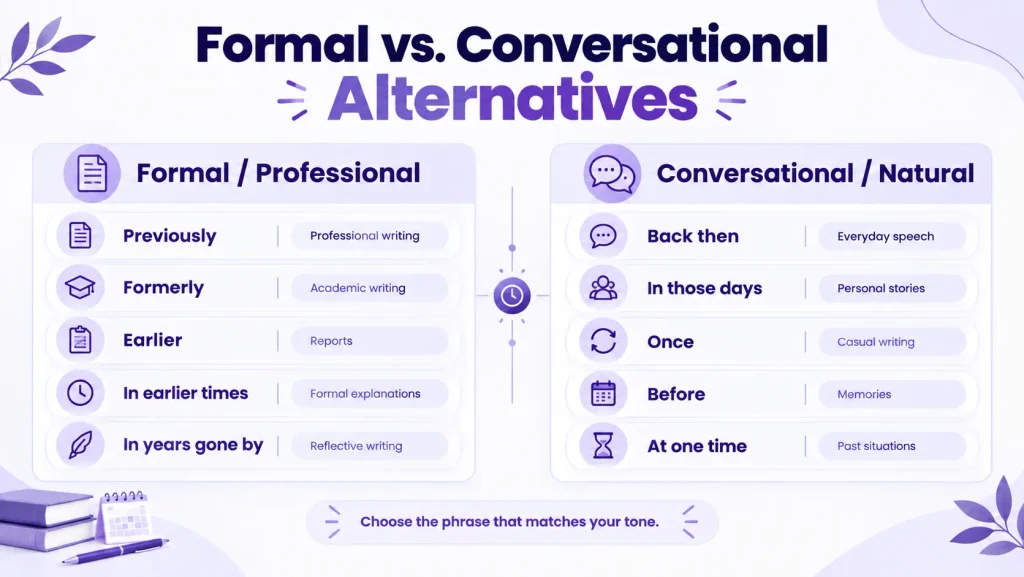
If you’re writing a professional email, previously is usually a natural choice:
We previously discussed the project timeline.
For academic or historical writing, formerly or in earlier times may fit better:
The region was formerly part of a larger kingdom.
For casual conversation, back then sounds more natural:
Back then, we used to walk to school.
For a personal memory, in those days works well:
In those days, we spent every summer at my grandparents’ house.
For a situation that used to be true but has changed, try once:
The restaurant was once the most popular place in town.
“Previously” vs. “Formerly”
These two words are close, but they’re not always interchangeable.
Previously simply places something before another time:
She previously worked at a hospital.
Formerly often emphasizes a former state, identity, use, or status:
The building was formerly a hospital.
Both refer to the past, but formerly more strongly suggests that the situation has changed.
“Back Then” vs. “In Those Days”
These expressions are very similar.
Back then is usually more conversational:
Back then, we didn’t have online banking.
In those days can sound slightly more reflective:
In those days, people wrote letters to stay in touch.
Both can refer to a particular period in the past rather than the past in general.
Common Mistakes When Replacing “In the Past”
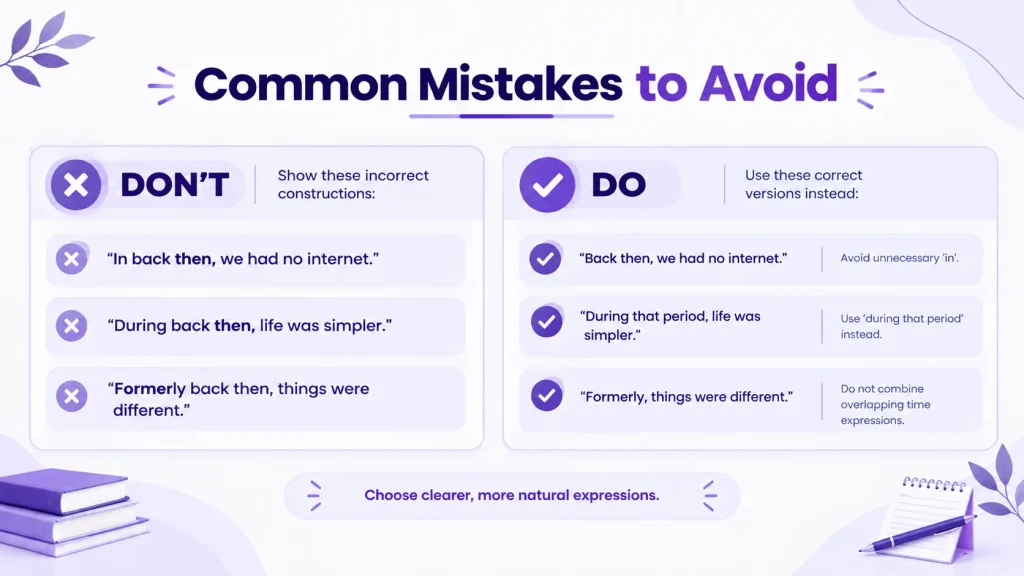
Using “formerly” for every past event
Formerly often implies a change in status or condition.
Less natural:
I formerly visited the library every Saturday.
More natural:
I used to visit the library every Saturday.
Using “back then” without a clear time reference
Back then normally works best when a specific past period has already been established.
We moved to Chicago in 2010. Back then, rent was much cheaper.
The reader knows what “back then” refers to.
Assuming “earlier” always means “in the past”
Earlier is relative to another point in time:
I spoke with her earlier today.
Here, earlier does not necessarily refer to a distant or general past.
Using overly formal phrases in casual conversation
Expressions such as “in years gone by” can sound more literary than everyday American English.
For casual speech, “back then,” “before,” or “previously” may sound more natural depending on the sentence.
Frequently Asked Questions
What is the most common alternative to “in the past”?
Previously is one of the closest alternatives, especially in formal, professional, and general writing. Before and earlier are also common, depending on the sentence.
Is “formerly” the same as “in the past”?
Not always. Formerly means something was true in the past and often suggests that its status, identity, ownership, or use has changed.
What is a casual way to say “in the past”?
Back then and in those days are natural casual alternatives, particularly when talking about a specific period.
What is a formal way to say “in the past”?
Previously and formerly are useful formal alternatives. In earlier times can also work when discussing history or broader periods.
Can I use “once” instead of “in the past”?
Sometimes. Once often suggests that something was true in the past but is no longer true.
The building was once a theater.
Is “back in the day” another way to say “in the past”?
Yes, but it is informal and often carries a nostalgic tone. It is commonly used when recalling a past period that the speaker remembers fondly.
What is the best alternative for an essay?
Previously, earlier, formerly, or in earlier times can work depending on the sentence. Choose based on the exact relationship between the past event and the point you’re discussing.
Final Thoughts
There is no single replacement for “in the past” that works in every sentence. Previously is a strong general-purpose choice, while formerly highlights a changed past status. Back then and in those days work naturally in conversation, and once is useful when something used to be true but is no longer true.
The key is to choose the phrase that matches both the time relationship and the tone of your sentence. That makes the writing sound natural rather than simply replacing one phrase with a dictionary synonym.

Role: Language Editor
Caleb Mercer is a Language Editor at RepublicsPress, focusing on grammar, sentence structure, professional writing, and English usage. He helps ensure that language guides are clear, accurate, natural, and easy to follow.