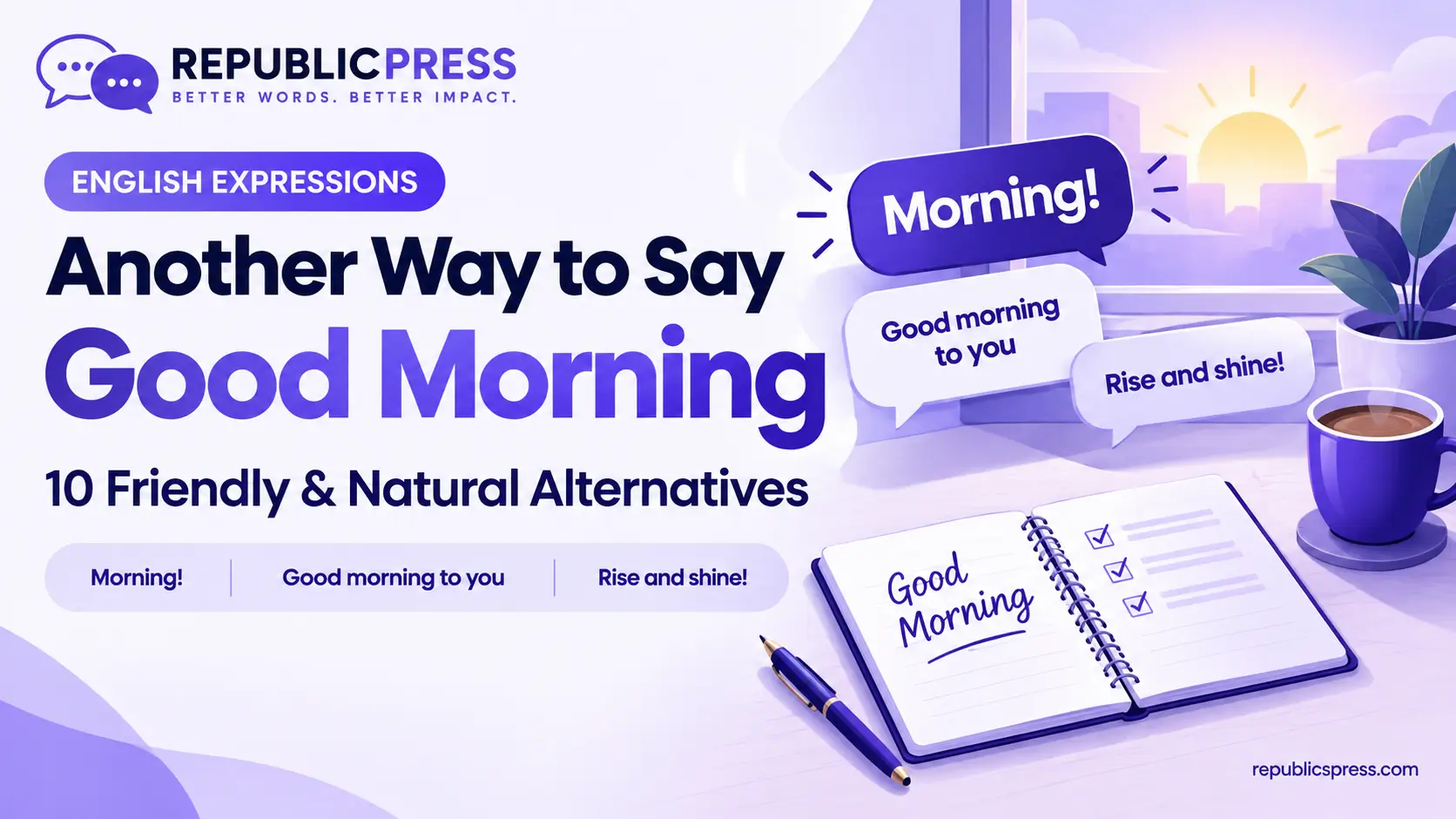
Another Way to Say Good Morning: 10 Friendly & Natural Alternatives
If you searched for another way to say goodmorning, you’re probably looking for a more natural, friendly, professional, or playful way to greet someone at the start of the day. In standard American English, the greeting is spelled “good morning” as two words. Natural alternatives include “Morning!”, “Good morning to you,” “Morning, everyone!”, and “Rise and shine!”
Key Takeaways
- “Good morning” is the standard spelling and most versatile morning greeting.
- “Morning!” is a short, casual alternative for everyday conversations.
- “Good morning to you” sounds warm and friendly.
- “Morning, everyone!” works well when greeting a group.
- “Rise and shine!” is cheerful and playful rather than formal.
- Professional situations usually call for the simple “Good morning.”
- The phrase “goodmorning” is not the standard spelling; write “good morning.”
What Is Another Way to Say Goodmorning?
The most natural answer to another way to say goodmorning is “Morning!” when you want a casual greeting. Other choices depend on your tone and situation.
For example, you could say:
- “Morning!”
- “Good morning to you.”
- “Morning, everyone!”
- “Morning, team!”
- “Rise and shine!”
- “Have a good morning.”
The best choice depends on whether you are talking to a friend, coworker, client, family member, or group.
A quick spelling note
Although people sometimes search for “another way to say goodmorning,” standard American English writes the greeting as “good morning,” with a space between the two words.
So write:
Good morning, everyone.
Not:
Goodmorning, everyone.
10 Natural Alternatives to Good Morning
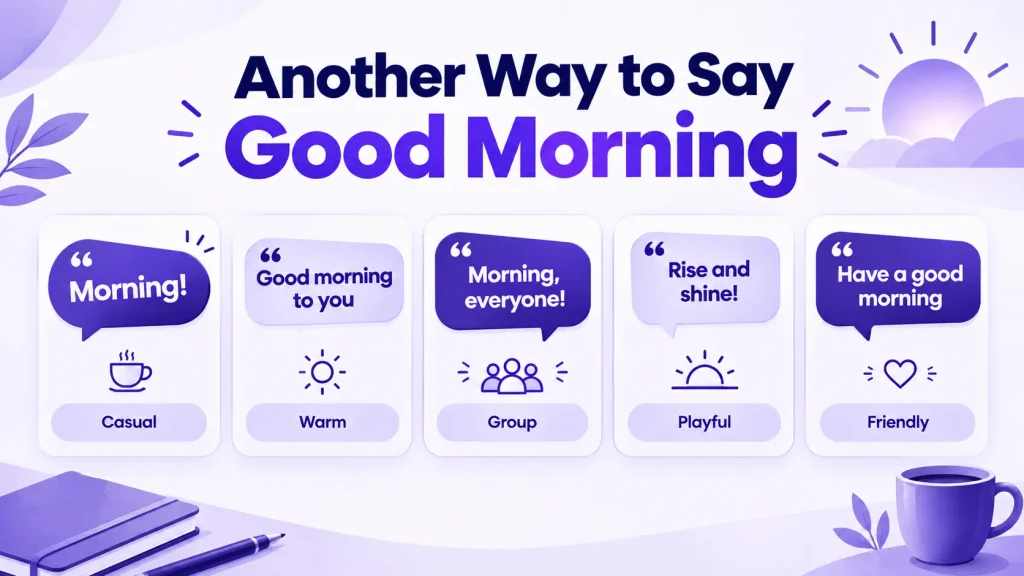
If you’re searching for another way to say goodmorning, these alternatives can help you choose a greeting that matches your situation.
1. Morning!
“Morning!” is one of the most natural casual alternatives to “good morning.” It is simply a shortened version of the full greeting.
Best for: Friends, familiar coworkers, neighbors, and everyday conversations.
Example:
“Morning! How did you sleep?”
This is usually the easiest choice when you want your greeting to sound relaxed and conversational.
2. Good Morning to You
“Good morning to you” keeps the original meaning while making the greeting sound slightly warmer or more expressive.
Best for: Friendly conversations and personal messages.
Example:
“Good morning to you! Ready for a busy day?”
It can also be a natural response when someone has already wished you a good morning.
3. Hello, Good Morning
“Hello, good morning” combines two common greetings. It sounds polite and clear.
Best for: Professional conversations, customer service, and formal interactions.
Example:
“Hello, good morning. How can I help you?”
For a simple everyday greeting, though, “Good morning” is usually enough.
4. Morning, Everyone!
If you are greeting several people, “Morning, everyone!” is a natural alternative to “Good morning, everyone.”
Best for: Meetings, classrooms, group conversations, and workplaces.
Example:
“Morning, everyone! Thanks for joining the meeting.”
You can also use “Morning, team!” when speaking to coworkers.
5. Morning, Team!
“Morning, team!” is a friendly workplace greeting. It is less formal than “Good morning, team,” but still appropriate for many relaxed professional environments.
Best for: Teams, meetings, group chats, and workplace conversations.
Example:
“Morning, team! I’ve shared the updated schedule.”
Use it when the workplace culture is reasonably informal.
6. Rise and Shine!
“Rise and shine!” is a cheerful expression used to encourage someone to wake up and get moving.
Best for: Family, close friends, children, and playful situations.
Example:
“Rise and shine! Breakfast is ready.”
It is not a direct replacement for “good morning” in every situation. It has a playful and energetic tone.
7. Top of the Morning!
“Top of the morning!” is a traditional morning greeting that can sound playful, humorous, or old-fashioned in modern American English.
Best for: Humor, playful conversations, and creative writing.
Example:
“Top of the morning! Ready for our big day?”
Because it can sound theatrical or old-fashioned, it is less common than “Morning!” in everyday American conversation.
8. A Pleasant Morning to You
“A pleasant morning to you” is a polite and somewhat formal way to wish someone a nice morning.
Best for: Formal, literary, or deliberately polished language.
Example:
“A pleasant morning to you, and thank you for meeting with me.”
It is grammatically correct, but most Americans would simply say “Good morning” in ordinary conversation.
9. Good Day
“Good day” can be used as a greeting, but it is broader than “good morning.” It refers to the daytime rather than specifically to the morning.
Best for: Formal, traditional, or deliberately polished language.
Example:
“Good day, everyone. Thank you for coming.”
If you specifically want to greet someone in the morning, “good morning” is more precise.
10. Have a Good Morning
“Have a good morning” is slightly different from “good morning.” Instead of simply greeting someone, it expresses a wish for them to have a pleasant morning.
Best for: Friendly conversations, messages, and farewells.
Example:
“I’ll talk to you later. Have a good morning!”
It is especially useful when ending a conversation rather than starting one.
Which Alternative Should You Use?
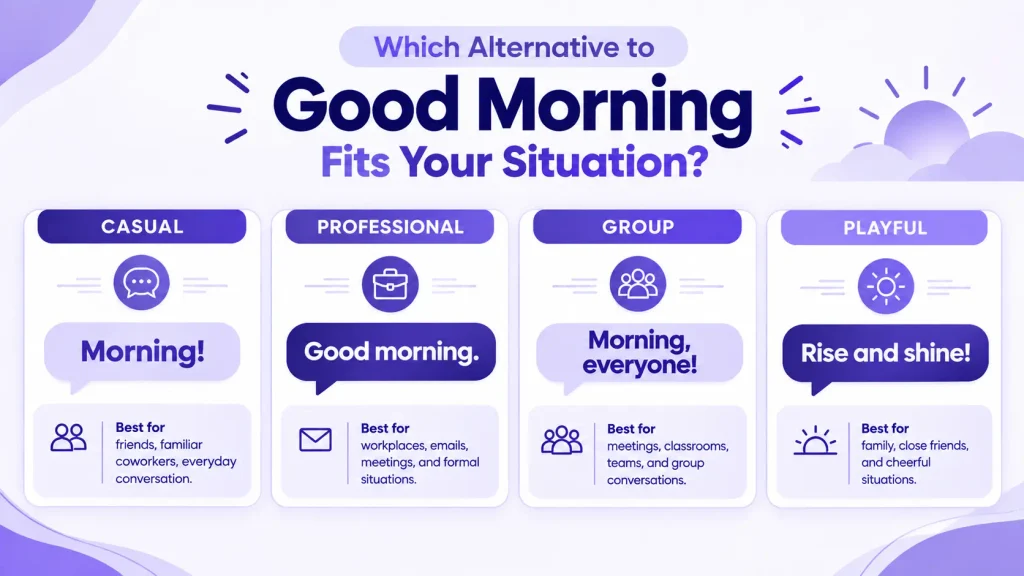
The best another way to say goodmorning depends on your relationship with the person and the setting.
For Friends
Choose something relaxed:
- “Morning!”
- “Good morning to you!”
- “Rise and shine!”
- “Morning! How’s it going?”
Example:
“Morning! Want to grab some coffee?”
For Coworkers
Keep the greeting friendly but appropriate:
- “Morning!”
- “Good morning.”
- “Morning, team!”
- “Morning, everyone!”
Example:
“Morning, everyone. I’ve shared the updated file.”
For Professional Emails
“Good morning” is usually the safest option.
For example:
“Good morning, Sarah. I’m following up on the information you requested.”
There is no need to use an unusual phrase simply to avoid repeating a standard professional greeting.
For Groups
Try:
- “Good morning, everyone.”
- “Morning, everyone!”
- “Good morning, team.”
- “Morning, team!”
Example:
“Good morning, everyone. Let’s begin today’s meeting.”
For a Playful Greeting
Try:
- “Rise and shine!”
- “Top of the morning!”
- “Morning, sunshine!”
“Morning, sunshine!” is affectionate and informal, so it is better for someone you know well.
Good Morning vs. Morning
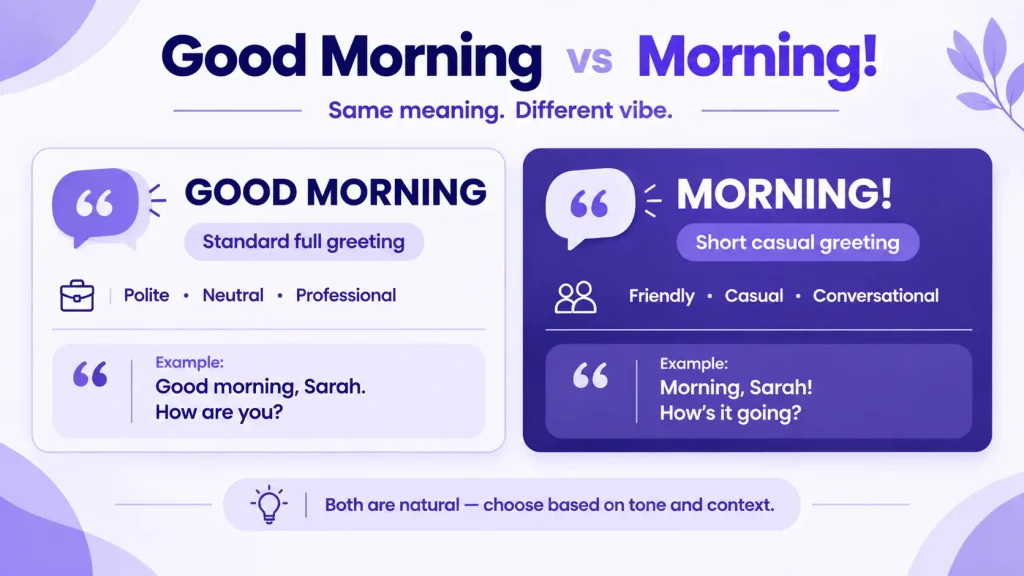
When choosing another way to say goodmorning, the difference between “Good morning” and “Morning!” is especially useful to understand.
| Expression | Tone | Best Context |
| Good morning | Neutral, polite | Professional and everyday situations |
| Morning! | Casual, friendly | Friends and familiar coworkers |
| Good morning to you | Warm, friendly | Personal conversations |
| Morning, everyone! | Friendly | Groups and meetings |
| Morning, team! | Casual-professional | Workplace teams |
| Rise and shine! | Playful | Family and close friends |
| Top of the morning! | Playful, traditional | Humor or creative use |
| Have a good morning | Warm, positive | Messages and farewells |
The key difference is simple: “Good morning” is the standard greeting, while “Morning!” is a shorter and more casual version.
Good Morning Alternatives by Tone
Here is a quick way to choose the right expression.
Neutral and Professional
Use:
- “Good morning.”
- “Good morning, everyone.”
- “Hello, good morning.”
These work well in workplaces, meetings, emails, and other professional situations.
Casual and Friendly
Use:
- “Morning!”
- “Good morning to you.”
- “Morning, everyone!”
These sound natural when speaking with people you know.
Playful and Cheerful
Use:
- “Rise and shine!”
- “Top of the morning!”
- “Morning, sunshine!”
These expressions add personality, but they are not appropriate for every audience.
Warm and Positive
Use:
- “Good morning to you.”
- “Have a good morning.”
- “Morning, sunshine!”
These can make a simple greeting feel more personal.
Common Mistakes When Choosing Another Way to Say Goodmorning
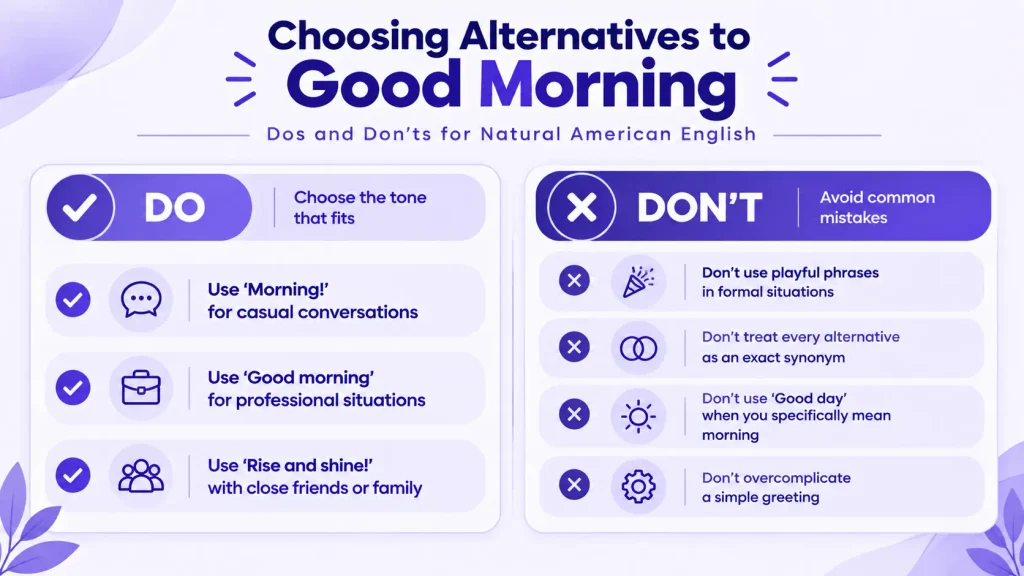
Finding a different greeting does not mean every morning-related expression can replace “good morning.” Some phrases have different meanings or levels of formality.
Using a playful phrase in a formal situation
“Rise and shine!” may sound friendly with a close friend, but it can feel too informal with a client or senior colleague.
For professional communication, use “Good morning.”
Treating every alternative as an exact synonym
“Have a good morning” is a wish, while “Morning!” is a greeting. “Rise and shine!” encourages someone to wake up, while “Good morning” simply greets them.
These expressions are related, but they are not identical.
Using “Good day” when you mean morning
“Good day” is broader than “good morning.” It can refer to the daytime generally.
If you are specifically greeting someone in the morning, “Good morning” is clearer.
Using “Top of the morning!” too seriously
This expression can sound old-fashioned or playful. It is not the most natural choice for ordinary professional or casual American English.
Writing “Goodmorning” as one word
This is one of the most common spelling mistakes related to the phrase.
The standard form is:
Good morning
Not:
Goodmorning
Frequently Asked Questions
What is another way to say goodmorning casually?
“Morning!” is one of the most natural casual alternatives. It is short, friendly, and common in everyday American English.
What is a cute way to say good morning?
“Morning, sunshine!” can sound warm and affectionate when speaking to someone you know well. “Rise and shine!” is another cheerful option.
What is a professional alternative to good morning?
“Good morning” is already the most natural professional greeting. You can also use “Good morning, everyone” or “Good morning, team” when addressing a group.
What can I say instead of good morning in a text?
For a casual text, try “Morning!”, “Good morning to you!”, or “Rise and shine!” Choose the phrase according to your relationship with the recipient.
What is another way to say good morning to a group?
You can say “Morning, everyone!”, “Good morning, everyone,” “Morning, team!”, or “Good morning, team.”
Is “Morning!” Grammatically correct?
Yes. “Morning!” is a common shortened greeting. The full expression is “Good morning,” but native speakers regularly use “Morning!” in casual conversation.
Is “goodmorning” one word?
No. The standard spelling is good morning, with two separate words
Final Takeaway
“Good morning” is already the most natural and versatile morning greeting in American English. If you want something shorter, use “Morning!” For a group, try “Morning, everyone!” or “Morning, team!” For a playful situation, “Rise and shine!” works well. The best alternative depends on the relationship, setting, and tone you want to create.

Role: Language Editor
Caleb Mercer is a Language Editor at RepublicsPress, focusing on grammar, sentence structure, professional writing, and English usage. He helps ensure that language guides are clear, accurate, natural, and easy to follow.