Another Way to Say “Glad to Know”: 15 Natural Alternatives
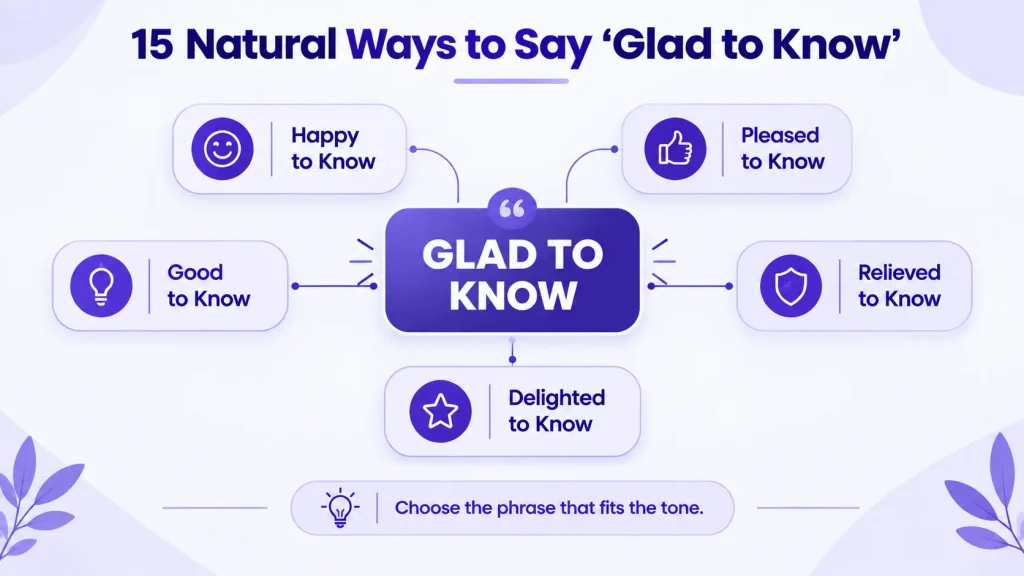
A natural way to say “glad to know” depends on the situation and how strongly you want to express your reaction. Common alternatives include “happy to know,” “pleased to know,” “good to know,” “relieved to know,” “delighted to know,” and “reassured to know.” Each has a slightly different tone or meaning.
Key Takeaways
- “Glad to know” means you feel pleased or happy after learning something.
- “Happy to know” is one of the closest everyday alternatives.
- “Good to know” is more neutral and practical.
- “Pleased to know” works well in professional or formal situations.
- “Relieved to know” specifically suggests that the information removes worry or concern.
- “Delighted to know” expresses stronger happiness and sounds more enthusiastic.
What Does “Glad to Know” Mean?
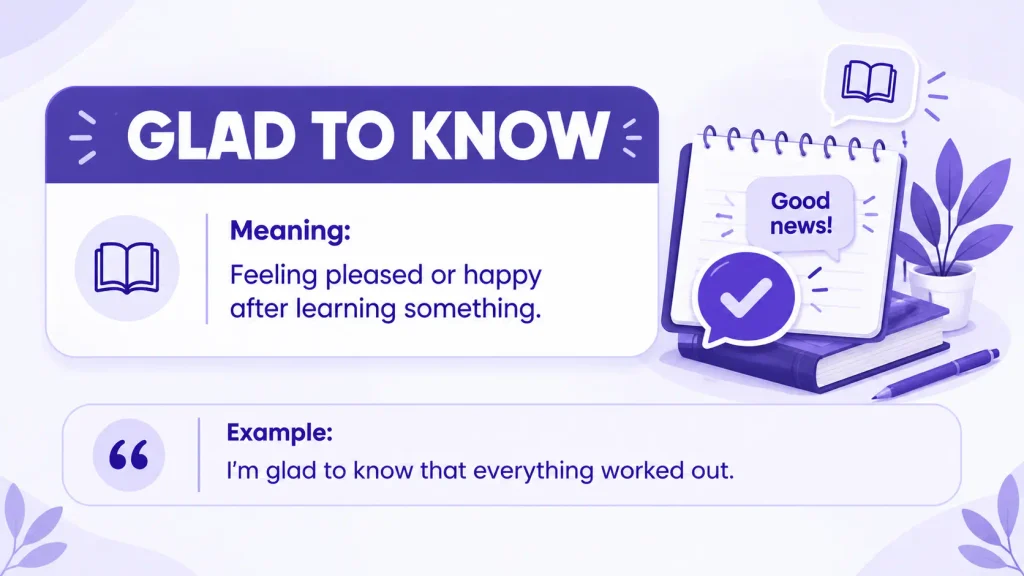
“Glad to know” means that you are pleased or happy because you have learned something. It is commonly used when new information gives you a positive feeling, reassurance, or relief. Dictionaries define “glad” as meaning pleased or happy, and standard examples include “I’m glad to know the parcel arrived safely.”
For example:
“I’m glad to know that everything worked out.”
This means:
“I’m happy or pleased to learn that everything worked out.”
The phrase can work in both casual conversations and professional communication. The best alternative depends on whether you want to sound casual, warm, professional, enthusiastic, or relieved.
15 Natural Ways to Say “Glad to Know”
1. Happy to Know
“Happy to know” is one of the closest alternatives to “glad to know.” It expresses straightforward happiness about information you have learned.
Example:
“I’m happy to know that you’re feeling better.”
Best for: Everyday conversations, friendly messages, and neutral communication.
2. Pleased to Know
“Pleased to know” has a slightly more formal and polished tone than “glad to know.” It can work particularly well in professional communication.
Example:
“We’re pleased to know that the project is progressing as planned.”
Best for: Professional emails, business communication, and formal situations.
3. Good to Know
“Good to know” is shorter and more neutral. Rather than strongly expressing happiness, it often acknowledges that the information is useful, reassuring, or positive.
Example:
“Good to know that the deadline has been extended.”
Best for: Casual conversations, workplace chats, and practical information.
Usage tip: This isn’t always a direct emotional replacement for “glad to know.” It can simply mean that the information is useful.
4. Relieved to Know
“Relieved to know” is appropriate when the information removes worry, fear, or uncertainty.
Example:
“I’m relieved to know that everyone arrived safely.”
Best for: Situations involving concern, uncertainty, or anxiety.
This phrase is more specific than “glad to know.” It suggests that you were worried before receiving the information. Oxford distinguishes “relieved” from more general positive feelings by connecting it with happiness after something unpleasant has stopped or has not happened.
5. Delighted to Know
“Delighted to know” expresses stronger happiness than “glad to know.” It sounds enthusiastic and somewhat more polished.
Example:
“I’m delighted to know that your hard work has paid off.”
Best for: Strongly positive news, formal writing, and enthusiastic responses.
6. Reassured to Know
“Reassured to know” focuses on feeling calmer or more confident because of the information.
Example:
“I’m reassured to know that the team has a backup plan.”
Best for: Professional, serious, or uncertain situations.
This is especially useful when the information doesn’t necessarily make you excited but makes you feel more secure.
7. Happy to Hear That
“Happy to hear that” is a very natural response when someone has just told you some good news.
Example:
“I’m happy to hear that you got the position.”
Best for: Conversations, texts, emails, and friendly professional communication.
If the information comes directly from another person, “happy to hear that” will often sound more natural than “happy to know.”
8. Pleased to Hear That
“Pleased to hear that” is a polished alternative when responding to information someone has shared.
Example:
“I’m pleased to hear that the client approved the proposal.”
Best for: Professional emails, workplace conversations, and formal communication.
9. Glad to Hear That
“Glad to hear that” is extremely close to “glad to know” but emphasizes receiving information from another person.
Example:
“I’m glad to hear that your presentation went well.”
Best for: Everyday conversation, workplace communication, and friendly responses.
Use “know” when emphasizing the fact that you now have information. Use “hear” when reacting to something someone has told you.
10. Great to Know
“Great to know” is casual and positive. It shows that the information is welcome or useful.
Example:
“That’s great to know. I’ll keep that in mind.”
Best for: Casual conversations, messages, and informal workplace communication.
11. Wonderful to Know
“Wonderful to know” expresses stronger positive emotion and can sound warm or appreciative.
Example:
“It’s wonderful to know that so many people enjoyed the event.”
Best for: Warm messages, personal communication, and positive announcements.
12. It’s Reassuring to Know
“It’s reassuring to know” is useful when information gives you confidence or peace of mind.
Example:
“It’s reassuring to know that someone will be available if we need help.”
Best for: Professional, personal, and serious situations.
13. I’m Glad I Know
“I’m glad I know” is slightly different from “I’m glad to know.” It emphasizes that having the information is beneficial.
Example:
“I’m glad I know about the schedule change before the meeting.”
Best for: Practical situations where the information helps you make a decision or prepare.
14. I’m Happy to Learn That
“I’m happy to learn that” emphasizes the process of discovering new information.
Example:
“I’m happy to learn that the program is available to new graduates.”
Best for: Professional, academic, and formal writing.
It can sound less conversational than “I’m happy to hear that,” so choose it when “learn” fits the situation naturally.
15. That’s Wonderful News
“That’s wonderful news” is a warm and enthusiastic response to positive information.
Example:
“You were accepted into the program? That’s wonderful news!”
Best for: Personal conversations, congratulations, and enthusiastic reactions.
It isn’t a grammatical replacement for every sentence containing “glad to know,” but it works very naturally when responding to someone’s good news.
“Glad to Know” vs. Similar Alternatives
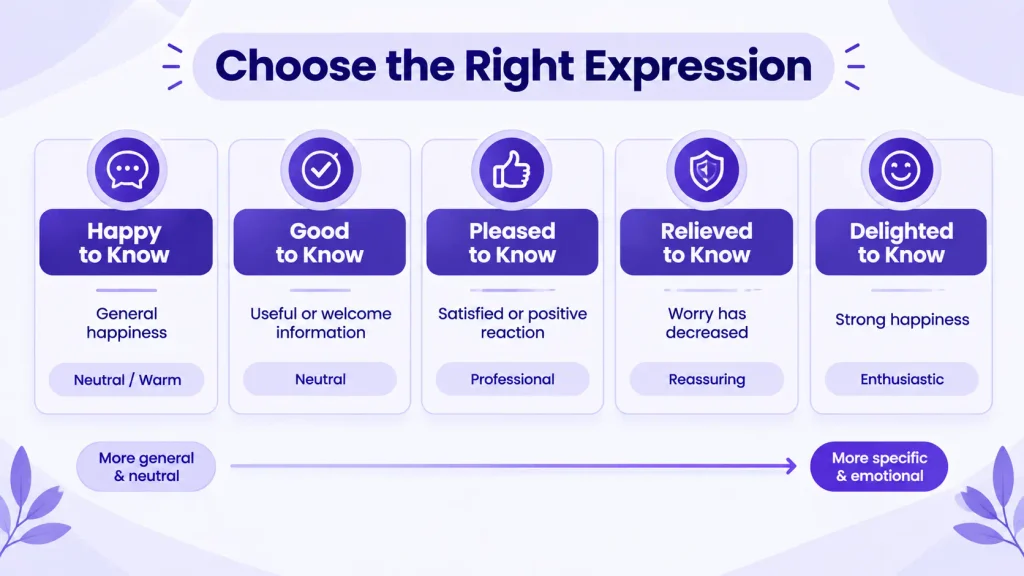
| Alternative | Meaning/Use | Tone | Best Context |
| Happy to know | Happy about new information | Neutral, warm | Everyday communication |
| Pleased to know | Satisfied or happy about information | Polished | Professional writing |
| Good to know | Information is useful or welcome | Neutral | Casual and workplace settings |
| Relieved to know | Worry has been reduced | Reassured | Concerning situations |
| Delighted to know | Very pleased about information | Enthusiastic | Positive or formal situations |
| Reassured to know | Information provides confidence | Calm, serious | Professional or uncertain situations |
| Happy to hear that | Positive reaction to someone’s news | Warm | Conversation and messages |
| Pleased to hear that | Positive reaction with a formal tone | Polished | Workplace communication |
| Great to know | Positive acknowledgment | Casual | Informal conversations |
| Wonderful to know | Strong positive reaction | Warm | Personal communication |
The distinctions matter because these expressions aren’t perfect synonyms. For example, “relieved” adds a sense of worry being removed, while “good to know” can simply acknowledge useful information. “Delighted” also expresses a stronger reaction than ordinary “glad.”
Which Alternative Should You Use?
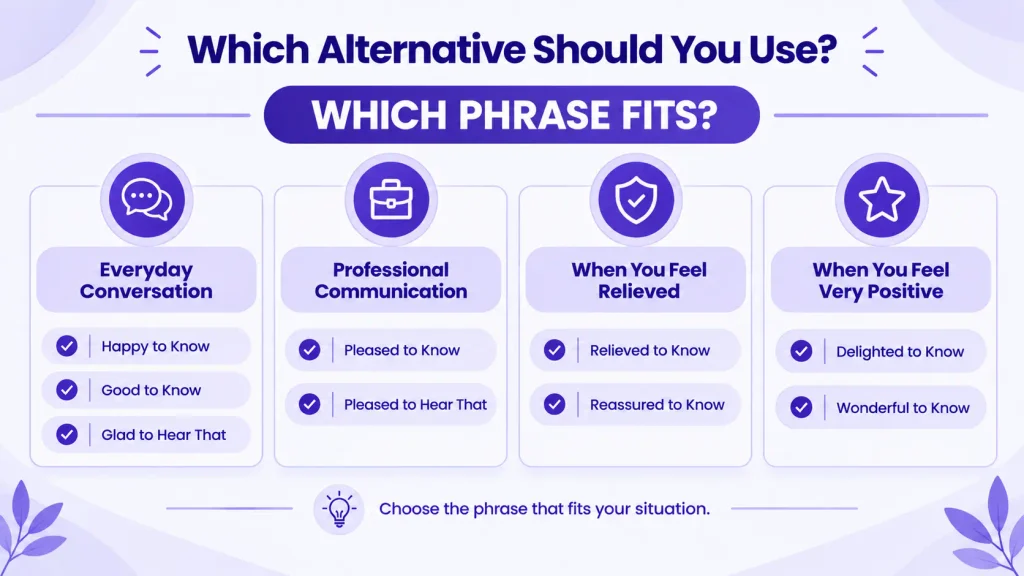
Choose based on the feeling you want to communicate.
For everyday conversation
Use:
- “Happy to know”
- “Good to know”
- “Great to know”
- “Happy to hear that”
- “Glad to hear that”
Example:
“Good to know you’ll be there tomorrow.”
For professional communication
Use:
- “Pleased to know”
- “Pleased to hear that”
- “Reassured to know”
- “Happy to learn that”
Example:
“I’m pleased to hear that the client approved the changes.”
When you feel relieved
Use:
- “Relieved to know”
- “Reassured to know”
- “It’s reassuring to know”
Example:
“I’m relieved to know that the documents arrived safely.”
When you want to sound enthusiastic
Use:
- “Delighted to know”
- “Wonderful to know”
- “That’s wonderful news”
Example:
“I’m delighted to know that you’ve reached your goal.”
“Glad to Know” vs. “Glad to Hear”
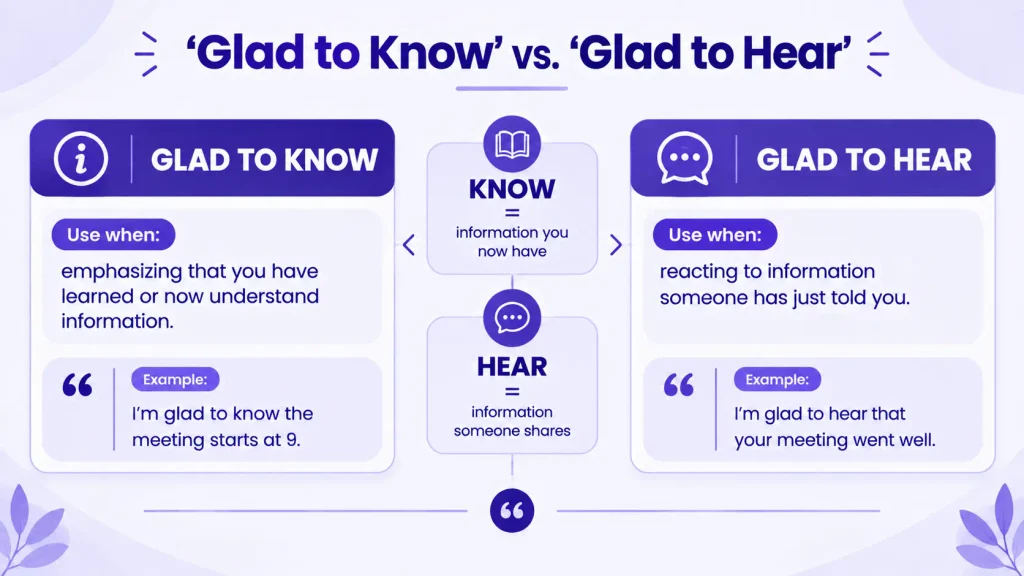
These phrases are closely related, but the context can make one sound more natural than the other.
Use “glad to know” when you are emphasizing the fact that you have learned or now understand something:
“I’m glad to know the meeting starts at 9.”
Use “glad to hear” when someone has just told you information:
“I’m glad to hear that your meeting went well.”
Both are standard English constructions. Oxford specifically lists patterns such as “glad to know,” “glad to hear,” and “glad to see.”
Common Mistakes to Avoid
Treating “good to know” as an exact synonym
“Good to know” often acknowledges useful information without expressing strong happiness.
“Good to know the store closes at 8.”
This doesn’t necessarily mean:
“I’m very happy about this.”
Using “relieved” without a reason for concern
“Relieved to know” suggests that you were worried or uncertain.
“I’m relieved to know everyone is safe.”
This works because there was a reason to worry. For ordinary positive information, “happy to know” may be more appropriate.
Using “delighted” for ordinary information
“Delighted” can sound stronger than necessary.
“I’m delighted to know the meeting starts at 10.”
This is grammatically fine, but “I’m glad to know the meeting starts at 10” may sound more natural if the information is simply useful.
Using “pleased” when you want a very casual tone
“Pleased to know” is correct, but “happy to know” or “good to know” may sound more relaxed in a text to a friend.
Frequently Asked Questions
What is another way to say “glad to know”?
Common alternatives include “happy to know,” “pleased to know,” “good to know,” “relieved to know,” “delighted to know,” and “reassured to know.” The best choice depends on the tone and situation.
Is “happy to know” the same as “glad to know”?
They are very close. Both can express happiness about information you have learned. “Glad” can sometimes carry a sense of gratitude or relief, while “happy” is broader.
Is “good to know” a professional phrase?
Yes. “Good to know” is natural in many workplace conversations and messages. However, it is relatively neutral and conversational, so “pleased to know” may be a better choice for more formal writing.
What is a formal way to say “glad to know”?
“Pleased to know,” “pleased to hear that,” and “delighted to know” can work in formal settings. Choose based on how strong and enthusiastic you want the response to sound.
What is a casual way to say “glad to know”?
“Good to know,” “great to know,” and “happy to know” are natural casual alternatives. When responding directly to someone’s news, “glad to hear that” is also very common.
How do you say “glad to know” in an email?
For a professional email, you can write “I’m pleased to know,” “I’m pleased to hear that,” or “I’m glad to hear that.” The right choice depends on how formal the email needs to be.
Is “relieved to know” stronger than “glad to know”?
It is more specific rather than simply stronger. “Relieved to know” indicates that the information has reduced worry or uncertainty, while “glad to know” can express general happiness or satisfaction.
Final Thoughts
“Glad to know” is already a natural American English expression, so you don’t need to replace it simply for the sake of variety. When you do want a different expression, choose according to the meaning you want: “happy to know” for general warmth, “good to know” for neutral acknowledgment, “pleased to know” for a polished tone, “relieved to know” for reduced worry, and “delighted to know” for stronger enthusiasm.

Role: Editorial Contributor
Graham Ellis contributes practical English and communication guides to RepublicsPress. His content focuses on vocabulary, writing techniques, word usage, and clear communication, with an emphasis on straightforward explanations and real-world examples.