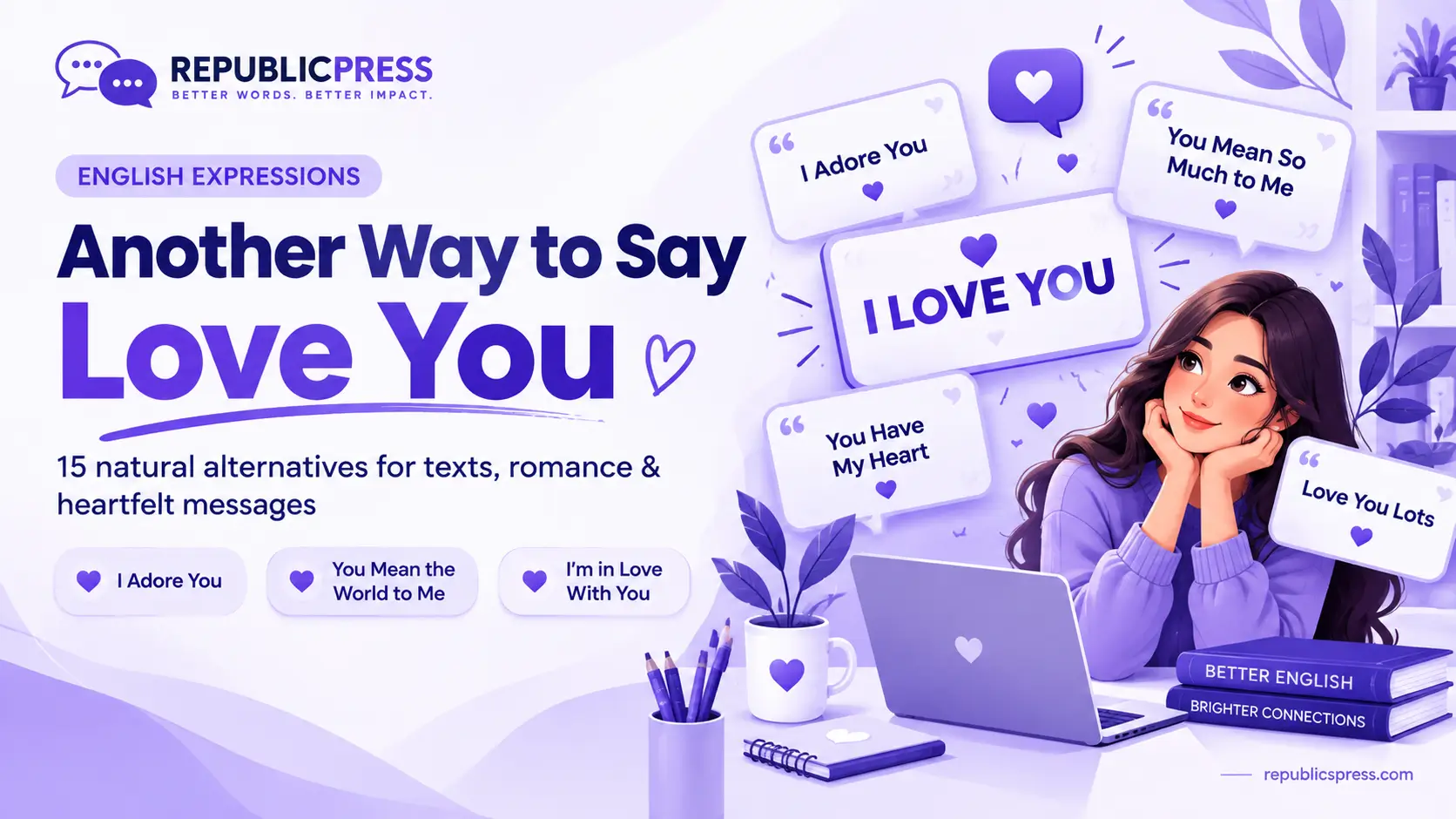
Another Way to Say Love You: 15 Natural Alternatives
If you want a different way to express “I love you,” you have plenty of natural options. Some sound romantic, while others work better for family, close friends, texts, or heartfelt messages. The best choice depends on your relationship and the feeling you want to convey.
Key Takeaways
- “I adore you” is warm and strongly affectionate.
- “You mean so much to me” works well when you want to express deep care.
- “You mean the world to me” has a strong emotional tone.
- “Love ya” and “Love you lots” are casual choices for texts and everyday conversations.
- Some phrases express appreciation or affection rather than romantic love.
- The right expression depends on your relationship, tone, and situation.
What Does “I Love You” Mean?
“I love you” is a direct way to express strong affection, emotional attachment, or deep care for someone. It can be romantic, but it is also commonly used between family members and close friends.
Because the phrase is so familiar, you may sometimes want something that sounds more personal, casual, emotional, or specific to the situation.
15 Natural Ways to Express Love

1. I Adore You
“I adore you” is a warm and affectionate expression. It can sound romantic, but it can also be playful or deeply caring depending on the relationship.
Example:
“You’re such a wonderful person. I adore you.”
Best for: Romantic relationships, close relationships, and heartfelt messages.
2. I’m in Love With You
This is a strong and clearly romantic expression. It communicates romantic feelings rather than simple affection or friendship.
Example:
“I’ve been wanting to tell you that I’m in love with you.”
Best for: Romantic relationships and serious emotional conversations.
3. You Mean So Much to Me
This phrase focuses on someone’s importance in your life. It is emotional without always sounding as direct as “I love you.”
Example:
“Thank you for always being there for me. You mean so much to me.”
Best for: Partners, family members, and close friends.
4. I’m Very Fond of You
“I’m very fond of you” expresses genuine affection and warmth. It is softer than “I’m in love with you” and can sound slightly more reserved.
Example:
“I’ve really enjoyed getting to know you. I’m very fond of you.”
Best for: Gentle, warm, or slightly understated messages.
5. You Mean the World to Me
This is a deeply affectionate expression that tells someone they are extremely important to you.
Example:
“You’ve supported me through so much. You mean the world to me.”
Best for: Romantic partners, family, and heartfelt occasions.
6. I Care About You Deeply
This phrase emphasizes sincere emotional care. It can work when you want to communicate strong feelings without making the message overly romantic.
Example:
“I want you to know that I care about you deeply.”
Best for: Serious conversations, close relationships, and emotional messages.
7. You Have My Heart
“You have my heart” is poetic and strongly romantic. It suggests deep emotional connection and devotion.
Example:
“No matter where life takes us, you have my heart.”
Best for: Romantic messages, cards, and meaningful occasions.
8. I’m So Lucky to Have You
This expression combines affection with gratitude. Instead of directly naming the feeling, it shows how much you value having that person in your life.
Example:
“Thank you for making every day better. I’m so lucky to have you.”
Best for: Romantic partners, close friends, and family.
9. You’re So Special to Me
This is a gentle way to tell someone they hold an important place in your life.
Example:
“I hope you know how special you are to me.”
Best for: Romantic relationships, family, and close friendships.
10. I’m So Grateful for You
This phrase focuses on appreciation and gratitude. It does not always mean romantic love, which makes it useful in many relationships.
Example:
“I’m so grateful for you and everything you’ve done for me.”
Best for: Family, friends, partners, and heartfelt thank-you messages.
11. Love Ya
“Love ya” is a casual version of “love you.” It sounds relaxed and conversational rather than formal or dramatic.
Example:
“Thanks for checking on me. Love ya!”
Best for: Text messages, close friends, family, and casual conversations.
12. Love You Lots
“Love you lots” sounds warm, friendly, and affectionate. It is especially natural in texts and personal messages.
Example:
“Hope you have an amazing day. Love you lots!”
Best for: Casual texts, family, partners, and close friends.
13. I Cherish You
“I cherish you” expresses deep appreciation and affection. It can sound more formal or poetic than everyday expressions.
Example:
“I cherish every moment we spend together.”
Best for: Romantic messages, cards, anniversaries, and heartfelt writing.
14. You’re Everything to Me
This is an intense and emotional expression. It suggests that the person has an extremely important place in your life.
Example:
“You’ve stood by me through everything. You’re everything to me.”
Best for: Deeply emotional or romantic messages.
15. I’m So Happy to Have You in My Life
This phrase expresses affection, appreciation, and happiness at having someone around.
Example:
“I’m so happy to have you in my life. You make difficult days easier.”
Best for: Partners, family members, and close friends.
Which Expression Should You Choose?
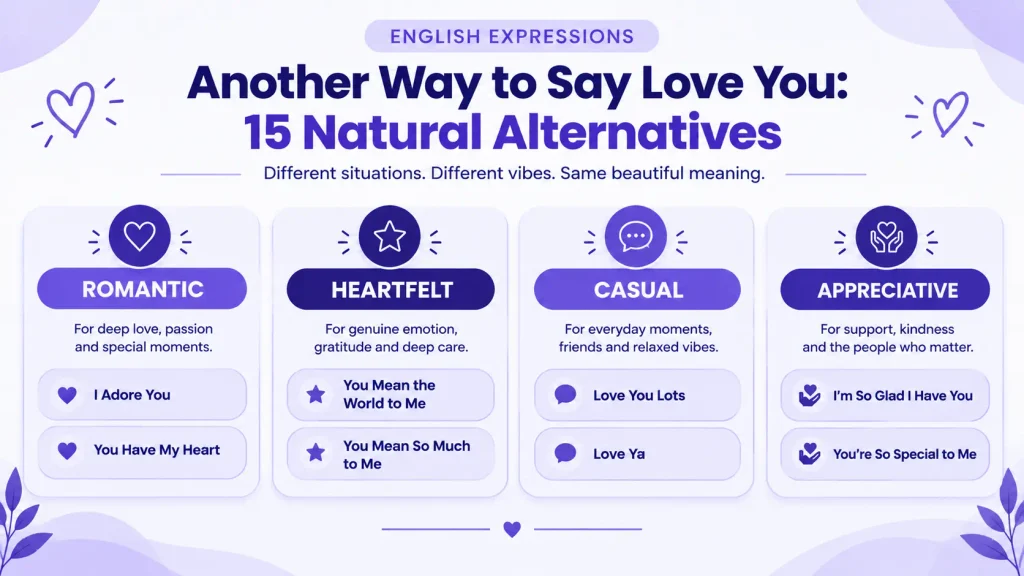
The best phrase depends on the relationship and the tone you want.
| Expression | Tone | Best Context |
|---|---|---|
| I Adore You | Warm, affectionate | Romance or close relationships |
| I’m in Love With You | Strong, romantic | Romantic relationships |
| You Mean So Much to Me | Emotional, sincere | Family, friends, romance |
| I’m Very Fond of You | Gentle, understated | Warm personal messages |
| You Mean the World to Me | Deep, emotional | Romance or family |
| I Care About You Deeply | Sincere, serious | Close relationships |
| You Have My Heart | Romantic, poetic | Partners |
| I’m So Lucky to Have You | Warm, grateful | Partners, friends, family |
| You’re So Special to Me | Sweet, gentle | Close relationships |
| I’m So Grateful for You | Appreciative | Friends, family, partners |
| Love Ya | Casual | Texts, friends, family |
| Love You Lots | Casual, warm | Texts and close relationships |
| I Cherish You | Deep, heartfelt | Romance or meaningful occasions |
| You’re Everything to Me | Intense, emotional | Romantic messages |
| I’m So Happy to Have You in My Life | Warm, appreciative | Close relationships |
How to Choose the Right Phrase
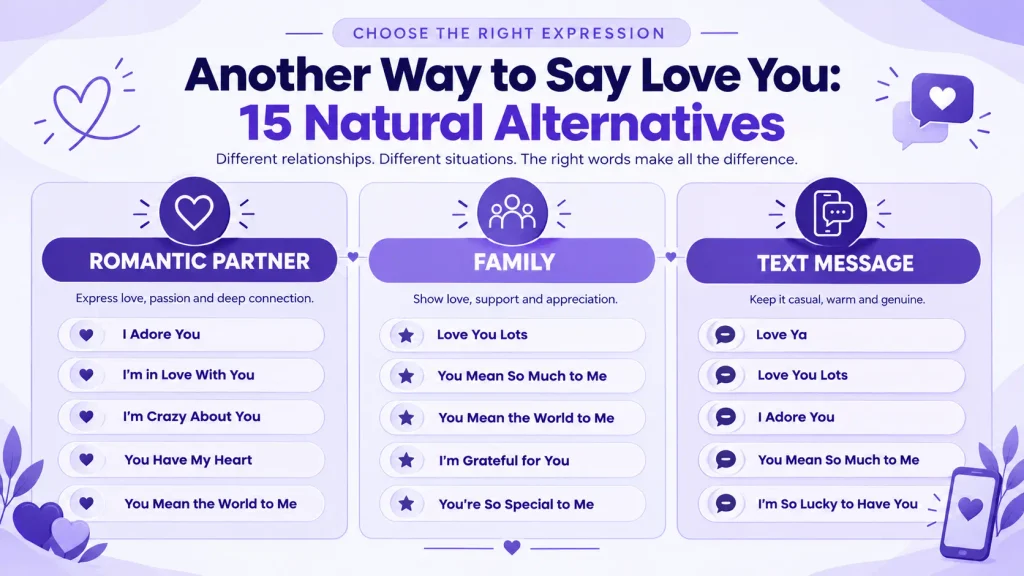
Think about three things before choosing an expression: your relationship, your tone, and the strength of the feeling.
For a Romantic Partner
If you want a clearly romantic message, try:
- “I’m in love with you.”
- “I adore you.”
- “You have my heart.”
- “You mean the world to me.”
- “I cherish you.”
For something softer, “You mean so much to me” can feel personal without sounding overly intense.
For Family
Family messages often sound more natural when they combine affection with appreciation.
Try:
- “You mean so much to me.”
- “I’m so grateful for you.”
- “You’re so special to me.”
- “I’m so happy to have you in my life.”
For Close Friends
Not every expression of love has to sound romantic. With close friends, phrases such as “I’m so grateful for you” or “You mean so much to me” can communicate genuine affection while keeping the message friendly.
For Text Messages
Short expressions usually feel most natural in casual texts:
- “Love ya!”
- “Love you lots!”
- “You mean so much to me.”
- “I’m so lucky to have you.”
The shorter options can feel especially natural when you’re replying to someone you already have a close relationship with.
Common Mistakes to Avoid
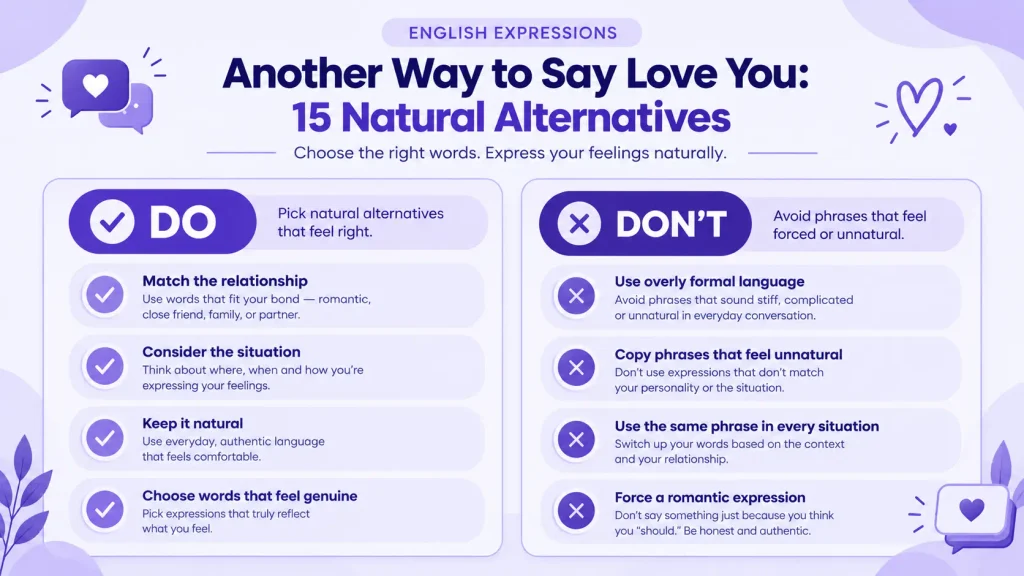
Using a Romantic Phrase With the Wrong Audience
“I’m in love with you” clearly suggests romantic feelings. It may create confusion if you intend to send a friendly or family message.
Choosing an Expression That Feels Too Intense
“You’re everything to me” is much stronger than “You’re so special to me.” Think about how serious or emotional you want the message to sound.
Using Formal Language in a Casual Text
“I cherish you” can be beautiful, but it may sound more serious or poetic than “Love ya” in an everyday text.
Treating Every Phrase as an Exact Synonym
These expressions do not all have exactly the same meaning. Some communicate romantic love, while others focus on appreciation, gratitude, emotional closeness, or affection.
FAQ
What is a sweet way to say “I love you”?
“You mean the world to me,” “You’re so special to me,” and “I adore you” are sweet alternatives. The best choice depends on how romantic or emotional you want the message to sound.
What is a romantic alternative to “I love you”?
“I’m in love with you,” “You have my heart,” and “I cherish you” are clearly romantic options.
How can I say “I love you” casually?
For a relaxed message, try “Love ya” or “Love you lots.” These sound natural in casual texts and conversations.
How can I express love without saying “I love you”?
You can focus on the person’s importance or your appreciation for them. For example, “You mean so much to me,” “I’m so grateful for you,” or “I’m so happy to have you in my life.”
What can I say instead of “I love you” to a family member?
“You mean the world to me,” “I’m so grateful for you,” and “You’re so special to me” can work well for family members.
What can I say instead of “I love you” in a text?
“Love ya,” “Love you lots,” and “You mean so much to me” are easy, natural choices for texting.
Is “I adore you” stronger than “I love you”?
“I adore you” expresses strong affection, but the emotional meaning depends on the situation. In a romantic relationship, it can sound very affectionate without necessarily carrying exactly the same meaning as “I love you.”
Final Thoughts
There are many ways to express deep affection without repeating the same words every time. A romantic message may call for “I’m in love with you” or “You have my heart,” while a message to a friend or family member may feel more natural with “You mean so much to me” or “I’m so grateful for you.”
Choose the expression that matches your relationship and the feeling you want to communicate. The most natural message is usually the one that sounds like something you would genuinely say.

Role: Editorial Contributor
Graham Ellis contributes practical English and communication guides to RepublicsPress. His content focuses on vocabulary, writing techniques, word usage, and clear communication, with an emphasis on straightforward explanations and real-world examples.