Another Way to Say “It’s OK”: 10 Natural Alternatives for Everyday English
If you’re looking for another way to say “it’s OK,” the best choice depends on what you mean. For reassurance, you can say “no problem” or “don’t worry about it.” For agreement, “that works for me” is more natural. In professional situations, “that’s fine” or “that works” may sound better.
Key Takeaways
- “No problem” is a common casual response when someone apologizes or asks for a favor.
- “That’s fine” works well in neutral and professional conversations.
- “Don’t worry about it” reassures someone who feels concerned or apologetic.
- “That works for me” shows that you agree with a plan or suggestion.
- “All good” is friendly and informal.
- The best alternative depends on whether “it’s OK” means agreement, reassurance, acceptance, or approval.
What Does “It’s OK” Mean?
The phrase “it’s OK” can express several different ideas. That is why there is no single replacement that works in every situation.
You might say “it’s OK” to:
- Reassure someone after a mistake
- Accept an apology
- Agree to a suggestion
- Say that something is acceptable
- Show that you are not upset
- Approve a plan or decision
For example:
“Sorry I’m late.”
You might respond, “It’s OK.”
But if someone asks:
“Can we meet at 3 p.m. instead?”
A more natural response may be “That works for me.”
The meaning stays similar, but the best wording changes with the situation.
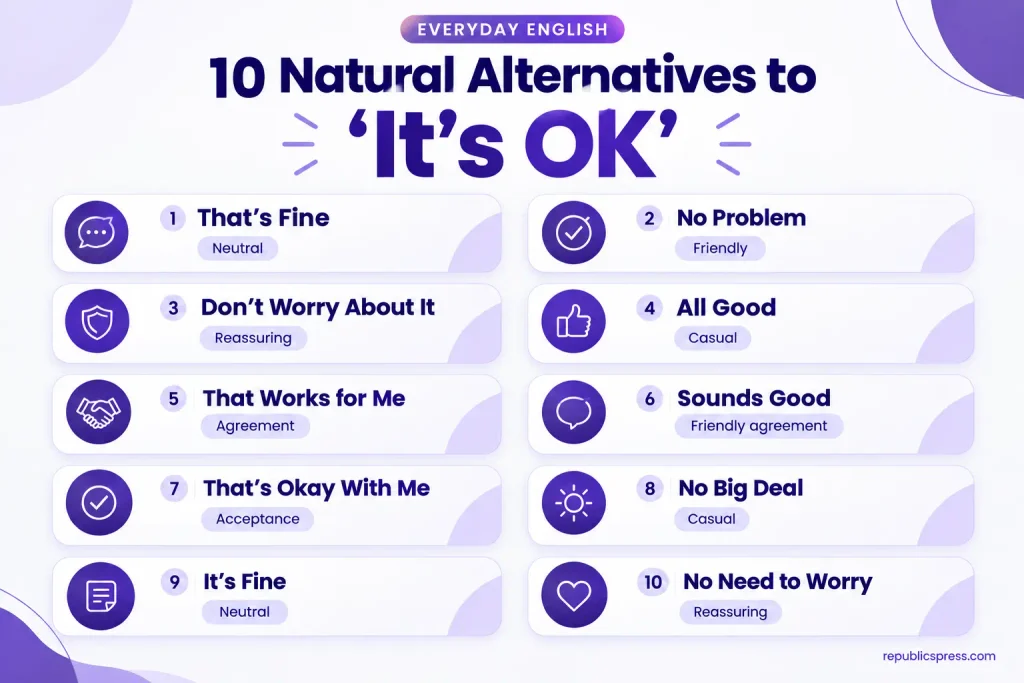
10 Natural Alternatives to “It’s OK”
1. That’s Fine
“That’s fine” is one of the closest neutral alternatives to “it’s OK.”
It can show acceptance without sounding too casual or overly emotional.
Example:
“Would it be OK if I sent the file tomorrow?”
“Yes, that’s fine.”
Best for: Neutral conversations, workplace communication, and everyday situations.
Tip: “That’s fine” can sometimes sound slightly less warm than “no problem,” especially when responding to an apology.
2. No Problem
“No problem” is a very common way to reassure someone or accept an apology.
Example:
“Sorry, I forgot to call you.”
“No problem. Just call me when you’re free.”
It can also respond to a request:
“Thanks for helping me with this.”
“No problem.”
Best for: Casual conversations, friendly messages, and everyday interactions.
Tip: This phrase is usually warm and relaxed, but it may be less suitable than a more formal response in certain professional situations.
3. Don’t Worry About It
Use “don’t worry about it” when you want to reassure someone that a problem is not serious.
Example:
“I’m sorry I spilled some water on the table.”
“Don’t worry about it. I’ll clean it up.”
It focuses more on reassurance than simple approval.
Best for: Apologies, small mistakes, and situations where someone feels concerned.
Tip: This phrase can sound caring and reassuring, but it does not always mean that you agree with a proposal.
4. All Good
“All good” is a short, friendly expression that means everything is fine.
Example:
“Sorry about the mix-up.”
“All good. We figured it out.”
It is especially common in casual spoken English and text messages.
Best for: Friends, informal conversations, texting, and relaxed workplace communication.
Tip: Avoid it in very formal writing, such as a formal business letter or academic paper.
5. That Works for Me
When “it’s OK” means “I agree with that plan,” “that works for me” is often a better choice.
Example:
“Can we move the meeting to Friday?”
“Sure, that works for me.”
It clearly communicates agreement.
Best for: Scheduling, plans, work discussions, and everyday decisions.
Tip: Use this when you want to say that a suggestion is acceptable to you.
6. Sounds Good
“Sounds good” is a natural way to agree with a suggestion or plan.
Example:
“Let’s meet for coffee after work.”
“Sounds good.”
It feels positive and conversational.
Best for: Friends, coworkers, texts, and informal conversations.
Tip: “Sounds good” is more clearly positive than the sometimes-neutral “it’s OK.”
7. That’s Okay With Me
“That’s okay with me” is useful when you want to show that you accept a particular choice or arrangement.
Example:
“If you’d rather start tomorrow, that’s okay with me.”
The phrase makes your personal approval clear.
Best for: Everyday conversations, decisions, plans, and polite agreement.
Tip: It is especially useful when another person is checking whether you are comfortable with a decision.
8. No Big Deal
“No big deal” means that something is not important or serious enough to worry about.
Example:
“Sorry I forgot to bring your book.”
“No big deal. You can bring it tomorrow.”
Best for: Casual conversations and reassuring someone about a small mistake.
Tip: Because it is informal, it may sound too relaxed in a formal workplace situation.
9. It’s Fine
“It’s fine” can directly replace “it’s OK” in many situations.
Example:
“Is it OK if I leave early today?”
“Yes, it’s fine.”
It can also reassure someone:
“I’m sorry about what happened.”
“It’s fine.”
Best for: Neutral everyday situations and simple acceptance.
Tip: Tone matters. When spoken sharply, “it’s fine” can sometimes sound annoyed or dismissive even when the words suggest acceptance.
10. No Need to Worry
“No need to worry” is a reassuring alternative when someone is concerned about a problem.
Example:
“I’m worried that I caused a problem.”
“No need to worry. Everything has been taken care of.”
Best for: Reassurance, polite conversations, and situations involving concern.
Tip: This phrase is about reducing someone’s worry. It is not always a direct replacement when “it’s OK” means agreement.
Which Alternative Should You Use?
The right phrase depends on what you want to communicate.
| Alternative | Main Meaning | Tone | Best Context |
| That’s fine | Acceptable | Neutral | Everyday and professional |
| No problem | No issue | Friendly | Casual and everyday |
| Don’t worry about it | No need for concern | Reassuring | Apologies and mistakes |
| All good | Everything is fine | Casual | Friends and texting |
| That works for me | I agree with the plan | Neutral | Meetings and decisions |
| Sounds good | I agree | Friendly | Plans and suggestions |
| That’s okay with me | I accept it | Neutral | Decisions and arrangements |
| No big deal | It is not serious | Casual | Small mistakes |
| It’s fine | It is acceptable | Neutral | Everyday situations |
| No need to worry | Everything is under control | Reassuring | Concerns and problems |
Another Way to Say “It’s OK” After an Apology
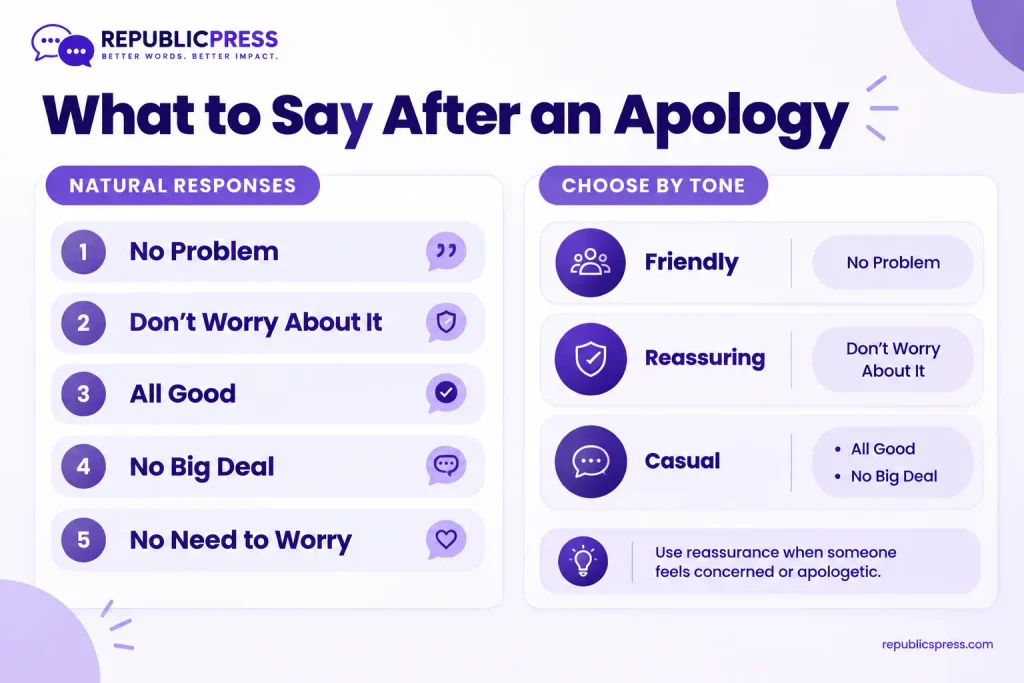
When someone apologizes, the most natural alternatives usually focus on reassurance.
You can say:
- No problem.
- Don’t worry about it.
- All good.
- No big deal.
- It’s fine.
- No need to worry.
For example:
“Sorry I missed your call.”
Instead of:
“It’s OK.”
You could say:
“No problem. Give me a call when you’re free.”
Or:
“Don’t worry about it. We can talk later.”
These responses sound more specific because they address the person’s concern directly.
Another Way to Say “It’s OK” When You Agree
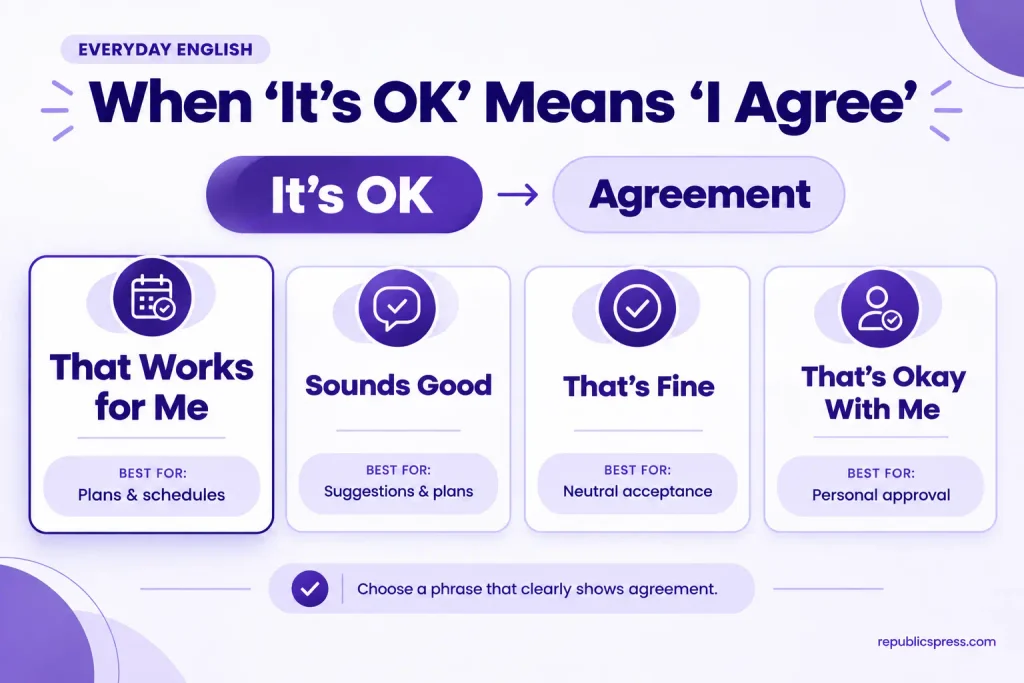
If someone asks whether a plan or suggestion is acceptable, choose a phrase that clearly shows agreement.
For example:
“Can we meet at 4 instead?”
Natural responses include:
- That works for me.
- Sounds good.
- That’s fine with me.
- That’s okay with me.
- Sure, that works.
In this situation, “That works for me” is especially clear because it tells the other person that the proposed arrangement is acceptable.
Professional Alternatives to “It’s OK”
In workplace communication, you may want something more precise than “it’s OK.”
Good options include:
- That’s fine.
- That works for me.
- That sounds good.
- I’m fine with that.
- That’s acceptable.
For example:
Casual:
“Yeah, it’s OK.”
Professional:
“That works for me.”
Or:
“That’s fine. Please send the updated version when it’s ready.”
The goal is not to make every message more formal. Instead, choose wording that clearly communicates your decision.
Casual Alternatives for Texting
In texts and informal conversations, shorter expressions often sound more natural.
Try:
- All good
- No problem
- Sounds good
- No big deal
- That’s fine
- Sure, works for me
For example:
“Sorry, I’m running 10 minutes late.”
A natural text response could be:
“All good!”
Or:
“No problem. See you soon.”
Common Mistakes When Replacing “It’s OK”

Using “Sounds Good” for an Apology
“Sounds good” normally responds to a suggestion or plan.
Less natural:
“Sorry I broke the cup.”
“Sounds good.”
Better:
“Sorry I broke the cup.”
“No problem. Don’t worry about it.”
Using Very Casual Phrases in Formal Writing
Expressions such as “all good” and “no big deal” work well in conversation, but they may sound too casual in formal communication.
For a professional email, “That’s fine” or “That works for me” is usually a safer choice.
Assuming Every Alternative Has the Same Meaning
The phrases above are related to “it’s OK,” but they are not interchangeable in every sentence.
For example:
- “That works for me” = I agree with the plan.
- “Don’t worry about it” = You do not need to be concerned.
- “Sounds good” = I like or accept the suggestion.
- “No big deal” = The problem is minor.
Understanding the difference helps your English sound more natural.
Frequently Asked Questions
What is another way to say “it’s OK” politely?
You can say “that’s fine,” “that works for me,” “no problem,” or “that’s okay with me.” The best option depends on whether you are accepting a plan, responding to an apology, or reassuring someone.
What is a casual way to say “it’s OK”?
“All good,” “no problem,” “sounds good,” and “no big deal” are common casual alternatives. “All good” is especially natural in texts and relaxed conversations.
What can I say instead of “it’s OK” after someone says sorry?
Try “no problem,” “don’t worry about it,” “all good,” or “no big deal.” These phrases reassure the person that their mistake or action is not causing a serious problem.
What is a professional way to say “it’s OK”?
In professional communication, “that’s fine,” “that works for me,” or “that’s acceptable” can work well. Choose the phrase based on whether you are agreeing to a plan or simply confirming that something is acceptable.
Is “all good” the same as “it’s OK”?
They can have a similar meaning, but “all good” is more casual. It often means that there is no problem or hard feelings. “It’s OK” is more neutral and can work in a wider range of situations.
Is “no problem” a good response to “sorry”?
Yes. “No problem” is a very common response to an apology, especially in casual or everyday conversation. It tells the other person that you are not upset about what happened.
What is the difference between “that’s fine” and “that works for me”?
“That’s fine” means something is acceptable. “That works for me” more clearly means that you agree with a particular plan or arrangement.
Can “it’s fine” sound rude?
It can, depending on the speaker’s tone and the situation. A short “It’s fine” may sometimes sound annoyed or dismissive. If you want to sound warmer, try “No problem” or “Don’t worry about it.”
Final Thoughts
There are many natural ways to say “it’s OK,” but the best choice depends on your intended meaning. Use “no problem” or “don’t worry about it” when reassuring someone. Choose “that works for me” or “sounds good” when agreeing to a plan. For a neutral response, “that’s fine” is a reliable choice.
The key is to match the phrase to the situation rather than treating every alternative as an exact synonym.

Role: Language Editor
Caleb Mercer is a Language Editor at RepublicsPress, focusing on grammar, sentence structure, professional writing, and English usage. He helps ensure that language guides are clear, accurate, natural, and easy to follow.