
Another Way to Say “The Reason for This”: 10 Better Alternatives
Common alternatives to “the reason for this” include “the explanation for this,” “the cause of this,” “the reason behind this,” “why this happened,” “what caused this,” and “the basis for this.” The best choice depends on whether you want a casual, professional, academic, or more direct tone.
Key Takeaways
- “The reason behind this” is one of the closest natural alternatives.
- “The cause of this” works best when discussing an event, problem, or result.
- “The explanation for this” is useful when you want to understand or explain something.
- “Why this happened” sounds natural and conversational.
- “The basis for this” is more formal and works well for decisions, claims, or policies.
- Not every alternative has exactly the same meaning, so context matters.
What Does “The Reason for This” Mean?
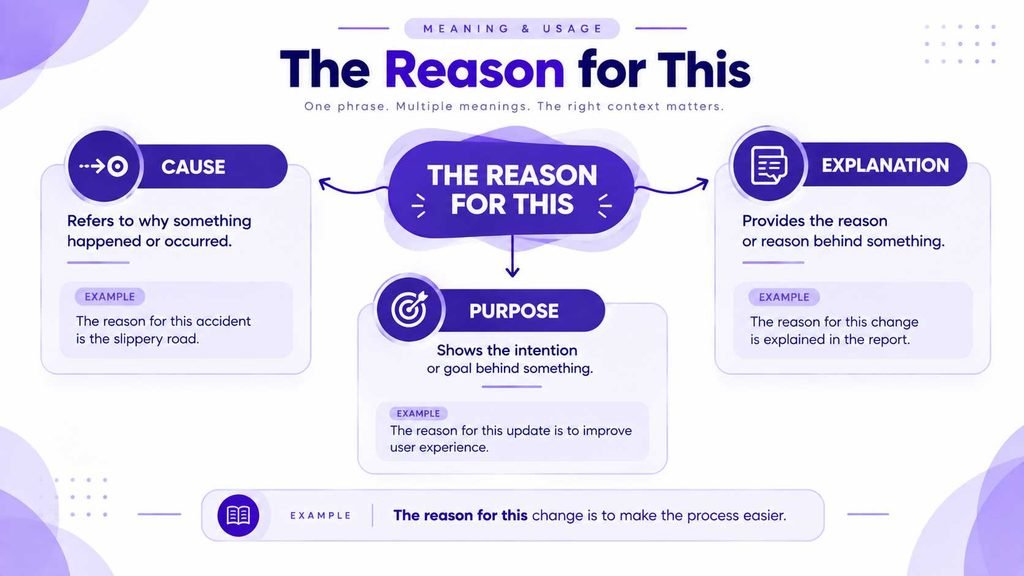
“The reason for this” refers to the cause, explanation, or purpose behind something.
For example:
“The reason for this change is to make the process easier.”
Here, the phrase asks or explains why the change occurred.
The expression is grammatically correct and common in American English, but you may want an alternative when you’re writing an essay, email, report, explanation, or everyday message and want your wording to sound more precise or varied.
10 Natural Alternatives to “The Reason for This”

1. The Reason Behind This
Best for: General, professional, and neutral writing
“The reason behind this” is probably the closest replacement for “the reason for this.” It emphasizes the explanation or motivation behind an action, decision, or situation.
Example:
The reason behind this decision is the company’s need to reduce operating costs.
Usage tip:
Use this when you want to focus on what motivated something, rather than simply identifying a physical cause.
2. The Explanation for This
Best for: Explanations, reports, formal writing, and problem-solving
“The explanation for this” works well when something is confusing, unexpected, or needs clarification.
Example:
Scientists are still looking for an explanation for this unusual result.
This phrase focuses more on understanding why something happened than on identifying a direct cause.
3. The Cause of This
Best for: Problems, events, effects, and results
Use “the cause of this” when you’re specifically talking about what produced or led to an outcome.
Example:
The cause of this delay was a technical problem with the system.
There is a subtle difference between “reason” and “cause.” A cause produces an event or result, while a reason can also describe someone’s motivation or justification.
4. Why This Happened
Best for: Conversational and straightforward writing
“Why this happened” is often more natural than “the reason for this” when discussing an event.
Example:
We need to understand why this happened before making any changes.
It sounds direct and conversational without being overly informal.
5. What Caused This
Best for: Direct questions and problem-solving
“What caused this?” is a concise way to ask about the source of a problem, event, or result.
Example:
The first step is to determine what caused this.
This alternative is particularly useful when you’re investigating something that went wrong.
6. The Explanation Behind This
Best for: General explanations and discussions
“The explanation behind this” can be used when discussing the thinking, logic, or circumstances that explain something.
Example:
There is a simple explanation behind this pattern.
However, “the explanation for this” is often more direct when you simply want to state why something occurred.
7. The Basis for This
Best for: Formal, professional, and academic writing
“The basis for this” refers to the facts, reasoning, evidence, or principles supporting something.
Example:
The report explains the basis for this recommendation.
This is not a universal replacement for “the reason for this.” It works particularly well when discussing a decision, argument, recommendation, or claim.
8. The Rationale for This
Best for: Professional, academic, and business writing
“Rationale” means the reasoning behind a decision, action, or approach.
Example:
The manager explained the rationale for this change during the meeting.
This is a strong choice when you’re explaining why a particular decision or policy was made.
9. The Motivation Behind This
Best for: Intentions, decisions, actions, and behavior
“The motivation behind this” focuses on the intention or driving force behind something.
Example:
The motivation behind this project was to improve access to educational resources.
Use it when the subject involves a person’s, group’s, or organization’s intentions.
10. The Cause Behind This
Best for: Casual or explanatory contexts
“The cause behind this” can sometimes be used to emphasize what is responsible for an outcome.
Example:
Researchers are investigating the cause behind this sudden increase.
That said, “the cause of this” is generally more concise and idiomatic, especially in formal writing.
Which Alternative Should You Use?
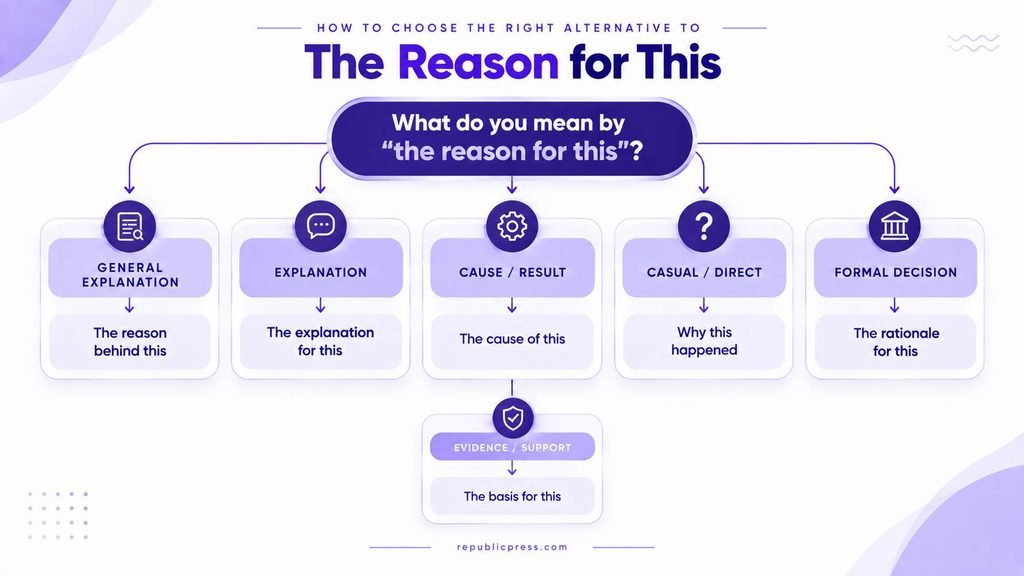
The right phrase depends on what you mean by “the reason for this.”
| Alternative | Main Meaning | Tone | Best Context |
| The reason behind this | Explanation or motivation | Neutral | General, professional |
| The explanation for this | What explains something | Neutral | Reports, discussions |
| The cause of this | What produced a result | Neutral/Formal | Problems, events |
| Why this happened | Why an event occurred | Conversational | Everyday writing |
| What caused this | What produced something | Direct | Questions, troubleshooting |
| The explanation behind this | Reason or logic behind something | Neutral | General explanations |
| The basis for this | Supporting reasoning or evidence | Formal | Academic, professional |
| The rationale for this | Reasoning behind a decision | Formal | Business, academic |
| The motivation behind this | Intention or driving force | Neutral/Formal | Decisions, behavior |
| The cause behind this | Source of an outcome | Neutral | Explanatory contexts |
Alternatives for Different Writing Situations
For Everyday Conversation
If you’re speaking casually, these options usually sound the most natural:
- Why this happened
- Why this is happening
- What caused this
- The reason behind this
For example:
I don’t understand why this happened.
This generally sounds more natural in conversation than:
I don’t understand the reason for this.
For Professional Writing
In a workplace email, report, or business document, consider:
- The reason behind this
- The rationale for this
- The basis for this
- The explanation for this
Example:
Could you explain the rationale for this change?
This sounds more professional when asking about a business decision.
For Academic Writing
Academic writing often benefits from more precise language:
- The cause of this
- The basis for this
- The rationale for this
- The explanation for this
Example:
The study examines the causes of this decline.
Be careful with “rationale,” though. It usually refers to reasoning behind a choice or approach, not the physical cause of an event.
For Explaining a Problem
If you’re trying to identify what went wrong, use:
- The cause of this
- What caused this
- Why this happened
- The explanation for this
Example:
We need to determine what caused this error.
That’s more precise than simply saying:
We need to determine the reason for this error.
“Reason,” “Cause,” and “Rationale”: What’s the Difference?
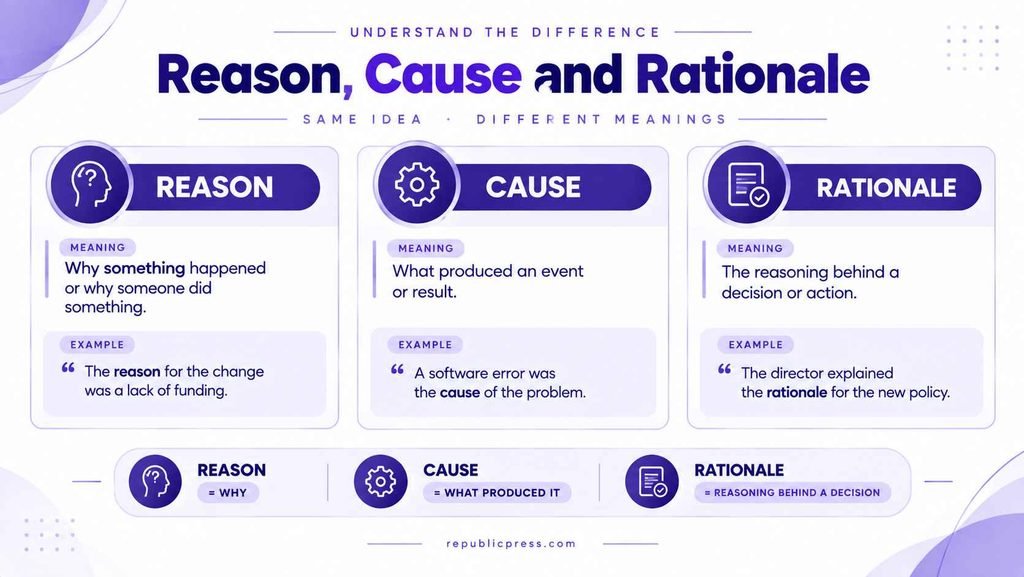
These words are related, but they aren’t interchangeable in every sentence.
Reason is broad. It can describe an explanation, motivation, or justification.
The reason for the change was a lack of funding.
Cause usually refers to something that produces an effect or event.
A software error was the cause of the problem.
Rationale refers to the reasoning used to support a decision or action.
The director explained the rationale for the new policy.
A simple way to remember the distinction is:
Reason = why
Cause = what produced it
Rationale = reasoning behind a decision
Common Mistakes to Avoid
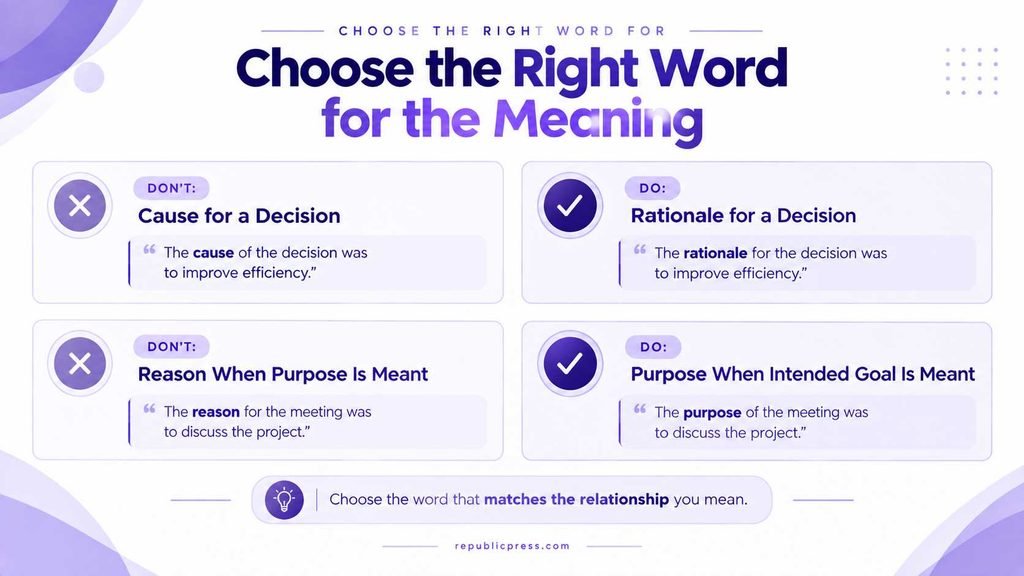
Using “Cause” When You Mean “Purpose”
These aren’t always the same.
The reason for the meeting was to discuss the new project.
Here, “purpose” may be a better description because the sentence explains what the meeting was intended to accomplish.
You could write:
The purpose of the meeting was to discuss the new project.
Using “Rationale” in Casual Conversation
“Rationale” is correct, but it can sound formal.
Instead of:
What’s the rationale for doing that?
A casual speaker might say:
Why are you doing that?
The best choice depends on your audience.
Treating Every Alternative as an Exact Synonym
“The reason behind this,” “the cause of this,” and “the rationale for this” overlap, but they aren’t identical.
For example:
The rationale for the decision was to improve efficiency.
sounds natural.
But:
The cause of the decision was to improve efficiency.
sounds awkward because a decision has reasoning or motivation, not usually a “cause” in this sense.
Frequently Asked Questions
What is another way to say “the reason for this”?
Some natural alternatives are “the reason behind this,” “the explanation for this,” “the cause of this,” “why this happened,” and “the rationale for this.” Choose based on whether you’re discussing a general explanation, cause, or decision.
What is a more professional way to say “the reason for this”?
“The rationale for this” is a strong professional alternative when discussing a decision or action. “The basis for this” can also work when referring to evidence or reasoning supporting a claim or decision.
What is a simpler way to say “the reason for this”?
Try “why this happened,” “why this is happening,” or “what caused this.” These options are straightforward and easy to understand.
Is “the reason behind this” grammatically correct?
Yes. “The reason behind this” is a standard and natural expression in American English. It is often used to introduce an explanation for an action, decision, situation, or result.
Is “cause” the same as “reason”?
Not always. A cause is something that produces an event or result, while a reason can refer to a cause, explanation, motivation, or justification. The words overlap in some contexts but should not always be substituted for each other.
Can I use “rationale” instead of “reason”?
Yes, when you’re discussing the reasoning behind a decision, action, policy, recommendation, or approach. “Rationale” is more formal and is less suitable when talking about a simple physical cause.
What is the best alternative for “the reason for this” in an essay?
It depends on the sentence. “The cause of this” works for events and outcomes, while “the rationale for this” works for decisions or approaches. “The explanation for this” is a useful neutral option.
Conclusion
There isn’t one replacement for “the reason for this” that works in every situation. “The reason behind this” is the closest general alternative, while “the cause of this” is better for events and results, and “the rationale for this” is more appropriate for decisions and policies.
For everyday writing, “why this happened” is often the simplest and most natural choice. The key is to choose the phrase that matches the exact relationship you’re trying to describe—not simply the phrase that looks most similar.

Role: English Content Writer
Maren Whitlock writes practical English language content for RepublicsPress, with a focus on vocabulary, word alternatives, everyday expressions, and clear communication. Her articles are designed to make difficult or confusing language easier to understand, with simple explanations and useful examples readers can apply in real situations.