Another Way to Say “Very Nice”: 10 Better & Natural Alternatives
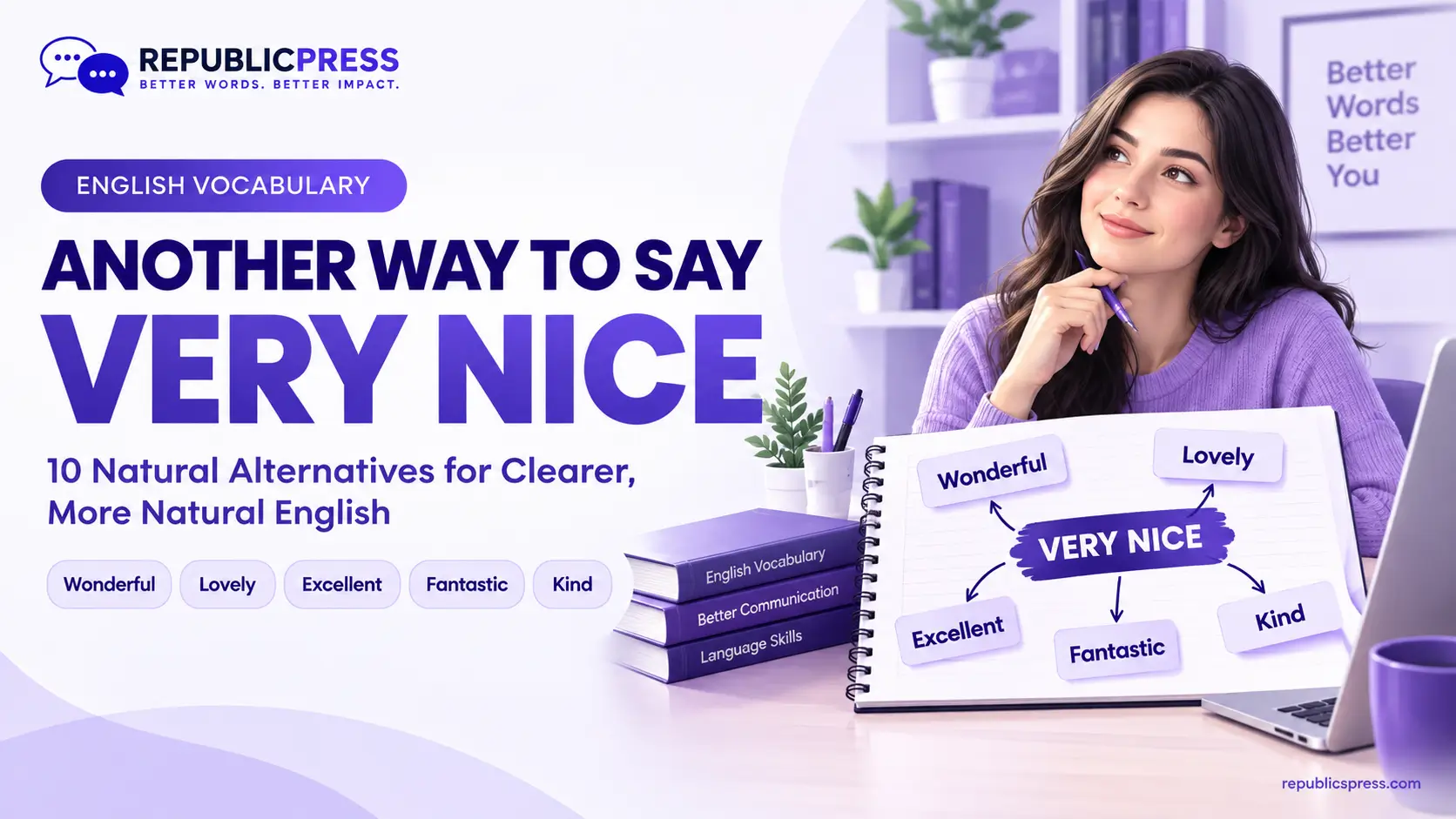
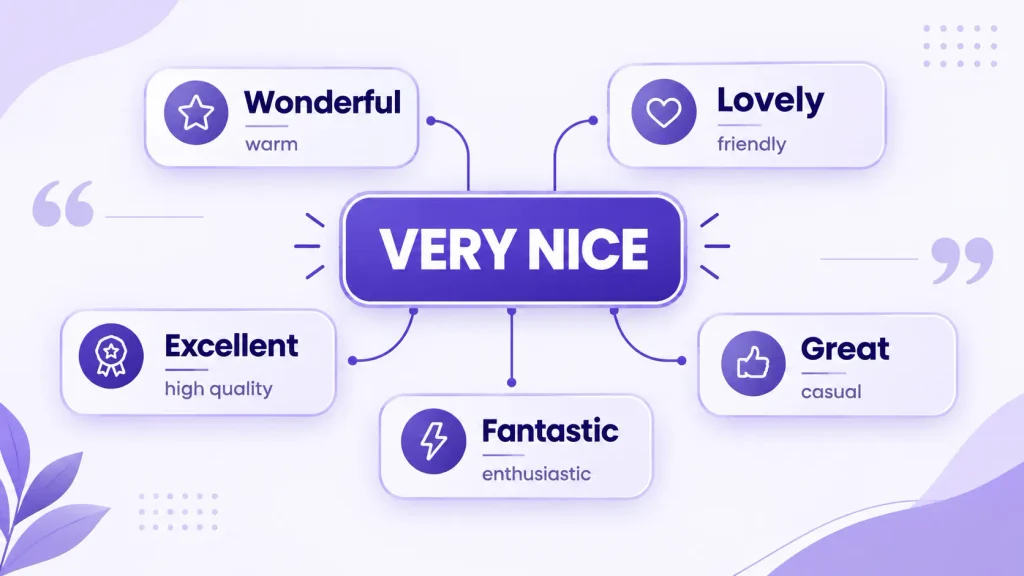
If you need another way to say “very nice,” the best choice depends on what you mean. Common options include “wonderful,” “lovely,” “excellent,” and “great.” For a person, words such as “kind” or “thoughtful” may be more exact. The right choice depends on the situation and the feeling you want to express.
Key Takeaways
- “Wonderful” is a warm and natural alternative to “very nice.”
- “Excellent” works well when you praise quality or good work.
- “Lovely” sounds warm and friendly.
- “Fantastic” and “amazing” show stronger excitement.
- “Pleasant” is a softer and more neutral choice.
- For a person’s character, “kind,” “thoughtful,” or “friendly” may be more exact.
What Does “Very Nice” Mean?
“Very nice” is a common phrase that shows approval or positive feelings. Its meaning can change based on the situation.
For example:
- “That’s a very nice dress.” → It looks attractive.
- “You’re very nice.” → You are kind or pleasant.
- “We had a very nice evening.” → We enjoyed the evening.
- “That’s a very nice result.” → The result is good or impressive.
- “You did a very nice job.” → You did the work well.
Because “very nice” can mean different things, there is no single perfect replacement for every situation.
10 Natural Alternatives to “Very Nice”
1. Wonderful
“Wonderful” is a natural choice when you want to show strong positive feelings.
Example:
“We had a wonderful time at the concert.”
Best for: experiences, events, people, places, and general praise.
“Wonderful” usually sounds warmer and more positive than “very nice.”
2. Lovely
“Lovely” is a warm way to describe something attractive, pleasant, or enjoyable.
Example:
“That was a lovely surprise.”
Best for: people, places, gifts, moments, and experiences.
You can also use it to compliment someone’s appearance:
“You look lovely today.”
3. Excellent
“Excellent” is useful when you want to praise quality, work, or results.
Example:
“You did an excellent job on the presentation.”
Best for: work, results, service, food, products, and schoolwork.
Compared with “very nice,” this word gives more direct praise.
4. Fantastic
“Fantastic” shows strong excitement and is common in everyday American English.
Example:
“Your idea sounds fantastic.”
Best for: ideas, plans, experiences, achievements, and good news.
Use it when “very nice” does not feel strong enough.
5. Amazing
“Amazing” is a good choice when something is very impressive.
Example:
“The view from the hotel was amazing.”
Best for: achievements, views, experiences, ideas, and results.
It shows more excitement than the general phrase “very nice.”
6. Pleasant
“Pleasant” is a softer and more neutral choice.
Example:
“We had a pleasant conversation after lunch.”
Best for: conversations, experiences, weather, visits, and surroundings.
Unlike “fantastic,” this word does not show strong excitement. Instead, it suggests that something was enjoyable or comfortable.
7. Kind
When “very nice” describes how someone treats you, “kind” may be a better choice.
Example:
“That was very kind of you.”
Best for: helpful actions, generous behavior, and caring people.
For example, instead of saying:
“My neighbor is very nice.”
you could say:
“My neighbor is very kind.”
The second sentence gives a clearer idea of what you mean.
8. Thoughtful
“Thoughtful” works well when someone has shown care or consideration.
Example:
“That was such a thoughtful gift.”
Best for: gifts, messages, favors, and kind actions.
This word is not a direct replacement for “very nice” in every case. It focuses on the care someone shows to another person.
9. Impressive
“Impressive” works when something stands out because of its quality, skill, or results.
Example:
“You’ve made impressive progress this year.”
Best for: achievements, skills, results, designs, and performances.
It shows more praise than the general phrase “very nice.”
10. Great
“Great” is one of the easiest casual alternatives to “very nice.”
Example:
“That sounds great!”
Best for: everyday conversations, plans, ideas, and general approval.
It is especially common in spoken American English.
Which Alternative Should You Use?
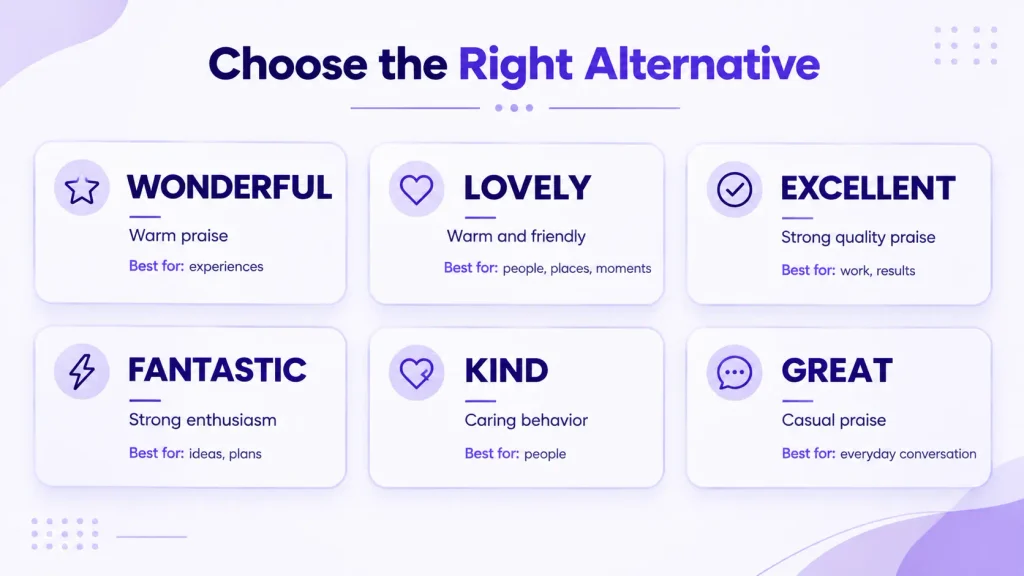
The best choice depends on what you are describing.
| Alternative | Main Meaning | Tone | Best Context |
| Wonderful | Very good or enjoyable | Warm | Experiences, people, events |
| Lovely | Pleasant or attractive | Warm | People, places, moments |
| Excellent | Very high quality | Positive | Work, results, performance |
| Fantastic | Extremely good | Excited | Ideas, plans, experiences |
| Amazing | Very impressive | Excited | Achievements, views, experiences |
| Pleasant | Enjoyable or comfortable | Neutral | Conversations, experiences |
| Kind | Caring or generous | Warm | A person’s behavior |
| Thoughtful | Caring and considerate | Warm | Gifts, actions, messages |
| Impressive | Worthy of praise | Positive | Skills, results, achievements |
| Great | Very good | Casual | Everyday conversation |
“Very Nice” for a Person
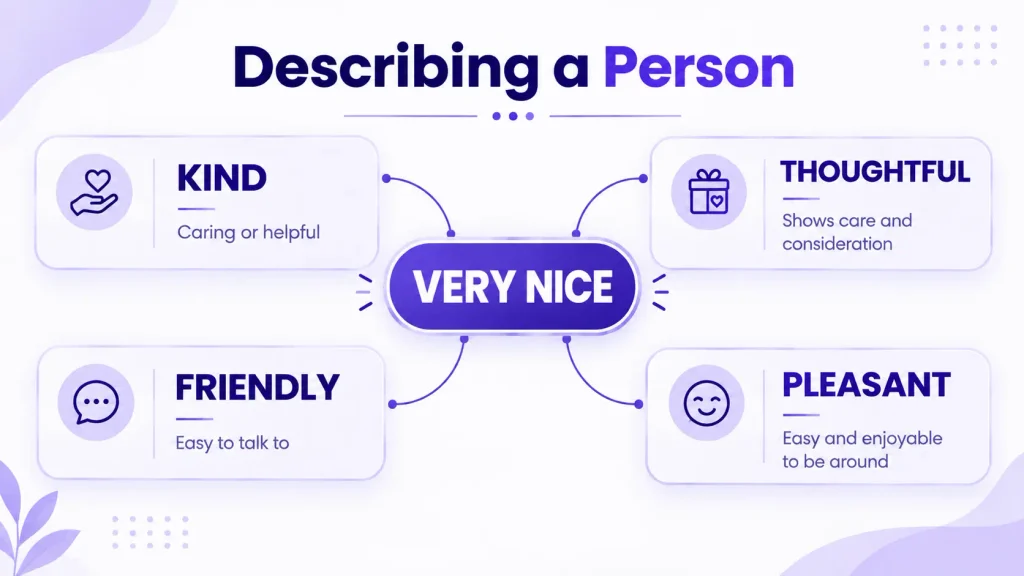
If you are describing someone’s personality, a more exact word can make your sentence clearer.
For example:
- “She is very nice.” → general positive description
- “She is very kind.” → focuses on kindness
- “She is thoughtful.” → focuses on care
- “She is friendly.” → focuses on being easy to talk to
- “She is pleasant.” → focuses on agreeable behavior
These words are similar, but they do not mean exactly the same thing.
For instance, “kind” may be better when someone helped you. On the other hand, “thoughtful” may fit when someone remembered an important detail about you.
“Very Nice” for Something Attractive
When you describe an object, place, or appearance, words such as “lovely,” “beautiful,” or “gorgeous” may work better.
For example:
“That’s a very nice dress.”
could become:
“That’s a lovely dress.”
If you want stronger praise, you could say:
“That’s a gorgeous dress.”
Keep in mind that “gorgeous” is much stronger than “very nice.” Therefore, use it when you want to show more excitement.
“Very Nice” for Work or Performance
When someone has done something well, a more specific compliment can sound better.
Instead of:
“You did a very nice job.”
you could say:
- “You did an excellent job.”
- “You did a great job.”
- “You did an impressive job.”
- “You handled it very well.”
- “You did outstanding work.”
For professional settings, “excellent” and “outstanding” can make the praise sound clear and direct.
“Very Nice” in Casual Conversation
In everyday conversation, short phrases often sound the most natural.
For example:
“That sounds very nice.”
could become:
- “That sounds great.”
- “That sounds wonderful.”
- “That sounds fantastic.”
- “That sounds lovely.”
Each option has a slightly different tone.
“Sounds great” is casual and common. Meanwhile, “sounds wonderful” feels warmer. “Sounds fantastic” shows more excitement.
Common Mistakes When Replacing “Very Nice”
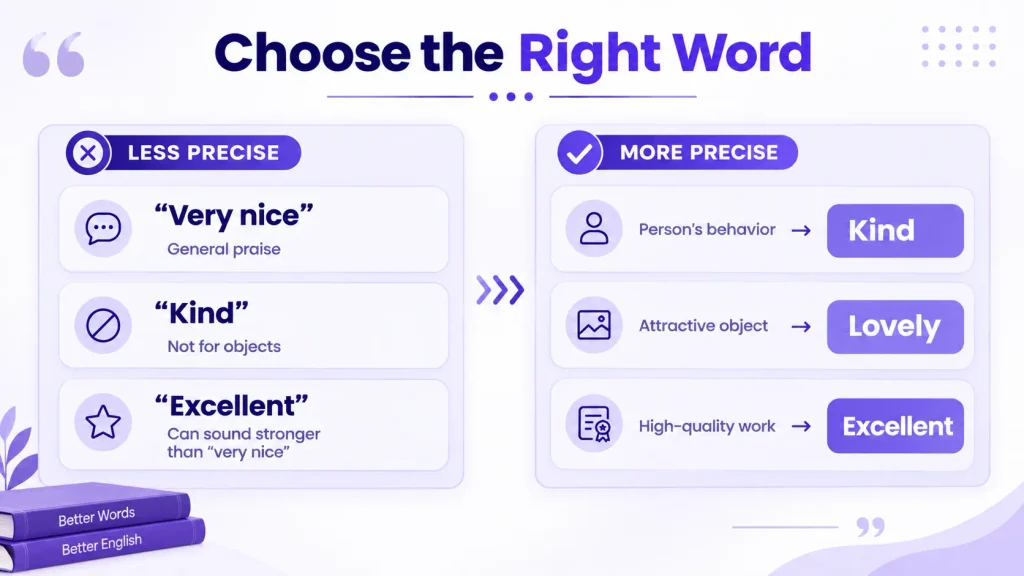
Using “kind” for everything
“Kind” describes caring or helpful behavior. It does not normally describe an attractive object.
Less natural:
“The restaurant has a kind interior.”
Better:
“The restaurant has a lovely interior.”
Using very strong words for simple praise
Words such as “amazing,” “incredible,” and “outstanding” show strong praise. As a result, they may sound too strong when you only mean that something was pleasant or good.
Forgetting about tone
“Excellent” can sound more formal than “great.” Likewise, “fantastic” can sound more excited. So, think about the person you are speaking to and the situation.
Treating every alternative as an exact synonym
“Kind,” “pleasant,” “lovely,” and “excellent” can overlap with “nice.” Still, each word has its own meaning. Choosing the word that best matches the situation will make your English sound more natural.
FAQs About Another Way to Say “Very Nice”
What is a better word for “very nice”?
“Wonderful,” “lovely,” “excellent,” “fantastic,” and “great” are common choices. However, the best word depends on whether you are describing a person, object, experience, or achievement.
What is a more professional way to say “very nice”?
“Excellent,” “impressive,” “high-quality,” or “well done” can work well in professional settings. The right option depends on what you are describing.
What is a casual way to say “very nice”?
“Great,” “awesome,” “fantastic,” and “amazing” are common casual choices. Among them, “great” is especially useful in everyday American English.
What is another way to say “very nice” to a person?
If you mean that someone is caring, “kind” or “thoughtful” may be more exact. If you mean that the person is easy and pleasant to be around, “friendly” or “pleasant” may work better.
Is “lovely” another way to say “very nice”?
Yes. “Lovely” can mean pleasant, attractive, charming, or enjoyable. It often sounds warmer than the general phrase “very nice.”
Is “excellent” stronger than “very nice”?
Usually, yes. “Excellent” gives stronger praise and works especially well for quality, work, performance, or results.
Can I use “amazing” instead of “very nice”?
Yes, when you want to show stronger excitement or praise. However, “amazing” is not always an exact replacement because it suggests that something is especially impressive.
Conclusion
“Very nice” is useful because it can describe many positive situations. Still, a more exact word can make your meaning clearer. Use “wonderful” or “lovely” for warm praise, “excellent” for quality, “fantastic” or “amazing” for strong excitement, and “kind” or “thoughtful” for a person’s behavior. Choosing the word that fits the situation will make your American English sound more natural.

Role: Language & Content Specialist
Tessa Holloway creates language-focused content covering phrases, idioms, expressions, vocabulary, and natural American English. Her work helps readers choose words and expressions that fit different everyday, academic, and professional situations.