Family Feud: 10 Best Answers for “Another Way to Say Mother”
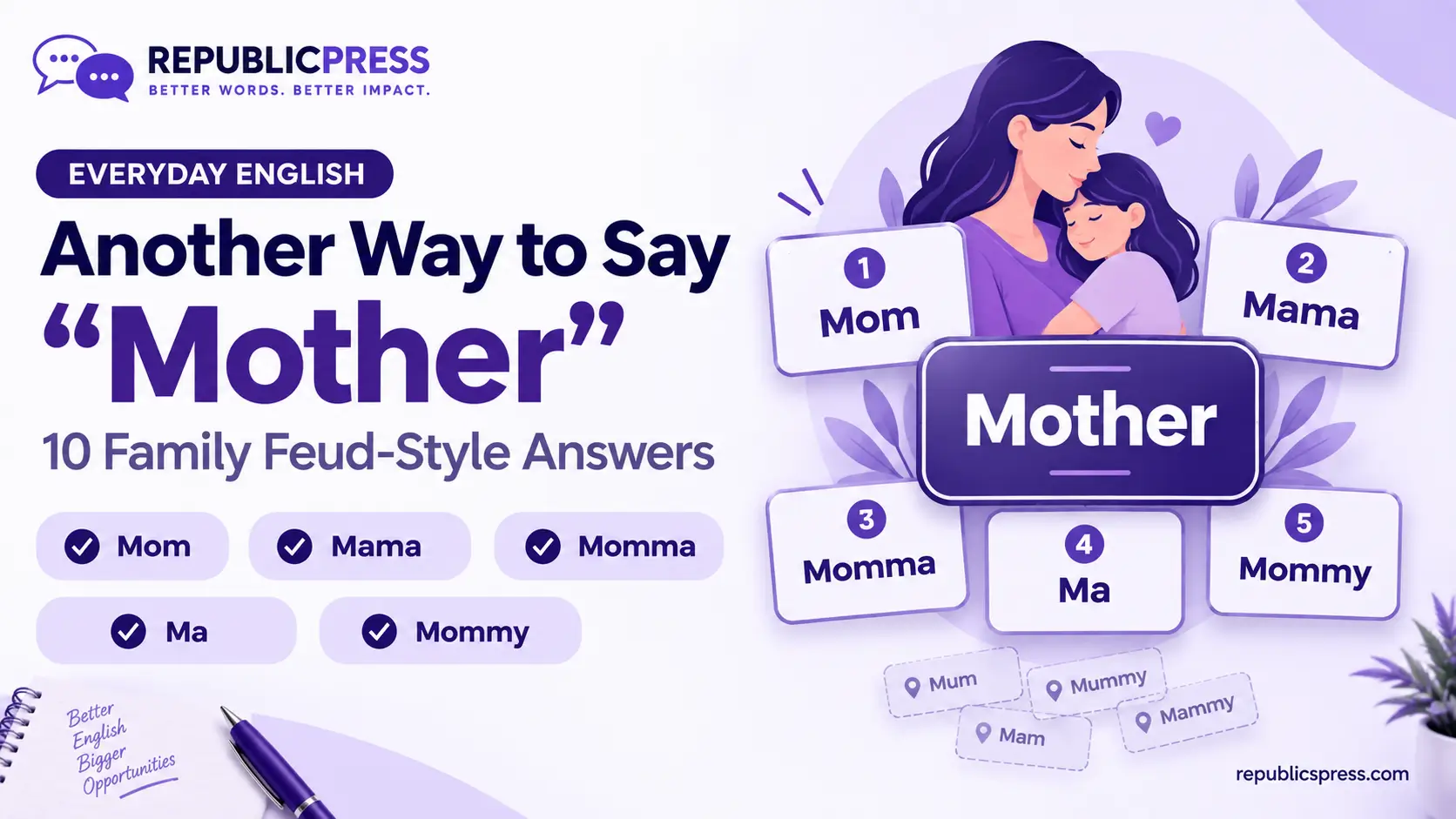
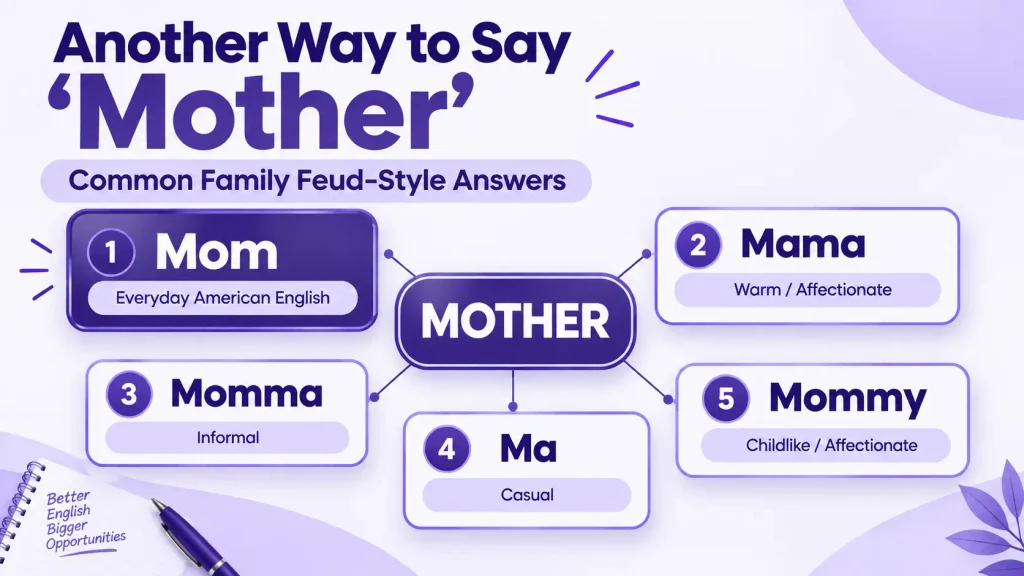
Looking for another way to say “mother” in Family Feud? Common answers include mom, mama, momma, ma, mommy, mum, mummy, mam, mammy, and maternal parent.
For an American Family Feud-style question, mom is the most natural everyday choice. Other answers can vary by region, age, and context.
Key Takeaways
- Mom is a natural everyday American English word for mother.
- Mama and momma sound warm and affectionate.
- Ma is a short, informal form.
- Mommy is common in children’s speech.
- Mum and mummy are mainly associated with British English.
- Mam is a regional form used in some English-speaking communities.
- Mammy can be regional, historical, or childlike.
- Maternal parent is formal and uncommon in everyday conversation.
- For Family Feud, familiar answers are usually better than formal terms.
- The exact ranking depends on the wording of the question and the people surveyed.
What Does “Another Way to Say Mother” Mean in Family Feud?
When Family Feud asks for “another way to say mother,” the goal is not necessarily to find a formal dictionary synonym.
Think about what people would naturally say in everyday conversation.
For example:
- “My mother called me.”
- “My mom called me.”
- “My mama called me.”
All three refer to the same person. However, they have different tones and levels of familiarity.
For an American Family Feud-style question, a common answer such as mom is more likely to come to mind than a formal expression such as maternal parent.
10 Ways to Say “Mother” for Family Feud
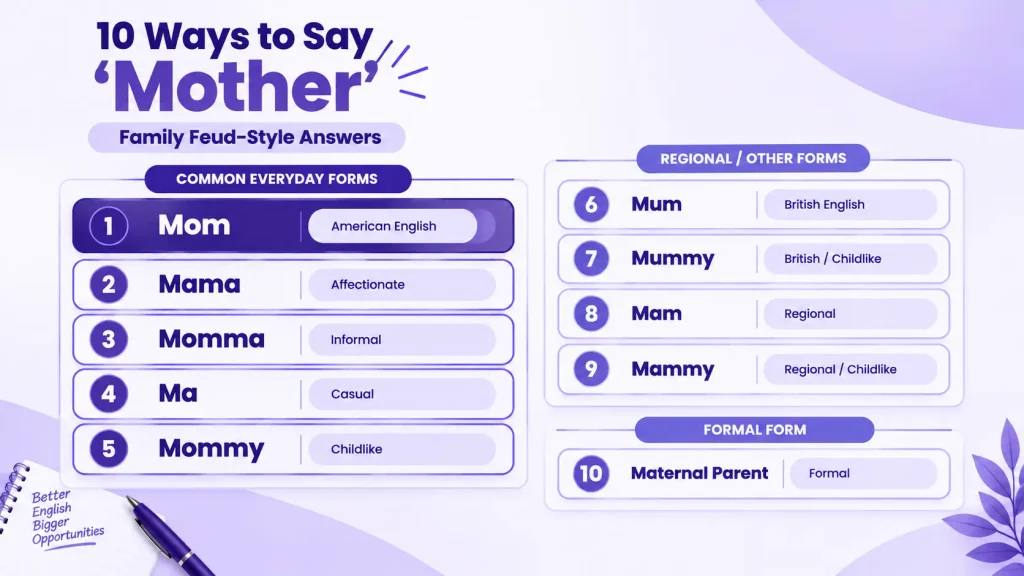
1. Mom
Mom is a natural everyday American English alternative to mother.
It is commonly used when talking about your mother or addressing her directly.
Example:
“My mom is picking me up after school.”
Best for: Everyday American conversation.
Family Feud tip: If the question asks for a common way to say “mother,” mom is one of the first answers to consider.
2. Mama
Mama is a warm and familiar word for mother.
It is often used in affectionate family conversations. Children may also use it when speaking to their mother.
Example:
“I called Mama when I got home.”
Best for: Family conversations and affectionate speech.
Family Feud tip: Mama is a reasonable answer, although its popularity can vary by family and region.
3. Momma
Momma is another informal and affectionate form of mom.
It can sound warm and personal, especially in family conversations.
Example:
“Momma always knows how to make me feel better.”
Best for: Informal and affectionate contexts.
Family Feud tip: Momma is a possible survey-style answer because some speakers use it instead of mom or mama.
4. Ma
Ma is a short and informal way to address or refer to one’s mother.
It is simple and conversational.
Example:
“Ma, can you help me with this?”
Best for: Casual family speech.
Family Feud tip: Ma is a recognizable answer, although it may be less common for some American speakers than mom.
5. Mommy
Mommy is commonly used by young children when talking about their mother.
Adults may also use it when speaking affectionately or referring to childhood.
Example:
“The little girl ran to her mommy.”
Best for: Children’s speech and affectionate contexts.
Family Feud tip: Mommy is a possible answer, especially when the question suggests a child’s way of saying “mother.”
6. Mum
Mum has the same basic meaning as mom, but it is mainly associated with British English and several other varieties of English.
Example:
“I’m going to call my mum tonight.”
Best for: British English and other non-American varieties.
Family Feud tip: In a U.S.-focused question, mum would generally be less likely than mom.
7. Mummy
Mummy is another form of mother that is mainly associated with British English.
It is especially common in children’s speech.
Example:
“The child asked her mummy for help.”
Best for: British English and children’s speech.
Family Feud tip: It is a valid English word, but it is less typical of everyday American English.
8. Mam
Mam is a regional form of mother.
It is used in some English-speaking communities, particularly in parts of the UK and Ireland.
Example:
“I’m going to ask my mam.”
Best for: Regional and dialectal English.
Family Feud tip: Mam is valid English, but it would generally be less expected in a broad American survey.
9. Mammy
Mammy can be an affectionate or childlike form of mother in some regional and historical contexts.
Its use varies considerably by region and context.
Example:
“The child called for her mammy.”
Best for: Regional, historical, or childlike speech.
Family Feud tip: This would be a much less common American answer than mom or mommy.
10. Maternal Parent
Maternal parent is a formal expression referring to a person’s mother or female parent.
It is understandable but does not sound natural in everyday conversation.
Example:
“The child was raised by their maternal parent.”
Best for: Formal, technical, or descriptive contexts.
Family Feud tip: This is a related formal expression, but it would be a very unlikely answer in a typical Family Feud-style survey.
Best Answers to Give in Family Feud
If you are trying to predict a Family Feud-style answer, start with familiar everyday words.
| Answer | Tone / Usage | Likely Everyday Use |
| Mom | Neutral, familiar | Very high |
| Mama | Warm, affectionate | High |
| Momma | Warm, informal | High |
| Ma | Casual | Moderate |
| Mommy | Childlike, affectionate | Moderate |
| Mum | British/regional | Lower in U.S. |
| Mummy | British/childlike | Lower in U.S. |
| Mam | Regional/dialectal | Lower in U.S. |
| Mammy | Regional/childlike | Lower in U.S. |
| Maternal parent | Formal/technical | Very low |
Note: This is a practical order based on everyday familiarity. It is not an official Family Feud survey ranking.
Actual answers can vary depending on the question, location, age group, and people surveyed.
If You Need the Most Likely Answers
For an American Family Feud-style question, I would start with these:
- Mom
- Mama
- Momma
- Ma
- Mommy
If you need more possibilities, consider:
- Mum
- Mummy
- Mam
- Mammy
- Maternal parent
The first five are much more useful for everyday American English.
The remaining options are mainly regional, British, childlike, or formal.
Mother vs. Mom: What’s the Difference?
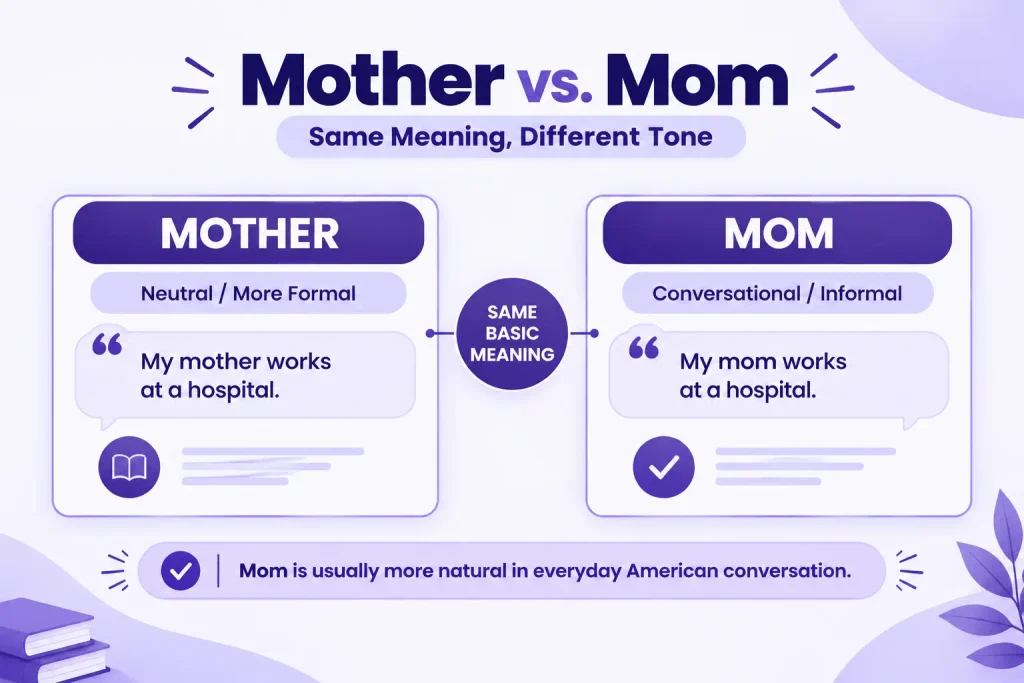
Mother and mom have the same basic meaning.
The main difference is their tone.
Mother can sound more neutral or formal:
“My mother works at a hospital.”
Mom sounds more conversational:
“My mom works at a hospital.”
In everyday American English, mom is usually the more natural choice for casual conversation.
This is also why mom is a strong answer for a Family Feud-style question.
American English vs. British English
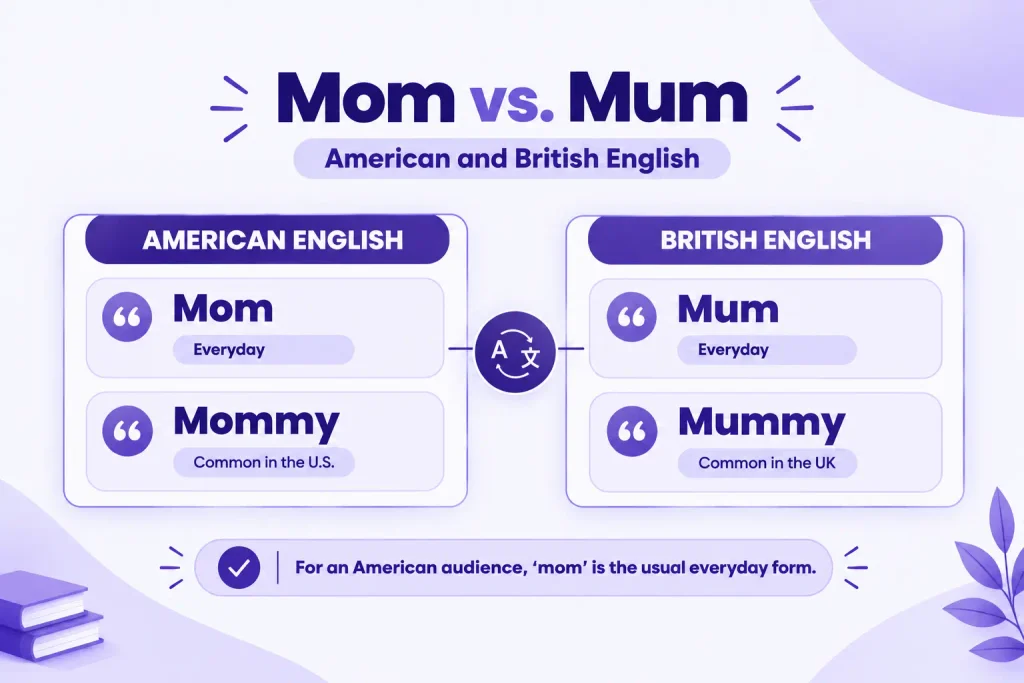
Different varieties of English use different words for mother.
American English
Common forms include:
- Mom
- Mommy
- Mama
- Momma
- Ma
British English
Common forms include:
- Mum
- Mummy
Regional English
Some English-speaking communities also use:
- Mam
- Mammy
These words are valid in particular varieties of English.
However, they are not equally common in American English.
For a U.S.-focused Family Feud question, mom is the safest answer to consider first.
Common Mistakes
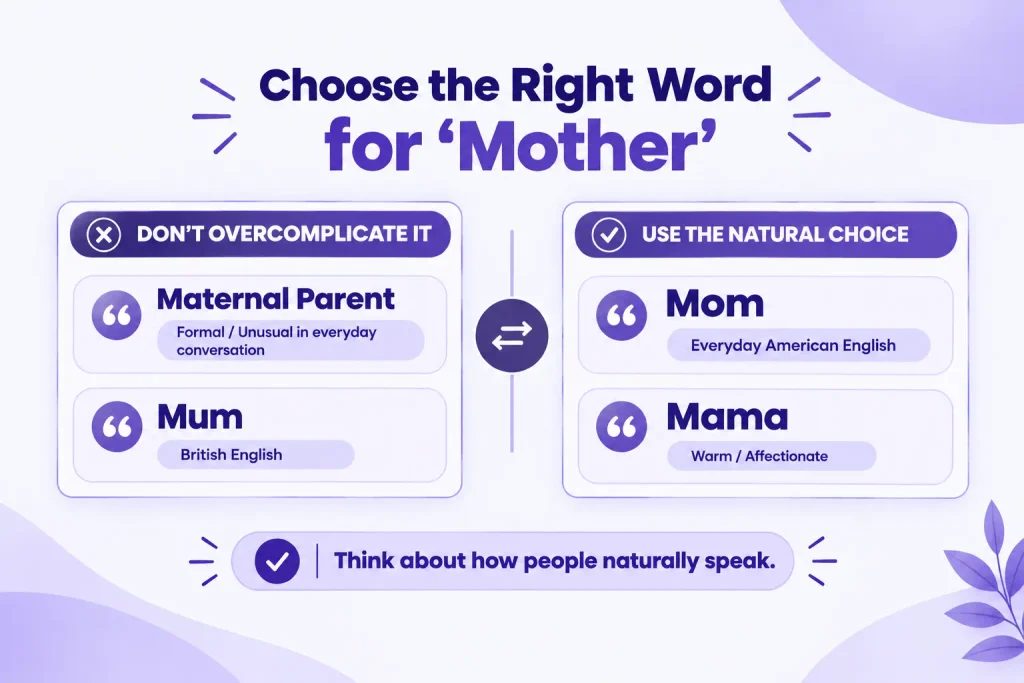
1. Treating Every Word as an Exact Synonym
Not every item on a broad list works as a direct replacement for mother.
For example, mom and mama can directly refer to a mother.
By contrast, maternal parent is much more formal and unusual in conversation.
Understanding this difference helps you choose a more natural answer.
2. Assuming British Words Are Typical American Answers
Mum and mummy are perfectly valid English words.
However, American speakers generally use mom and mommy.
So if the question is aimed at an American audience, regional differences matter.
3. Choosing a Formal Expression
A phrase such as maternal parent may be technically understandable.
However, it sounds unusual in everyday conversation.
Compare:
“My mom called me.”
with:
“My maternal parent called me.”
The first sentence sounds natural.
The second sounds technical and formal.
For Family Feud, everyday language is usually a better starting point.
4. Assuming There Is One Official Ranking
A list of possible answers should not be presented as an official Family Feud ranking unless the actual survey data is available.
Survey answers can change based on:
- The wording of the question
- Age of participants
- Geographic location
- Cultural background
- Regional vocabulary
So it is better to describe these as possible or common answers rather than an official ranking.
Frequently Asked Questions
What is the most common way to say mother in American English?
Mom is one of the most natural and widely used everyday alternatives to mother in American English.
It is informal, familiar, and suitable for ordinary conversation.
What is a cute way to say mother?
Mama, momma, and mommy can all sound affectionate.
The best choice depends on the speaker’s age, family, and personal style.
Is “mom” the same as “mother”?
Yes.
Both words refer to a female parent. However, mom is more informal, while mother can sound more neutral or formal.
Is “mama” an American word?
Yes.
Mama is used in American English, especially in family and affectionate contexts.
Its frequency varies between families and regions.
Is “momma” different from “mama”?
They generally refer to the same relationship.
Both can be informal or affectionate forms of mother, although spelling preferences vary between speakers and families.
Is “mum” an American word for mother?
Mum is mainly associated with British English and some other English varieties.
In the United States, mom is the usual form.
Is “mummy” an American word?
Mummy is primarily associated with British English and children’s speech.
American English generally uses mommy instead.
What does “ma” mean?
Ma is an informal term for one’s mother.
It can be used when addressing a mother or referring to her.
What does “mam” mean?
Mam is a regional form of mother.
It is used in some English-speaking communities, particularly in parts of the UK and Ireland.
It is not the standard American form.
What does “maternal parent” mean?
Maternal parent is a formal expression referring to a person’s mother or female parent.
It is understandable, but it is not normally used as an everyday replacement for mother.
What are good Family Feud answers for mother?
Common answers to consider include:
- Mom
- Mama
- Momma
- Ma
- Mommy
Regional and less-common possibilities include mum, mummy, mam, and mammy.
For an American Family Feud-style question, everyday forms are generally better guesses than formal expressions such as maternal parent.
Conclusion
If Family Feud asks for another way to say “Family Feud: Another Way to Say Mother — 10 Answers
Looking for another way to say “mother” in Family Feud? Common answers include mom, mama, momma, ma, mommy, mum, mummy, mam, mammy, and maternal parent.
For an American Family Feud-style question, mom is the most natural everyday choice. Other answers can vary by region, age, and context.

Role: Language Editor
Caleb Mercer is a Language Editor at RepublicsPress, focusing on grammar, sentence structure, professional writing, and English usage. He helps ensure that language guides are clear, accurate, natural, and easy to follow.