Another Way to Say “Really Good”: 10 Better & Natural Alternatives
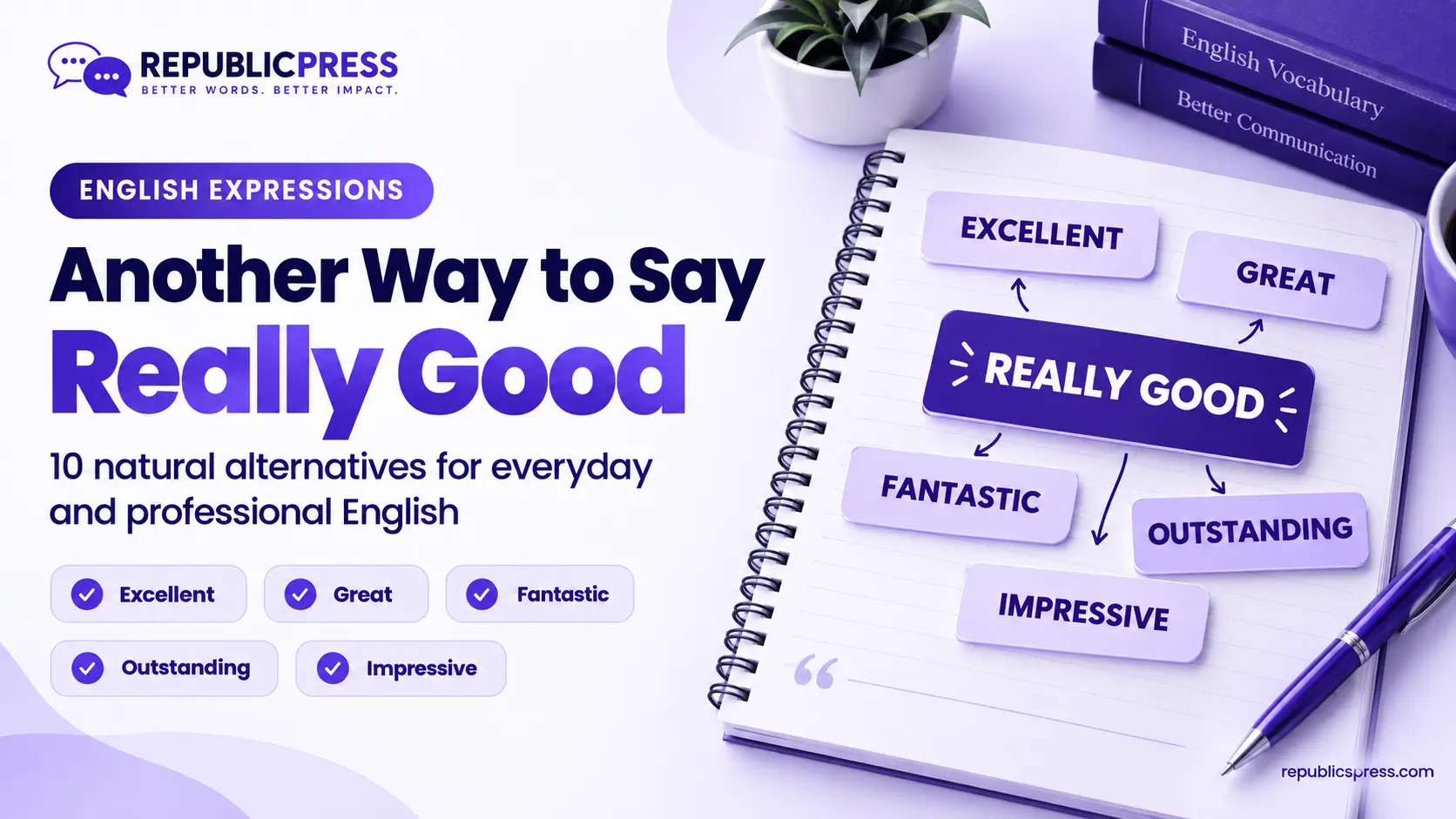
If you need another way to say “really good,” you have many natural options. You can say “excellent,” “great,” “fantastic,” “outstanding,” “impressive,” “amazing,” “superb,” “terrific,” “remarkable,” or “first-rate.” The best choice depends on the situation and how strong you want your praise to sound.
Key Takeaways
- “Excellent” is a useful choice for many situations.
- “Great” sounds natural in everyday conversation.
- “Fantastic” and “amazing” show strong excitement.
- “Outstanding” and “exceptional” show very high praise.
- “Impressive” works well for skills, work, and achievements.
- Your choice should match the tone and situation.
What Does “Really Good” Mean?
“Really good” is a common phrase used to say that something has a high level of quality. It can also show that you like something very much.
For example:
- “That was a really good movie.”
- “She is really good at writing.”
- “We had a really good time.”
- “This restaurant is really good.”
The phrase is simple and natural. However, you may want a stronger or more specific word in professional or formal writing.
10 Natural Alternatives to “Really Good”

1. Excellent
“Excellent” means very good or of high quality. It is one of the easiest replacements for “really good.”
Best for: Work, school, formal writing, and everyday speech.
Example:
“Your presentation was excellent.”
This word gives clear praise without sounding too casual.
2. Great
“Great” is one of the most common ways to replace “really good.” It works well in everyday American English.
Best for: Casual conversations, messages, ideas, and general praise.
Example:
“That’s a great idea.”
It is simple, friendly, and easy to use.
3. Fantastic
“Fantastic” shows strong positive feelings. It often sounds more excited than “great.”
Best for: Casual conversations, experiences, events, and personal opinions.
Example:
“We had a fantastic time at the concert.”
Use it when you want your praise to sound warm and enthusiastic.
4. Outstanding
“Outstanding” means extremely good and better than most other things of the same kind.
Best for: Work, achievements, performance, and professional praise.
Example:
“She did an outstanding job on the project.”
This word is especially useful when someone has done something very well.
5. Impressive
“Impressive” describes something that makes you feel admiration because of its quality, skill, or result.
Best for: Skills, work, results, performances, and achievements.
Example:
“Your progress this year has been impressive.”
Unlike “great,” this word often focuses on the effect something has on you.
6. Amazing
“Amazing” is a strong and common word for something that surprises or excites you in a positive way.
Best for: Casual speech, experiences, food, places, and personal reactions.
Example:
“The food at that restaurant was amazing.”
It sounds more excited than “really good.”
7. Superb
“Superb” means extremely good or of very high quality.
Best for: Food, service, performances, products, and reviews.
Example:
“The hotel provided superb service.”
This word can sound a little more polished than “great.”
8. Terrific
“Terrific” is a friendly way to say that something is very good.
Best for: Casual conversations, friendly messages, and everyday praise.
Example:
“You did a terrific job on the presentation.”
It has a positive and cheerful tone.
9. Remarkable
“Remarkable” describes something that is unusual or special because of its quality or results.
Best for: Achievements, progress, results, and important qualities.
Example:
“She has made remarkable progress in a short time.”
This word is useful when something clearly stands out.
10. First-Rate
“First-rate” means very good or of high quality.
Best for: Services, products, work, and professional situations.
Example:
“They provide first-rate customer service.”
It is a useful choice when you want to focus on quality.
Choosing the Right Alternative
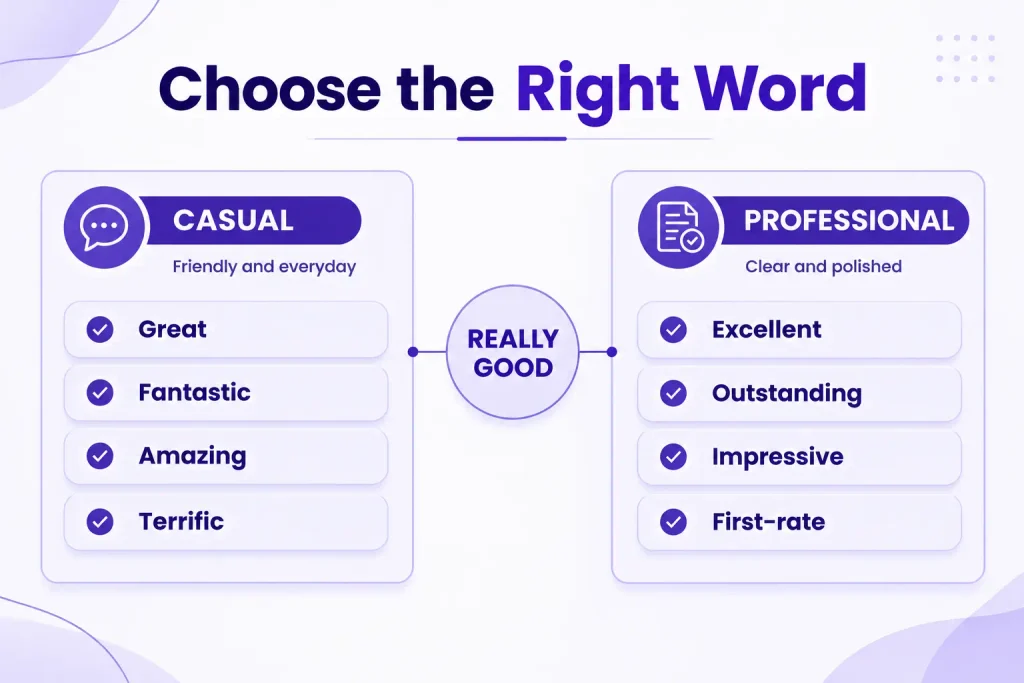
The best replacement depends on the situation. Some words sound casual, while others are better for work or formal writing.
| Alternative | Tone | Best Context |
| Excellent | Neutral | Work, school, everyday praise |
| Great | Casual | Everyday conversation |
| Fantastic | Enthusiastic | Casual conversations |
| Outstanding | Strong | Work and achievements |
| Impressive | Positive | Skills and results |
| Amazing | Enthusiastic | Experiences and opinions |
| Superb | Strong | Food, service, and reviews |
| Terrific | Friendly | Casual conversation |
| Remarkable | Strong | Progress and achievements |
| First-rate | Professional | Products and services |
Another Way to Say “Really Good” for a Person
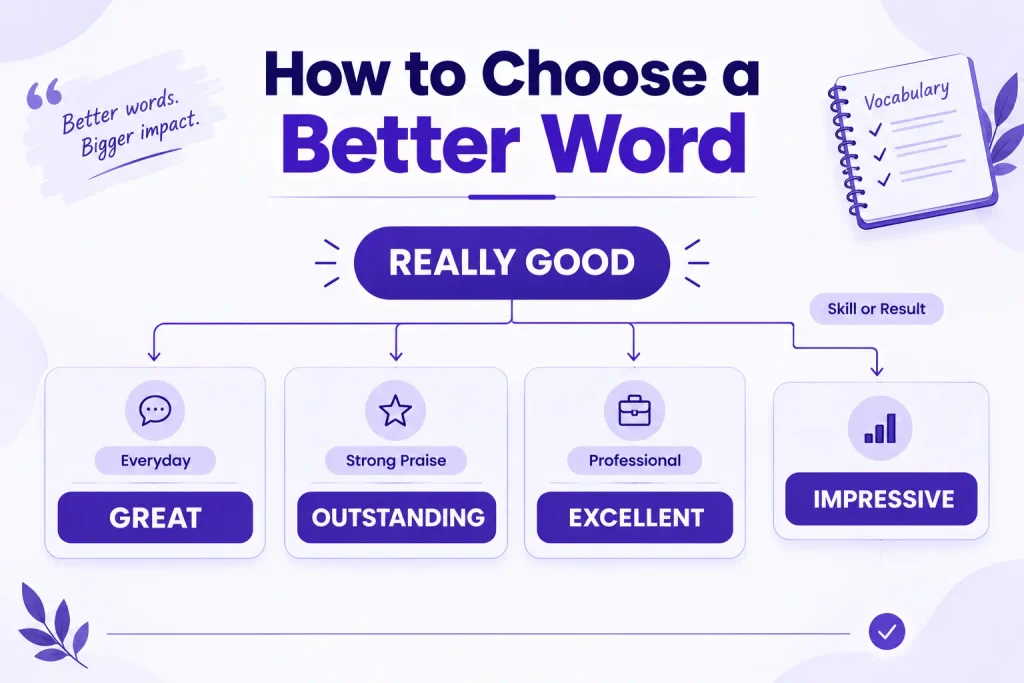
When you are talking about someone’s skills, you can choose a word that shows how well they perform.
Instead of:
“She is really good at her job.”
You could say:
“She is excellent at her job.”
For stronger praise, try:
“She is outstanding at what she does.”
Similarly, “impressive” works well when you want to focus on someone’s skill or results.
Another Way to Say “Really Good Job”
There are several natural ways to praise someone’s work.
You can say:
- “Excellent job!”
- “Great work!”
- “Fantastic job!”
- “Outstanding work!”
- “You did an amazing job!”
For a workplace setting, “excellent work” and “outstanding work” are good choices. On the other hand, “great job” sounds more relaxed and friendly.
Another Way to Say “Really Good” for Food
When talking about food, “great,” “excellent,” “amazing,” and “superb” all work well.
For example:
“The food was really good.”
You could instead say:
“The food was excellent.”
For a more excited reaction, say:
“The food was amazing.”
If you are writing a restaurant review, “superb” can also be a good choice.
Another Way to Say “Really Good” for an Idea
“Great” is often the most natural choice for an idea.
For example:
“That’s a really good idea.”
You could say:
“That’s a great idea.”
For a little more emphasis, you can use:
“That’s an excellent idea.”
If you are speaking casually, “great” usually sounds more natural than a formal word such as “exceptional.”
Common Mistakes When Replacing “Really Good”
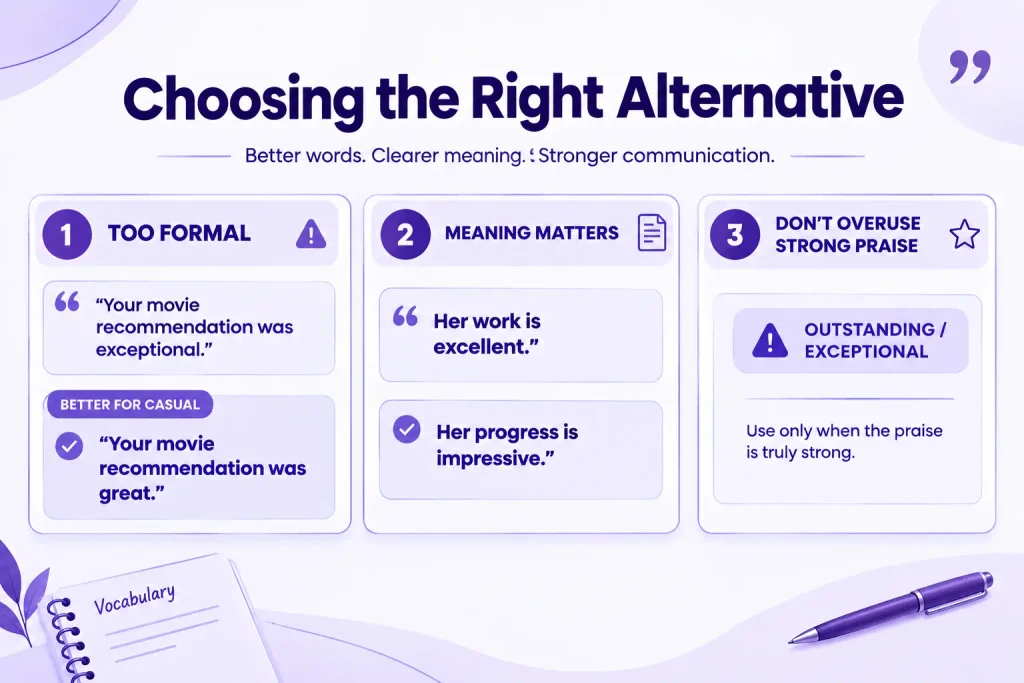
Using a Formal Word in a Casual Setting
Some words can sound too formal in everyday conversation.
For example:
“Your movie recommendation was exceptional.”
This is correct, but it may sound too formal for a simple text message.
Instead, you could say:
“Your movie recommendation was great.”
Using Every Alternative the Same Way
Not every alternative has exactly the same meaning.
For example, “impressive” often means that something made a strong positive impression. “Excellent,” however, mainly describes high quality.
Compare these examples:
“Her work is excellent.”
“Her progress is impressive.”
Both are positive, but the focus is slightly different.
Using Strong Praise Too Often
Words such as “outstanding” and “exceptional” show strong praise. Therefore, they may sound less meaningful if you use them for everything.
Choose a word that matches how strongly you want to praise something.
Frequently Asked Questions
What is the best formal way to say “really good”?
“Excellent” is one of the safest choices for formal writing. You can also use “outstanding” or “exceptional” when stronger praise is suitable.
What is a casual way to say “really good”?
“Great,” “fantastic,” and “terrific” are natural choices for casual American English. “Amazing” is another common option when you want to show more excitement.
What is a stronger word for “really good”?
“Outstanding,” “exceptional,” and “superb” can show a higher level of praise than “really good.”
Is “excellent” better than “really good”?
Neither word is always better. “Really good” sounds more casual, while “excellent” works well in both everyday and professional situations.
Can I use “amazing” instead of “really good”?
Yes. “Amazing” is a natural choice when something makes you feel very excited or impressed. It is especially common in casual American English.
What is the best alternative for professional writing?
“Excellent,” “outstanding,” and “impressive” are useful choices for professional writing. The right word depends on what you are describing.
What is another way to say “really good job”?
You can say “excellent job,” “great work,” “fantastic job,” “outstanding work,” or “amazing job.” Choose the phrase that matches the level of praise and the situation.
Final Thoughts
There are many natural ways to say “really good.” For everyday conversations, “great” is simple and natural. In professional writing, “excellent” is a strong choice. If you want to show more excitement, try “fantastic” or “amazing.” For strong praise, “outstanding” or “exceptional” may work better.
The key is to choose a word that fits the situation. That way, your English sounds natural while clearly showing how much you like something.

Role: Language & Content Specialist
Tessa Holloway creates language-focused content covering phrases, idioms, expressions, vocabulary, and natural American English. Her work helps readers choose words and expressions that fit different everyday, academic, and professional situations.