Another Way to Say White: 15 Natural Alternatives for Different Contexts
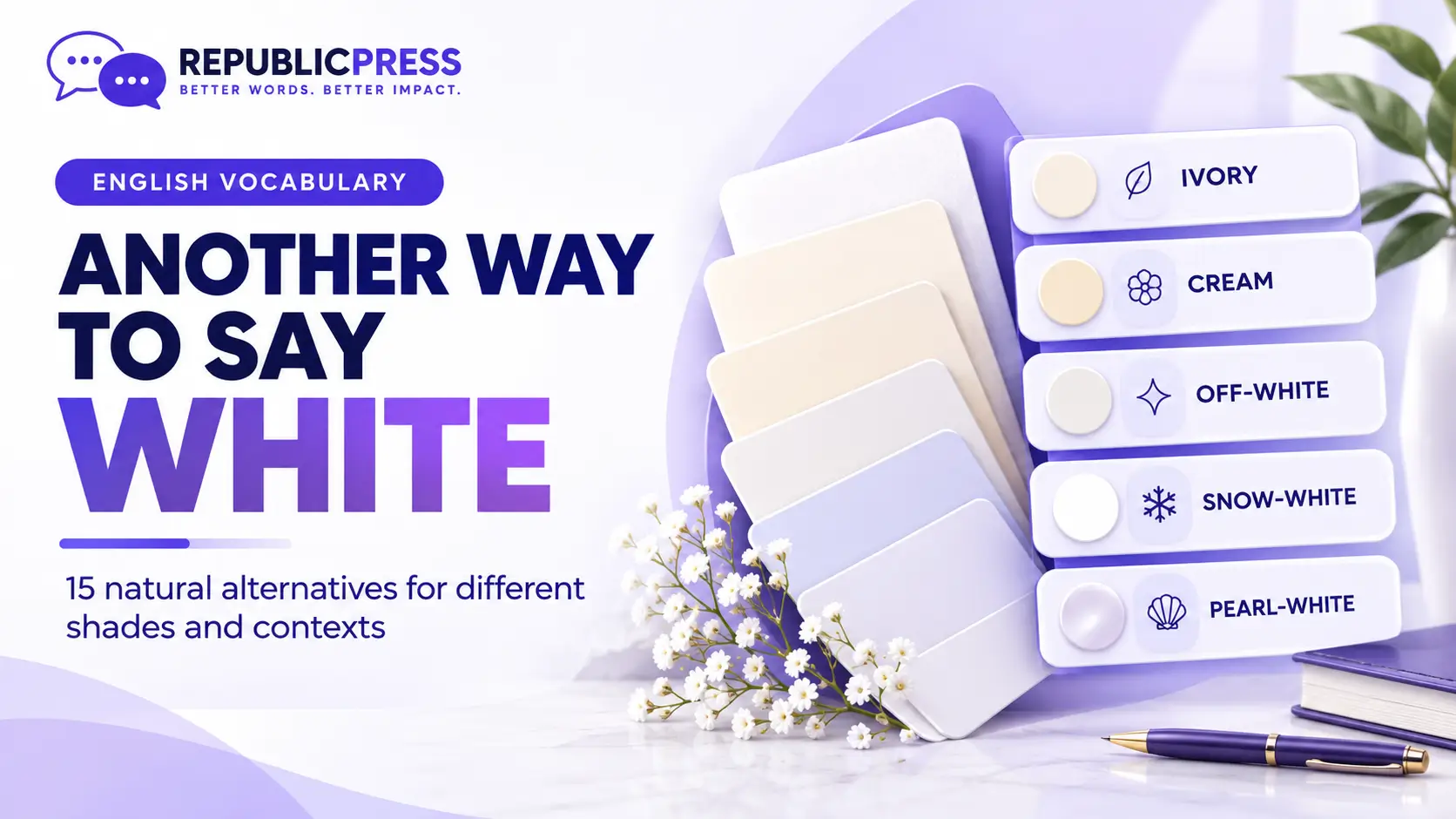
If you’re looking for another way to say “white,” the best choice depends on what you mean. For color, natural alternatives include ivory, cream, off-white, snow-white, pale, and milky. Some describe a specific shade, while others add emphasis or a particular tone.
Key Takeaways
- Ivory and cream describe softer shades of white.
- Off-white works well for slightly darker or warmer whites.
- Snow-white and pure white emphasize brightness or cleanliness.
- Pale can describe something light in color, but it isn’t an exact synonym for white.
- Milky and chalky are useful when describing a particular visual quality.
- The right alternative depends on whether you’re describing color, appearance, brightness, or tone.
What Does “White” Mean?
“White” is a basic color term used for something that reflects light without a strong hue. It can describe clothing, walls, paper, paint, objects, hair, or other physical features.
However, not every white looks exactly the same. A white shirt might be bright and crisp, while an old wall may look cream or off-white. Choosing a more specific word can make your writing clearer and more descriptive.
For example:
- “She wore a white dress.”
- “She wore an ivory dress.”
- “The room has off-white walls.”
- “He chose a cream sweater.”
Each sentence creates a slightly different visual impression.
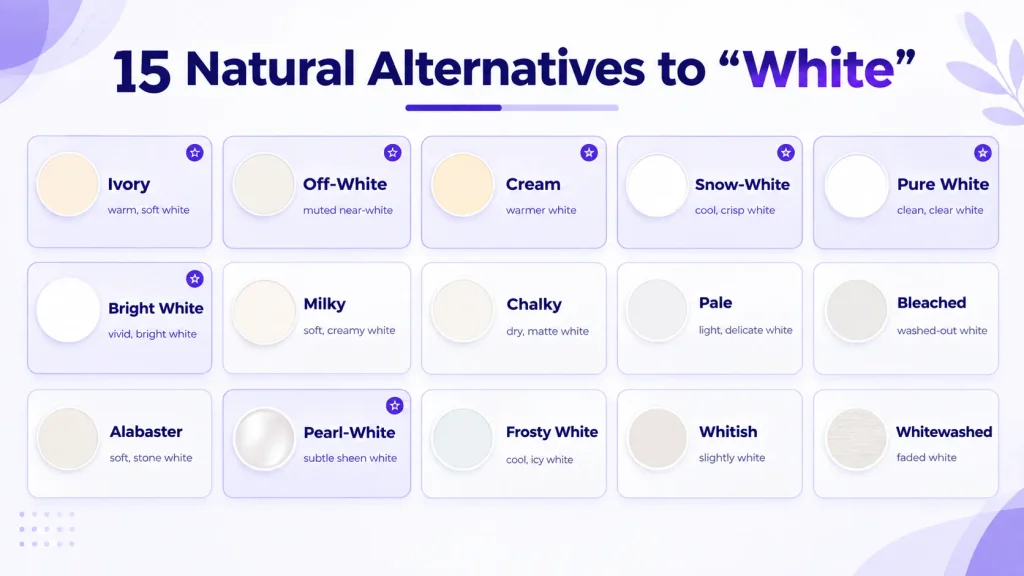
15 Natural Alternatives to “White”
1. Ivory
Ivory describes a soft, warm white with a slight yellow or cream undertone.
Example:
“She chose an ivory dress for the ceremony.”
Best for: Clothing, interiors, paper, wedding designs, and elegant descriptions.
2. Off-White
Off-white refers to a color that is close to white but not completely pure white.
Example:
“The designer used an off-white background.”
Best for: Paint, clothing, furniture, websites, interiors, and design.
3. Cream
Cream is a warm, pale color that is lighter than beige but less stark than pure white.
Example:
“The living room has cream-colored walls.”
Best for: Clothing, home décor, food, paint, and everyday descriptions.
4. Snow-White
Snow-white describes something extremely bright, clean-looking, or pure white.
Example:
“She folded the snow-white towels and placed them in the cabinet.”
Best for: Descriptive writing, clothing, fabric, snow, and literary descriptions.
5. Pure White
Pure white emphasizes that something is completely or strongly white without another noticeable color.
Example:
“The artist painted the background pure white.”
Best for: Design, art, photography, interiors, and precise color descriptions.
6. Bright White
Bright white emphasizes brightness rather than simply identifying the color.
Example:
“The kitchen has bright white cabinets.”
Best for: Interiors, clothing, lighting, design, and visual descriptions.
7. Milky
Milky describes something that looks white, cloudy, or somewhat opaque, often with a soft appearance.
Example:
“The glass had a milky appearance.”
Best for: Liquids, glass, eyes, surfaces, and descriptive writing.
8. Chalky
Chalky describes a dull, powdery, or matte white appearance.
Example:
“The old wall had a chalky white finish.”
Best for: Paint, walls, surfaces, makeup, and textures.
9. Pale
Pale means light or lacking strong color. It can sometimes describe something that is close to white, but it is not an exact synonym for white.
Example:
“She chose a pale blue dress with white details.”
Best for: Skin, colors, fabrics, and general descriptions where lightness matters.
10. Bleached
Bleached can describe something that has been made very light or white, often through a chemical or whitening process.
Example:
“The fabric had a bleached, almost-white appearance.”
Best for: Hair, fabric, wood, paper, and other materials that have been lightened.
11. Alabaster
Alabaster is a descriptive term for a smooth, pale white or creamy-white appearance. It is often used in literary or artistic descriptions.
Example:
“The sculpture had an alabaster appearance.”
Best for: Art, skin descriptions, architecture, and literary writing.
12. Pearl-White
Pearl-white describes a soft white with a subtle luminous or pearly quality.
Example:
“The car has a pearl-white finish.”
Best for: Cars, cosmetics, jewelry, fashion, and product descriptions.
13. Frosty White
Frosty white suggests a cool, pale, icy-looking white.
Example:
“The designer selected a frosty white for the winter-themed room.”
Best for: Seasonal descriptions, interiors, fashion, and creative writing.
14. Whitish
Whitish means somewhat white or having a noticeable white appearance without being completely white.
Example:
“The liquid had a whitish color.”
Best for: Scientific, medical, descriptive, and everyday observations.
15. Whitewashed
Whitewashed can describe something covered or painted with a thin white coating. It can also have figurative meanings, so context matters.
Example:
“The old brick walls were whitewashed.”
Best for: Walls, buildings, rustic interiors, and historical descriptions.
Quick Comparison: Alternatives to “White”
| Alternative | Meaning/Use | Tone | Best Context |
| Ivory | Warm, soft white | Elegant | Clothing, décor |
| Off-white | Slightly different from pure white | Neutral | Design, interiors |
| Cream | Warm yellowish white | Soft | Clothing, décor |
| Snow-white | Very bright or pure white | Descriptive | Writing, fabrics |
| Pure white | Completely white | Precise | Art, design |
| Bright white | Strong, vivid white | Neutral | Interiors, clothing |
| Milky | Soft, cloudy white | Descriptive | Glass, liquids |
| Chalky | Dull, powdery white | Descriptive | Surfaces, paint |
| Pale | Light or weak in color | Neutral | Colors, appearance |
| Bleached | Made very light or white | Descriptive | Fabric, hair |
| Alabaster | Smooth, pale white | Literary | Art, descriptions |
| Pearl-white | Luminous white | Elegant | Cars, cosmetics |
| Frosty white | Cool, icy white | Creative | Design, descriptions |
| Whitish | Somewhat white | Neutral | General description |
| Whitewashed | Covered with white coating | Descriptive | Buildings, walls |
How to Choose the Right Alternative
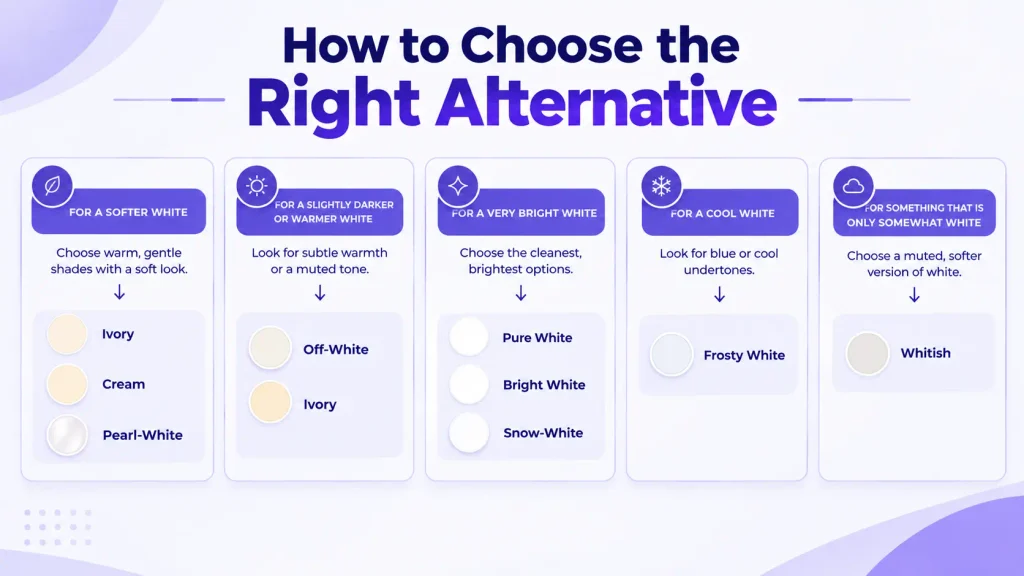
The best replacement depends on the exact shade or quality you want to communicate.
For a softer white
Use ivory, cream, or pearl-white.
“The room was decorated in soft cream tones.”
For a slightly darker or warmer white
Use off-white or ivory.
“The website uses an off-white background instead of stark white.”
For a very bright white
Use pure white, bright white, or snow-white.
“The photographer placed the product against a pure white background.”
For a cool white
Use frosty white when a descriptive or creative tone is appropriate.
“The walls had a frosty white finish.”
For something that is only somewhat white
Use whitish.
“The liquid appeared whitish under the light.”
For a textured or matte white
Use chalky.
“The paint left a chalky white residue on the surface.”
“White” vs. “Ivory” vs. “Cream” vs. “Off-White”
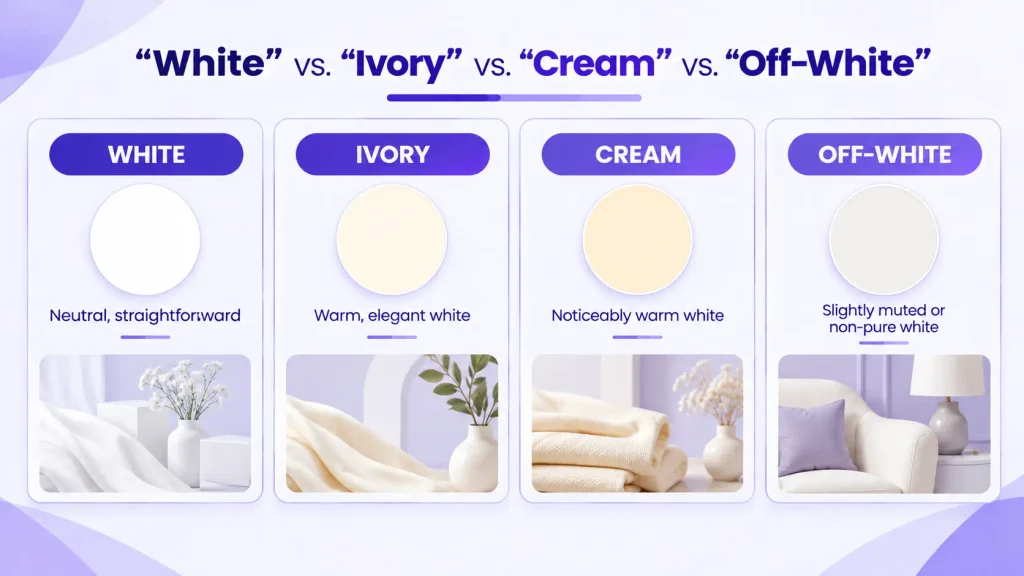
These words are related, but they aren’t interchangeable in every situation.
White is the broadest and most neutral term. It describes the basic color.
Ivory usually suggests a warmer, slightly yellowish white and often sounds more refined.
Cream is warmer and more distinctly yellow than most ivory shades.
Off-white is a general term for a color that is close to white but not completely pure white.
For example, when describing a dress:
- White dress → neutral, straightforward
- Ivory dress → warm, elegant white
- Cream dress → noticeably warm white
- Off-white dress → slightly muted or non-pure white
Common Mistakes When Replacing “White”
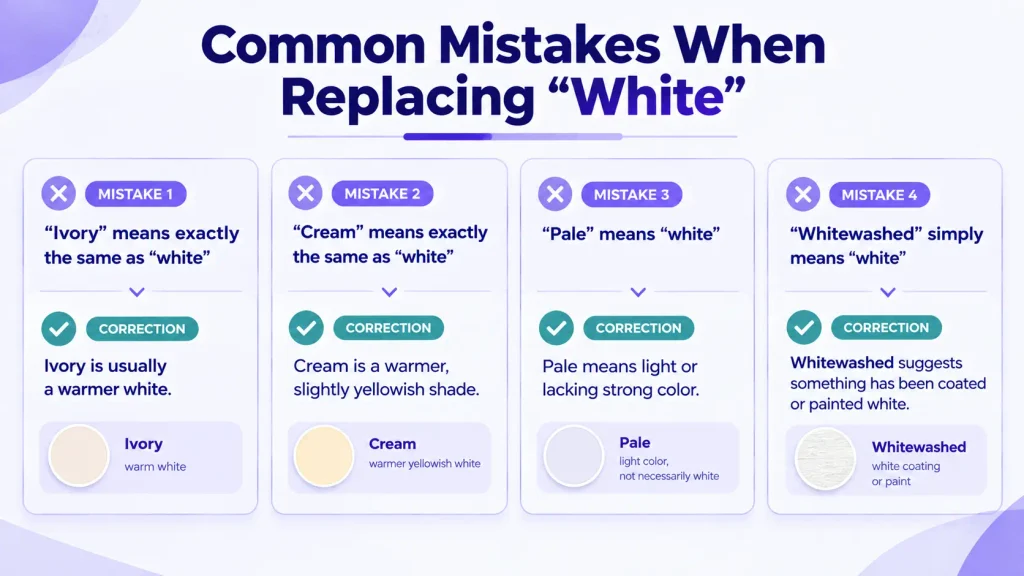
Treating every alternative as an exact synonym
Words such as cream, ivory, and pale describe related shades or qualities rather than exactly the same color.
Using literary words in everyday writing
“Alabaster” can sound poetic or descriptive. In a normal product description, white or off-white may be clearer.
Confusing “pale” with “white”
Pale means light or lacking intensity. A pale blue object is still blue, not white.
Using “whitewashed” when you only mean “white”
“Whitewashed” suggests that something was coated or painted white. It is not simply a more sophisticated word for the color white.
Frequently Asked Questions
What is a fancy word for white?
Ivory, alabaster, pearl-white, and snow-white can sound more refined or descriptive than simply saying “white.” The best choice depends on the object and context.
What is another word for pure white?
Natural options include snow-white, bright white, and pure white itself. Snow-white is especially useful when you want a vivid descriptive expression.
What is a softer word for white?
Ivory, cream, and off-white can describe softer or warmer versions of white.
Is ivory the same as white?
Not exactly. Ivory is a warm shade close to white, usually with a subtle yellow or cream undertone.
Is cream another word for white?
Cream is related to white but isn’t an exact synonym. It usually describes a warmer, slightly yellowish shade.
What is the opposite of “off-white”?
There isn’t one universal opposite, but pure white or bright white can provide a useful contrast when discussing color shades.
What is another word for whitish?
Depending on the context, pale, milky, creamy, or off-white may work. “Whitish” specifically means somewhat white rather than completely white.
Final Thoughts
There are many ways to describe white more precisely, but the right word depends on the appearance you want to convey. Ivory and cream suggest warmth, off-white indicates a near-white shade, snow-white emphasizes purity, and pearl-white suggests a soft, luminous finish. For simple writing, though, white remains the clearest choice.

Role: Language Editor
Caleb Mercer is a Language Editor at RepublicsPress, focusing on grammar, sentence structure, professional writing, and English usage. He helps ensure that language guides are clear, accurate, natural, and easy to follow.