Another Way to Say Be Well: 12 Natural Alternatives
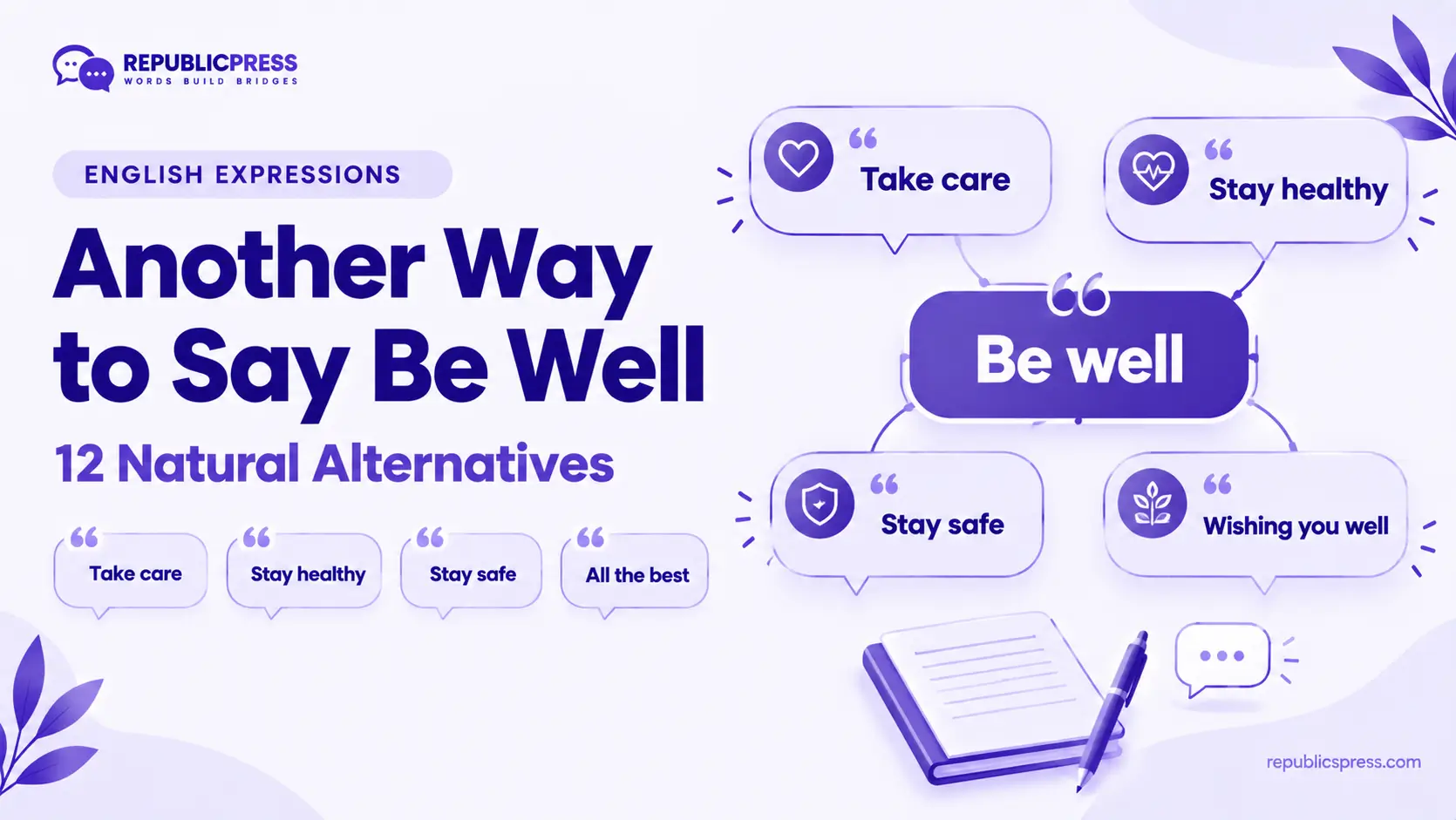
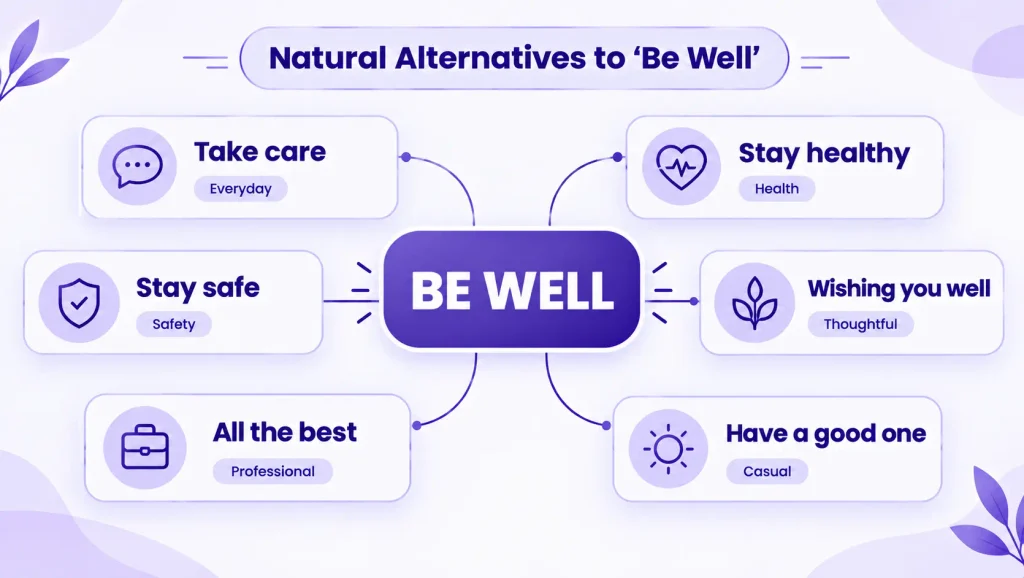
If you’re looking for another way to say “be well,” the best choice depends on the situation. Natural alternatives include take care, stay healthy, stay safe, all the best, have a good one, and wishing you well. Some sound warm and casual, while others are more formal or thoughtful.
Key Takeaways
- Take care is the most natural everyday alternative to “be well.”
- Stay healthy works when you’re specifically referring to someone’s health.
- Stay safe is better when there may be a safety concern or risk.
- Wishing you well sounds warm and thoughtful, especially in writing.
- All the best is a flexible closing for emails, messages, and personal notes.
- Get well soon is appropriate for someone who is already sick, not as a general replacement for “be well.”
What Does “Be Well” Mean?
“Be well” is a polite expression used to wish someone good health, happiness, or general well-being. It can be used when saying goodbye, ending a message, or expressing goodwill toward someone.
For example:
It was great talking with you. Be well!
The phrase is positive and polite, but it can sometimes sound slightly formal or thoughtful compared with everyday expressions such as “take care.”
The right alternative depends on what you want to communicate.
12 Natural Ways to Say “Be Well”
1. Take Care
“Take care” is probably the most natural everyday alternative to “be well.”
It can express general goodwill and works in conversations, texts, emails, and casual messages.
Example:
“Thanks for stopping by. Take care!”
Best for: Casual, friendly, and everyday situations.
Usage tip: “Take care” is broader than “stay healthy.” It can refer to someone’s overall well-being, not just physical health.
2. Stay Healthy
Use “stay healthy” when you specifically want to wish someone good health.
Example:
“It’s been great catching up with you. Stay healthy!”
Best for: Health-related conversations, family, friends, and wellness contexts.
This phrase is more specific than “be well” because it focuses directly on health.
3. Stay Safe
“Stay safe” is a natural choice when you are concerned about someone’s safety or want to wish them protection.
Example:
“Have a safe trip, and stay safe!”
Best for: Travel, bad weather, dangerous situations, or everyday farewells when safety is relevant.
It doesn’t mean exactly the same thing as “be well,” so use it when safety is part of the message.
4. Wishing You Well
“Wishing you well” is a warm and thoughtful alternative, particularly in writing.
Example:
“I’ve enjoyed working with you. Wishing you well in your new role.”
Best for: Personal notes, transitions, farewells, and thoughtful messages.
It can sound more sincere and deliberate than the casual “take care.”
5. All the Best
“All the best” is a versatile closing that expresses good wishes without sounding overly emotional.
Example:
“Thanks again for everything. All the best!”
Best for: Emails, professional messages, acquaintances, and personal communication.
It doesn’t specifically refer to health, but it works well when “be well” is being used as a general farewell.
6. Have a Good One
“Have a good one” is a casual American English expression meaning “have a good day” or “have a good time.”
Example:
“Thanks for your help. Have a good one!”
Best for: Casual conversations, texts, customer interactions, and everyday goodbyes.
It is more relaxed than “be well,” so it may not fit a serious or emotional farewell.
7. Take Good Care of Yourself
“Take good care of yourself” adds warmth and personal concern to the message.
Example:
“I’m glad you’re feeling better. Take good care of yourself.”
Best for: Friends, family, someone recovering from illness, or someone going through a difficult period.
Compared with “take care,” this version sounds more personal and caring.
8. Stay Strong
“Stay strong” is appropriate when someone is facing a difficult situation.
Example:
“I know this is a challenging time. Stay strong.”
Best for: Difficult circumstances, emotional support, and challenging life events.
This is not a direct synonym for “be well.” It focuses more on emotional resilience than general well-being.
9. I Hope You’re Doing Well
“I hope you’re doing well” is especially useful when you want to check in with someone rather than simply say goodbye.
Example:
“It’s been a while since we talked. I hope you’re doing well.”
Best for: Emails, messages, reconnecting with someone, and polite conversation.
It is not usually a farewell phrase. Instead, it expresses a positive wish about someone’s current situation.
10. Wishing You Good Health
“Wishing you good health” is a more direct and formal expression of well-being.
Example:
“Thank you for your continued support. Wishing you good health and happiness.”
Best for: Formal notes, thoughtful messages, cards, and health-related situations.
It sounds more formal than “stay healthy” and may feel too serious for a casual text.
11. Be Safe and Well
“Be safe and well” combines two common wishes into one phrase.
Example:
“Thank you for everything. Be safe and well.”
Best for: Warm farewells, personal messages, and situations where both safety and well-being matter.
This keeps the spirit of “be well” while making the message slightly more expressive.
12. Have a Wonderful Day
“Have a wonderful day” works when you’re ending a conversation during the day and want a friendly, positive farewell.
Example:
“Thanks for calling. Have a wonderful day!”
Best for: Customer service, casual conversations, emails, and everyday interactions.
It doesn’t specifically communicate health or well-being, but it can replace “be well” when the intended meaning is simply a pleasant goodbye.
Quick Comparison: Which Alternative Should You Use?
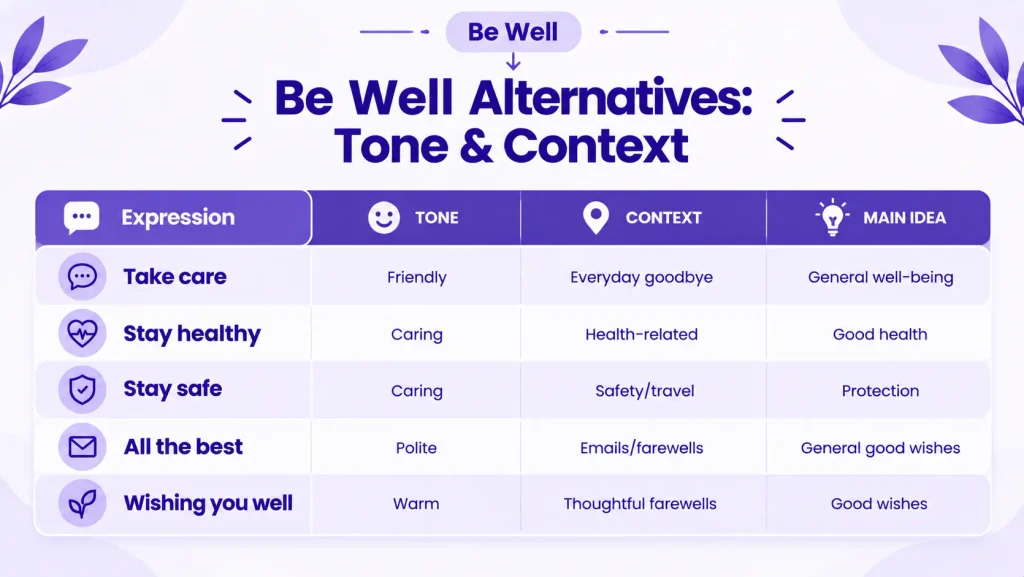
| Alternative | Tone | Best Context |
| Take care | Friendly, natural | Everyday conversations |
| Stay healthy | Caring, direct | Health and wellness |
| Stay safe | Caring, practical | Travel or safety concerns |
| Wishing you well | Warm, thoughtful | Farewells and written messages |
| All the best | Polite, versatile | Emails and professional messages |
| Have a good one | Casual, relaxed | Everyday American English |
| Take good care of yourself | Warm, personal | Friends, family, difficult times |
| Stay strong | Supportive | Challenging situations |
| I hope you’re doing well | Warm, polite | Checking in |
| Wishing you good health | Formal, sincere | Cards and formal messages |
| Be safe and well | Warm, caring | Personal farewells |
| Have a wonderful day | Friendly, positive | Everyday interactions |
Which Alternative Is Best for a Casual Conversation?
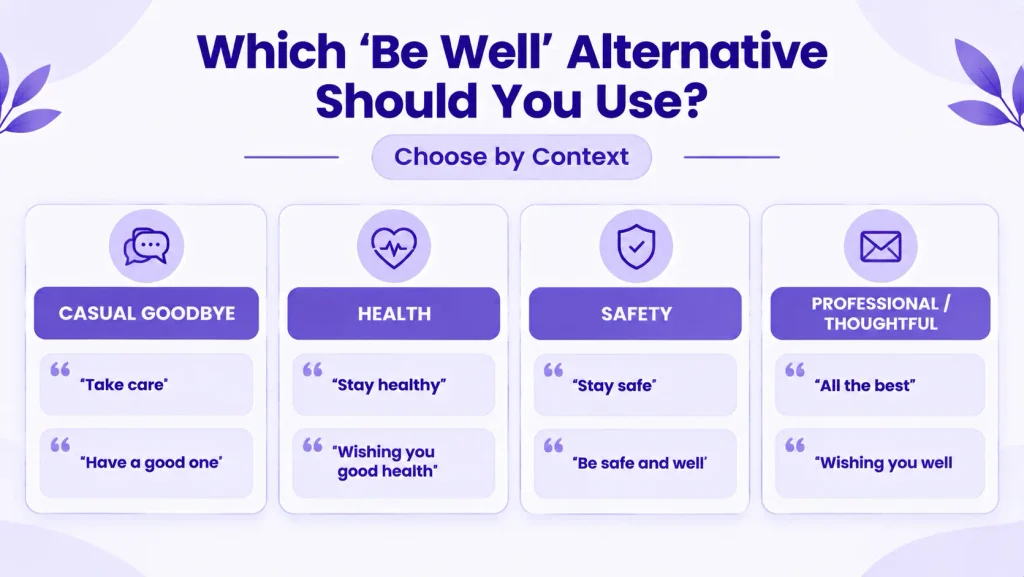
For most casual conversations, “take care” is the easiest replacement for “be well.”
For example:
- “It was nice seeing you. Take care!”
- “Thanks for coming by. Take care.”
- “I’ll talk to you soon. Take care!”
If you’re specifically talking about someone’s health, “stay healthy” is more precise.
Which Alternative Is Best for a Professional Email?
For a professional email, “all the best” or “wishing you well” usually works better than “be well.”
For example:
Thank you for your time and support. All the best,
[Name]
Or:
I wish you continued success in your new position. Wishing you well,
[Name]
“Take care” can also be perfectly appropriate in a friendly professional relationship, but it is more conversational.
Which Alternative Sounds the Warmest?
If you want to sound genuinely caring, “take good care of yourself” or “wishing you well” can carry more warmth than a simple “be well.”
For example:
I hope things get easier for you. Take good care of yourself.
This sounds more personal than:
Be well.
The best choice depends on your relationship with the person and the reason for your message.
Common Mistakes When Replacing “Be Well”
Using “Get Well Soon” for a General Farewell
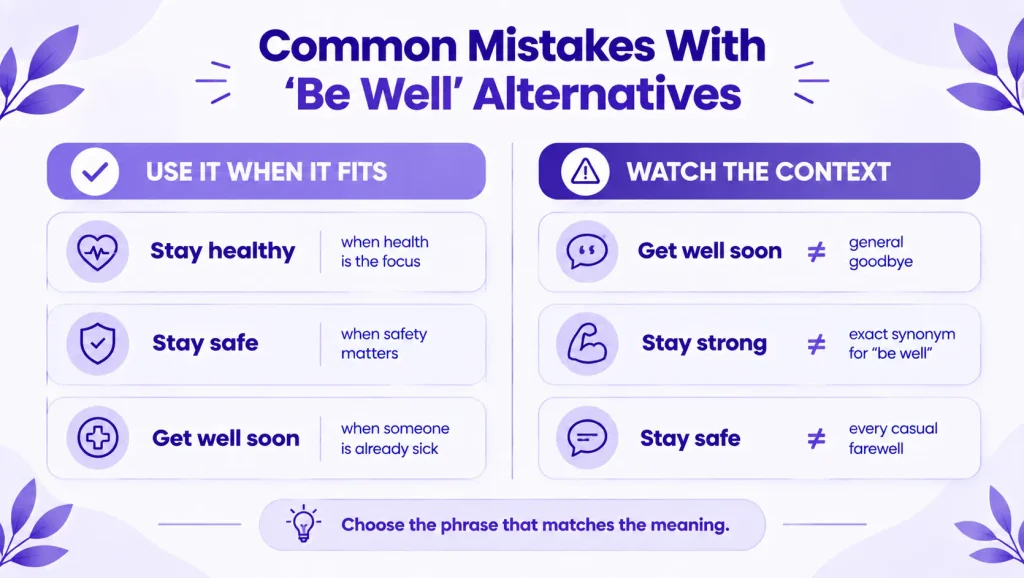
“Get well soon” specifically suggests that someone is sick or recovering.
Natural:
“I heard you’re feeling under the weather. Get well soon!”
Not natural:
“Thanks for meeting with me. Get well soon!”
For a normal goodbye, use “take care” or “all the best.”
Using “Stay Safe” When Safety Isn’t Relevant
“Stay safe” can sound unusual if there is no reason to mention safety.
For a normal email closing, “all the best” may be more natural.
Assuming Every Alternative Means Exactly the Same Thing
These expressions overlap with “be well,” but they aren’t interchangeable in every situation.
- Stay healthy focuses on physical health.
- Stay safe focuses on safety.
- Stay strong focuses on resilience.
- All the best expresses general good wishes.
- Have a good one is mainly a casual farewell.
Choosing the phrase based on its specific meaning will make your English sound more natural.
FAQs About “Be Well”
What is the most common way to say “be well”?
“Take care” is one of the most common natural alternatives in everyday American English. It works well as a friendly goodbye in conversations, texts, and casual messages.
Is “be well” formal?
“Be well” can sound somewhat formal, thoughtful, or deliberate, depending on the context. It isn’t incorrect or unusually formal, but “take care” is generally more conversational.
Can I say “be well” in an email?
Yes. “Be well” can work as a warm email closing, particularly in a personal or thoughtful message. For many professional emails, “all the best” is a more conventional closing.
What is another way to say “be well” to a friend?
You can say “take care,” “stay healthy,” “take good care of yourself,” or “stay safe.” The best choice depends on whether you’re expressing general affection, concern about health, or concern about safety.
What is a formal way to say “be well”?
“Wishing you well” and “wishing you good health” can sound more formal or thoughtful. “All the best” is also appropriate for many professional situations.
Is “stay well” the same as “be well”?
They are very similar. Both can express a wish for someone’s continued health or well-being. “Stay well” can sound slightly more like a wish for someone to remain healthy, while “be well” can function as a broader farewell.
Can “be well” sound rude?
Usually, no. “Be well” is generally polite. However, because it can sound somewhat formal or final, its tone may depend on the relationship and situation. In a casual conversation, “take care” may sound more natural.
Conclusion
The best alternative to “be well” depends on what you want to communicate. For an everyday goodbye, “take care” is a natural choice. Use “stay healthy” when health is the focus, “stay safe” when safety matters, and “wishing you well” for a warmer or more thoughtful message. For professional communication, “all the best” is a flexible option.
Choosing the phrase that matches the situation will make your message sound more natural than simply replacing “be well” with a word-for-word synonym.

Role: English Content Writer
Maren Whitlock writes practical English language content for RepublicsPress, with a focus on vocabulary, word alternatives, everyday expressions, and clear communication. Her articles are designed to make difficult or confusing language easier to understand, with simple explanations and useful examples readers can apply in real situations.