Another Way to Say Bad Things: 15 Natural Alternatives
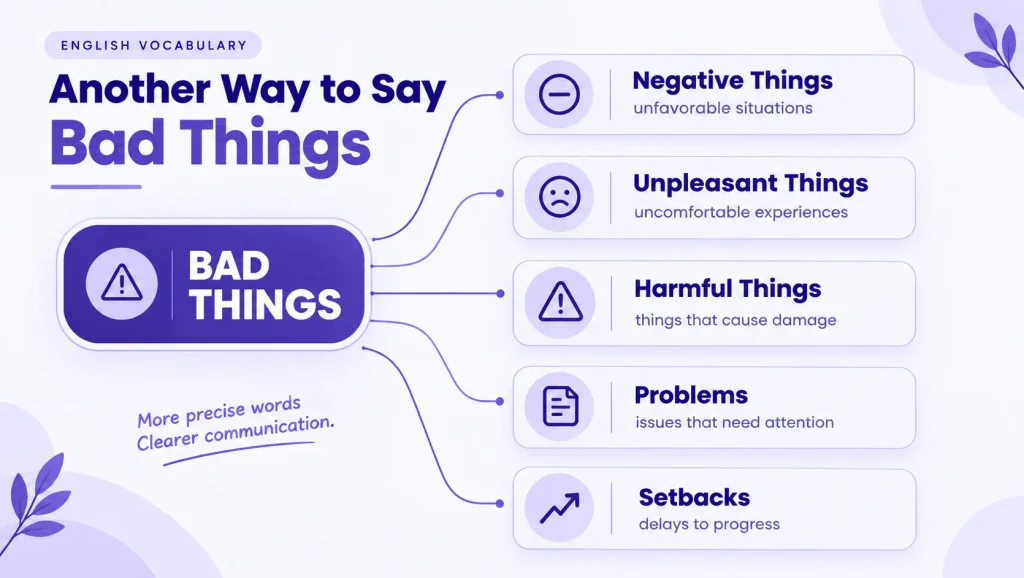
If you’re looking for another way to say “bad things,” the best choice depends on what you mean. Natural alternatives include negative things, unpleasant things, harmful things, problems, difficulties, troubles, setbacks, unfortunate events, and negative experiences. Some are neutral, while others suggest harm, criticism, or serious consequences.
Key Takeaways
- Negative things is a broad, neutral alternative to “bad things.”
- Unpleasant things works well for experiences, situations, or events you do not enjoy.
- Harmful things suggests that something causes damage or negative effects.
- Problems is useful when “bad things” refers to issues that need attention.
- Setbacks describes difficulties that delay progress rather than permanent failure.
- The best phrase depends on the meaning, tone, and situation.
What Does “Bad Things” Mean?
“Bad things” is a broad and informal phrase. It can refer to unpleasant experiences, problems, harmful actions, unfortunate events, mistakes, or negative situations.
Because the phrase is so general, replacing it with a more specific expression can make your writing clearer.
For example:
We all experience bad things sometimes.
Depending on the intended meaning, you could say:
We all experience difficult times sometimes.
Or:
Everyone faces setbacks from time to time.
Or:
Everyone goes through unpleasant experiences.
These alternatives are not exact synonyms. Each one highlights a slightly different meaning.
15 Natural Ways to Say “Bad Things”
1. Negative Things
“Negative things” is one of the closest general alternatives. It can describe thoughts, experiences, events, information, or situations with an unfavorable effect.
Best for: Neutral and general writing
Example:
“Try not to focus too much on the negative things that happened.”
Usage tip: This is a broad replacement, so use a more specific phrase when you know exactly what was bad.
2. Unpleasant Things
“Unpleasant things” refers to experiences or situations that are uncomfortable, undesirable, or difficult to deal with.
Best for: Everyday conversation and polite writing
Example:
“She went through some unpleasant things while moving to a new city.”
Usage tip: This sounds softer than “bad things” and does not necessarily suggest serious harm.
3. Harmful Things
Use “harmful things” when you mean actions, substances, habits, or situations that can cause damage or injury.
Best for: Health, safety, and serious contexts
Example:
“Children should be taught to recognize harmful things online.”
Usage tip: “Harmful” is stronger and more specific than “bad.”
4. Problems
“Problems” is a natural choice when “bad things” means issues that create difficulty or need to be solved.
Best for: Work, school, relationships, and everyday situations
Example:
“We need to talk about the problems affecting the project.”
Usage tip: Use “problems” when the situation involves something that needs attention or resolution.
5. Difficulties
“Difficulties” describes challenges or situations that make something harder to accomplish.
Best for: Professional, academic, and neutral writing
Example:
“The company faced several difficulties during the transition.”
Usage tip: This sounds more formal and less emotional than “bad things.”
6. Troubles
“Troubles” refers to problems, difficulties, or situations that cause worry or distress.
Best for: Conversational and expressive English
Example:
“He has had his share of troubles over the years.”
Usage tip: “Troubles” often has a personal or emotional tone.
7. Setbacks
A “setback” is a problem or disappointment that slows progress.
Best for: Work, education, business, personal goals, and projects
Example:
“The team experienced several setbacks but continued working toward its goal.”
Usage tip: This word does not mean everything is bad. It specifically suggests that progress has been interrupted or delayed.
8. Unfortunate Events
“Unfortunate events” is a polite and relatively formal way to describe things that happened with undesirable results.
Best for: Formal, professional, and sensitive situations
Example:
“The organization experienced several unfortunate events during the year.”
Usage tip: This expression can sound deliberately diplomatic when discussing sensitive subjects.
9. Negative Experiences
Use “negative experiences” when referring to unpleasant or disappointing things someone has personally experienced.
Best for: Personal writing, reviews, education, and conversations
Example:
“Negative experiences can sometimes teach us valuable lessons.”
Usage tip: This is more precise than “bad things” when you are talking about someone’s experiences.
10. Difficult Experiences
“Difficult experiences” is a softer, more empathetic alternative to “bad things.”
Best for: Personal, emotional, and supportive conversations
Example:
“She has learned a lot from her difficult experiences.”
Usage tip: This phrase focuses on the challenge without sounding overly dramatic.
11. Hard Times
“Hard times” is a common expression for periods of difficulty, stress, or hardship.
Best for: Casual and emotional contexts
Example:
“Friends often become especially important during hard times.”
Usage tip: “Hard times” usually refers to a period of difficulty rather than one specific event.
12. Adverse Situations
“Adverse situations” describes unfavorable or difficult circumstances.
Best for: Formal and professional writing
Example:
“The team learned how to respond effectively to adverse situations.”
Usage tip: This is more formal than “bad things” and may sound too technical for casual conversation.
13. Negative Consequences
Use “negative consequences” when you mean harmful or undesirable results caused by an action or decision.
Best for: Academic, professional, and explanatory writing
Example:
“Poor planning can lead to negative consequences.”
Usage tip: This phrase focuses on the results of something rather than the event itself.
14. Misfortunes
“Misfortunes” refers to unfortunate events or circumstances that cause difficulty or distress.
Best for: Formal, literary, or expressive writing
Example:
“Despite his many misfortunes, he remained hopeful.”
Usage tip: This word has a stronger literary quality than everyday “bad things.”
15. Things That Went Wrong
“Things that went wrong” is a natural conversational alternative when you are talking about mistakes, failures, or unexpected problems.
Best for: Casual conversation and storytelling
Example:
“Let’s review what happened and identify the things that went wrong.”
Usage tip: This is especially useful when describing a specific situation rather than bad experiences in general.
Which Alternative Should You Use?
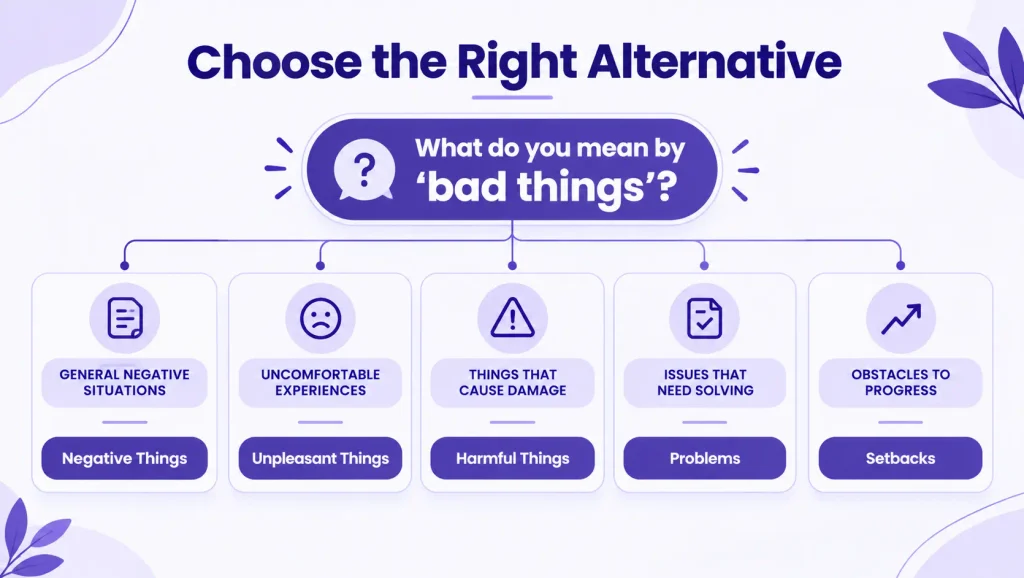
The right replacement depends on what “bad things” actually means.
| Alternative | Main meaning | Tone | Best context |
| Negative things | Unfavorable things | Neutral | General |
| Unpleasant things | Things that are uncomfortable or undesirable | Neutral | Everyday |
| Harmful things | Things that cause damage | Serious | Health, safety |
| Problems | Issues that need attention | Neutral | General, workplace |
| Difficulties | Challenges or obstacles | Formal | Academic, professional |
| Troubles | Problems or distress | Conversational | Personal |
| Setbacks | Problems that slow progress | Neutral | Goals, work |
| Unfortunate events | Events with undesirable outcomes | Formal | Sensitive situations |
| Negative experiences | Unpleasant personal experiences | Neutral | Personal |
| Difficult experiences | Challenging experiences | Gentle | Personal, emotional |
| Hard times | Periods of difficulty | Casual | Personal |
| Adverse situations | Unfavorable circumstances | Formal | Professional |
| Negative consequences | Undesirable results | Neutral/formal | Academic, professional |
| Misfortunes | Unfortunate circumstances | Literary | Formal, expressive |
| Things that went wrong | Mistakes or unexpected problems | Casual | Conversation |
“Bad Things” vs. “Negative Things”
These expressions are similar, but they are not always interchangeable.
“Bad things” is informal and broad:
We all have bad things happen to us.
“Negative things” sounds more neutral:
We should learn from negative things that happen to us.
“Negative” can also describe effects, information, thoughts, experiences, or outcomes, making it useful in more formal writing.
“Bad Things” vs. “Harmful Things”
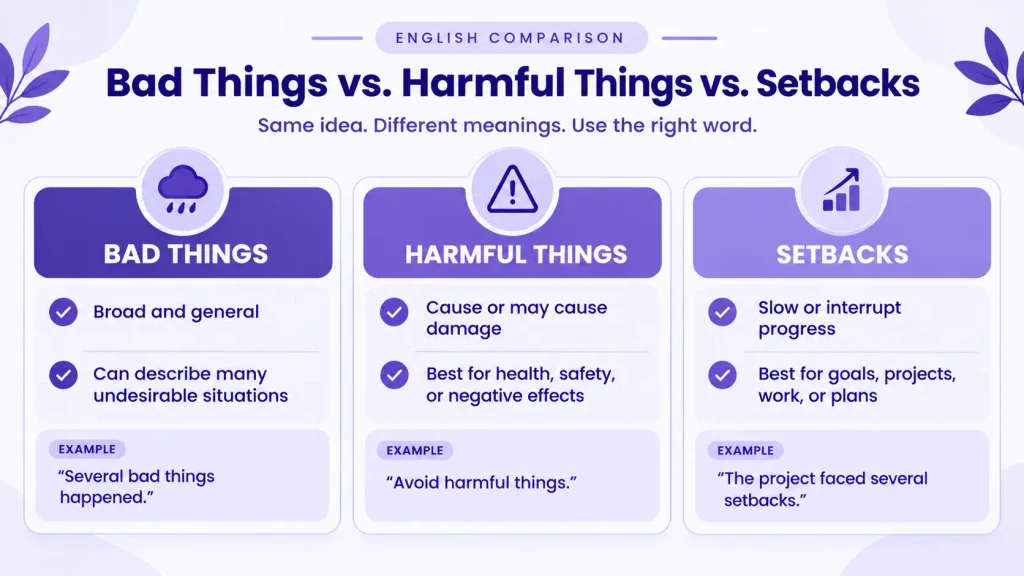
These phrases have an important difference.
Bad things can mean anything undesirable.
Harmful things specifically suggest damage or harm.
For example:
Avoid bad things.
This is vague.
A more precise sentence would be:
Avoid things that could be harmful to your health.
The second sentence tells the reader what kind of negative effect is involved.
“Bad Things” vs. “Setbacks”
A setback is not simply anything bad. It specifically affects progress.
For example:
The project experienced several setbacks.
This suggests that something interrupted or slowed the project’s progress.
You would not normally use “setbacks” for every unpleasant event. The word works best when there is a goal, plan, or process that has been disrupted.
“Bad Things” vs. “Hard Times”
These expressions also differ in scope.
Bad things can refer to individual events:
Several bad things happened yesterday.
Hard times usually describes a difficult period:
The family went through hard times after losing their home.
If you’re talking about a period of struggle, “hard times” may sound much more natural.
How to Choose the Right Alternative
Before replacing “bad things,” ask what you actually want to communicate.
If you mean general negative situations
Use negative things.
Don’t let negative things affect your confidence.
If you mean uncomfortable experiences
Use unpleasant things.
We sometimes have to deal with unpleasant things at work.
If you mean things that cause damage
Use harmful things.
Keep children away from harmful things.
If you mean issues that need to be solved
Use problems.
We need to address these problems quickly.
If you mean obstacles to progress
Use setbacks.
The team overcame several setbacks.
If you mean a difficult period
Use hard times.
They supported each other through hard times.
If you mean undesirable results
Use negative consequences.
The decision could have negative consequences.
Common Mistakes When Replacing “Bad Things”
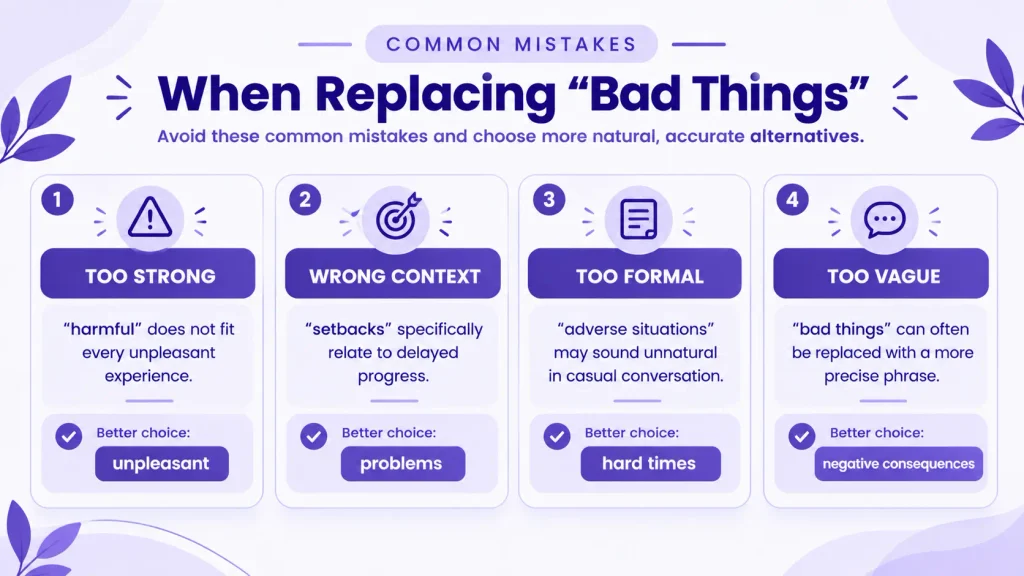
Using a word that is too strong
Not every bad experience is harmful.
For example, saying:
I had a harmful experience at the restaurant.
may sound unnatural if you simply mean that the experience was disappointing.
“Unpleasant experience” or “negative experience” may fit better.
Treating “setbacks” as a general synonym
A setback specifically involves delayed or disrupted progress. It should not replace “bad things” in every sentence.
Using overly formal language in casual conversation
Words such as adverse and misfortunes can sound formal in everyday speech.
If you’re talking with a friend, “problems,” “hard times,” or “difficult things” may sound more natural.
Choosing a vague phrase when a precise one is available
“Bad things” does not tell the reader much.
Compare:
The decision caused bad things.
with:
The decision created several negative consequences.
The second sentence gives the reader a clearer idea of the relationship between the decision and its results.
Frequently Asked Questions
What is a better word for “bad things”?
There is no single replacement that works in every situation. Negative things, problems, difficulties, unpleasant things, harmful things, setbacks, and negative experiences can all work depending on the intended meaning.
What is a polite way to say “bad things”?
Unpleasant things, difficult experiences, and unfortunate events can sound softer and more polite than “bad things,” especially when discussing sensitive situations.
What is a formal way to say “bad things”?
Depending on the context, adverse situations, negative consequences, unfortunate events, or difficulties may work well in formal writing.
What is another way to say “bad experiences”?
Natural alternatives include negative experiences, unpleasant experiences, and difficult experiences. The best option depends on how strong or emotional you want the phrase to sound.
Is “negative things” the same as “bad things”?
They are often similar, but “negative things” is usually more neutral and can sound more appropriate in formal or analytical writing. “Bad things” is broader and more conversational.
What is another way to say “bad situations”?
You could say difficult situations, challenging situations, adverse situations, unpleasant circumstances, or problematic situations, depending on the context.
What is another way to say “bad outcomes”?
Negative outcomes, undesirable results, and negative consequences are natural alternatives. “Negative consequences” is especially useful when an action directly causes the result.
Final Thoughts
“Bad things” is understandable, but it is often too broad when you want precise writing. The best alternative depends on what you mean: problems for issues that need solving, setbacks for interrupted progress, harmful things for things that cause damage, negative experiences for personal experiences, and hard times for difficult periods.
Choosing the specific phrase that matches your meaning will make your American English sound clearer, more natural, and more precise.

Role: Language & Content Specialist
Tessa Holloway creates language-focused content covering phrases, idioms, expressions, vocabulary, and natural American English. Her work helps readers choose words and expressions that fit different everyday, academic, and professional situations.