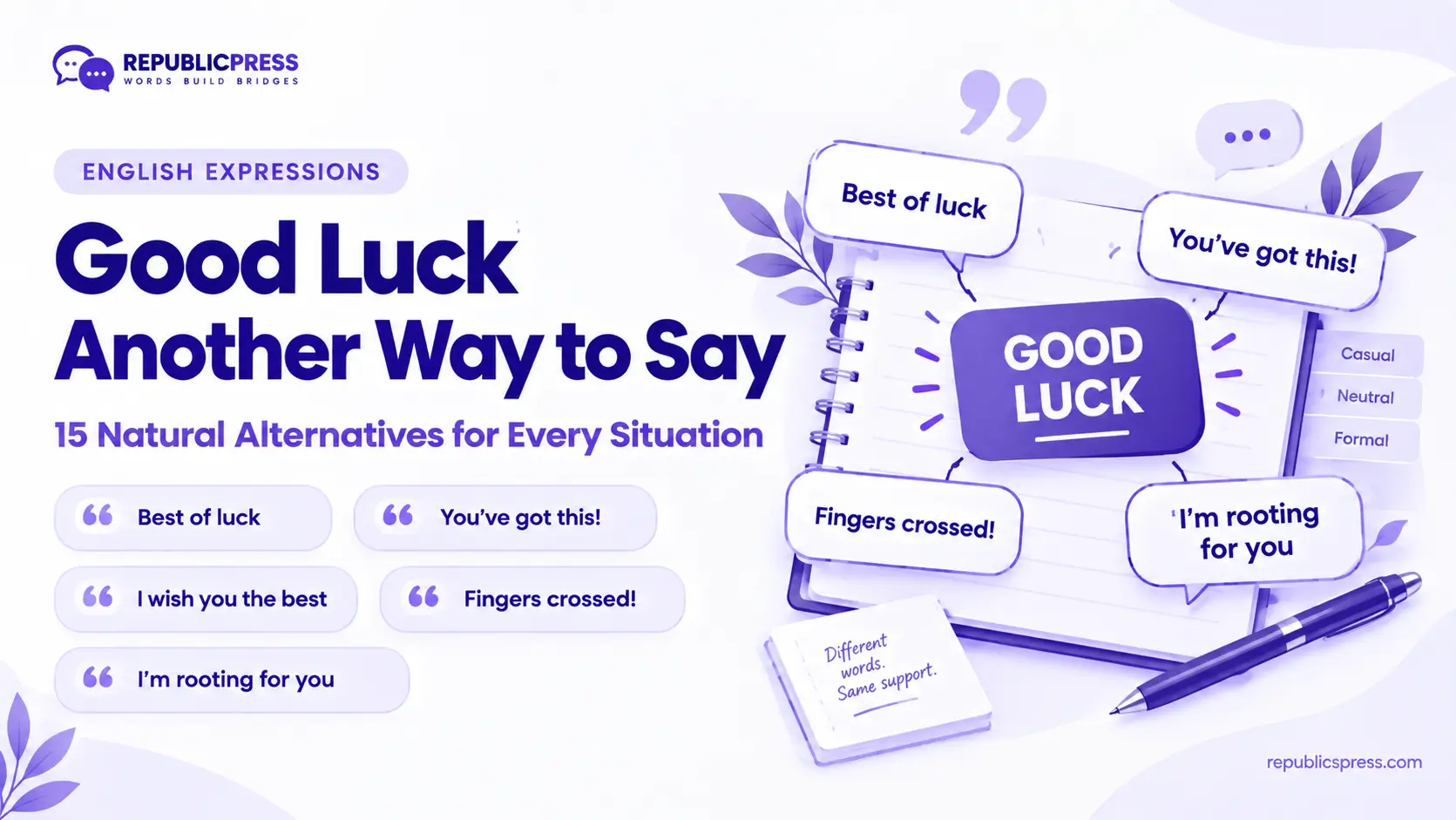
Good Luck Another Way to Say: 15 Natural Alternatives
If you’re looking for another way to say “good luck,” the best choice depends on the situation. For a casual conversation, “You’ve got this!” sounds warm and encouraging. For a more formal message, “I wish you the best” works well. Other options can express confidence, hope, encouragement, or support.
Key Takeaways
- “Good luck” is a common way to wish someone success.
- “You’ve got this!” is friendly and encouraging.
- “Best of luck” is a natural, slightly warmer variation.
- “I wish you the best” works well in formal and personal situations.
- “Fingers crossed!” expresses hope that something goes well.
- The right alternative depends on your relationship with the person and the situation.
What Does “Good Luck” Mean?
“Good luck” is a common expression used to wish someone success or a positive result. People often say it before an exam, interview, competition, performance, trip, difficult task, or important event.
For example:
Good luck on your interview tomorrow!
The phrase is friendly and widely understood, but you may want a different expression to sound more personal, encouraging, professional, or enthusiastic.
15 Other Ways to Say “Good Luck”
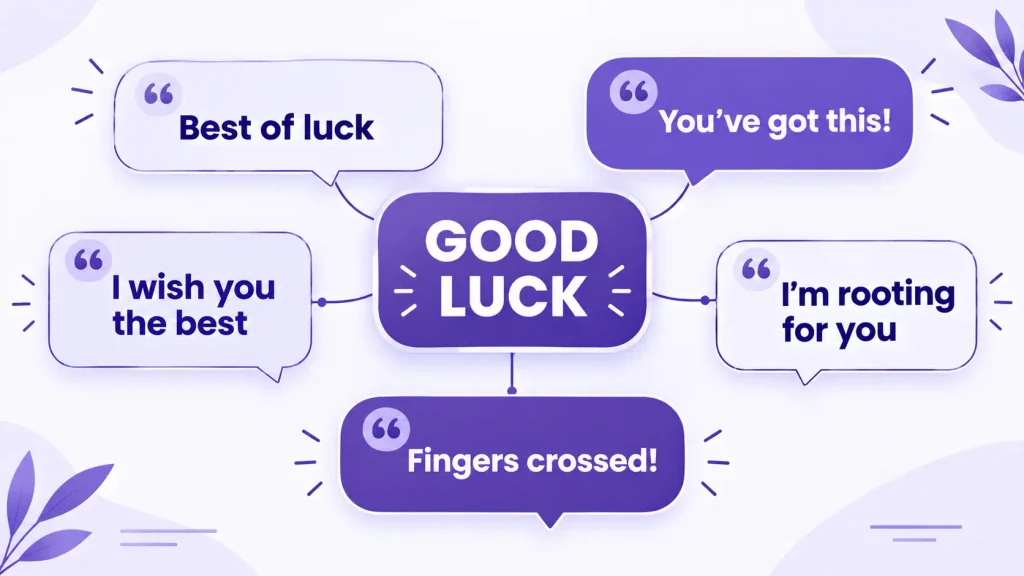
1. Best of Luck
“Best of luck” has almost the same meaning as “good luck.” It is natural, friendly, and suitable for many situations.
Example:
Best of luck with your new job!
Best for: Everyday conversations, messages, school, work, and important events.
2. You’ve Got This!
“You’ve got this!” shows confidence in someone’s ability to succeed. It is more encouraging than simply saying “good luck.”
Example:
You’ve prepared for this exam for weeks. You’ve got this!
Best for: Friends, family, coworkers, exams, presentations, interviews, and competitions.
3. I Wish You the Best
“I wish you the best” is warm and polite. It can work in both personal and professional situations.
Example:
I wish you the best in your new position.
Best for: Professional messages, major life changes, and personal situations.
4. All the Best
“All the best” is a versatile expression that can communicate good wishes without directly saying “good luck.”
Example:
All the best with your upcoming presentation.
Best for: Professional emails, messages, farewells, and everyday communication.
5. Wishing You Success
“Wishing you success” focuses specifically on achieving a positive result.
Example:
Wishing you success in your new business venture.
Best for: Professional, academic, and formal situations.
6. You Can Do It!
“You can do it!” expresses confidence and encouragement. It is especially useful when someone is nervous about a challenge.
Example:
Don’t worry about the interview. You can do it!
Best for: Encouraging friends, students, coworkers, and family members.
7. I’m Rooting for You
“I’m rooting for you” means that you are supporting someone and hoping they succeed.
Example:
I know you’re nervous about the competition, but I’m rooting for you!
Best for: Friendly and supportive conversations.
8. Fingers Crossed!
“Fingers crossed!” expresses hope that something will have a good outcome. It is casual and often used when the result is uncertain.
Example:
Your interview sounds promising. Fingers crossed!
Best for: Casual conversations, texts, and social situations.
9. Knock ’Em Dead!
“Knock ’em dead!” is an informal idiom meaning “do an excellent job” or “make a strong impression.” It is often used before a performance, presentation, or important appearance.
Example:
You’re going on stage in five minutes. Knock ’em dead!
Best for: Performances, presentations, interviews, and other situations where confidence matters.
10. Go for It!
“Go for it!” encourages someone to take action confidently.
Example:
You’ve been thinking about applying for the position. Go for it!
Best for: Casual conversations and situations involving a decision or challenge.
11. I’m Behind You All the Way
This phrase communicates strong support. It does not simply wish someone luck; it tells them that you support their efforts.
Example:
Whatever you decide, I’m behind you all the way.
Best for: Personal conversations, major decisions, and emotional support.
12. Sending You Good Vibes
“Sending you good vibes” is a casual, positive expression used to show support and hope for a good outcome.
Example:
Sending you good vibes for your interview today!
Best for: Text messages, social media, and friendly conversations.
13. Hope It Goes Well
“Hope it goes well” is simple and natural. It is useful when you want to sound sincere without being overly enthusiastic.
Example:
Hope your appointment goes well tomorrow.
Best for: Everyday conversations and casual messages.
14. Wishing You the Best of Luck
“Wishing you the best of luck” combines a warm wish with the traditional idea of good luck.
Example:
Wishing you the best of luck on your final exam!
Best for: Personal messages, cards, school, work, and important events.
15. May Everything Go Your Way
“May everything go your way” expresses a hope that circumstances will work out favorably.
Example:
You’ve worked hard for this opportunity. May everything go your way.
Best for: Warm, thoughtful, and slightly more expressive messages.
Quick Comparison: Which Alternative Should You Use?
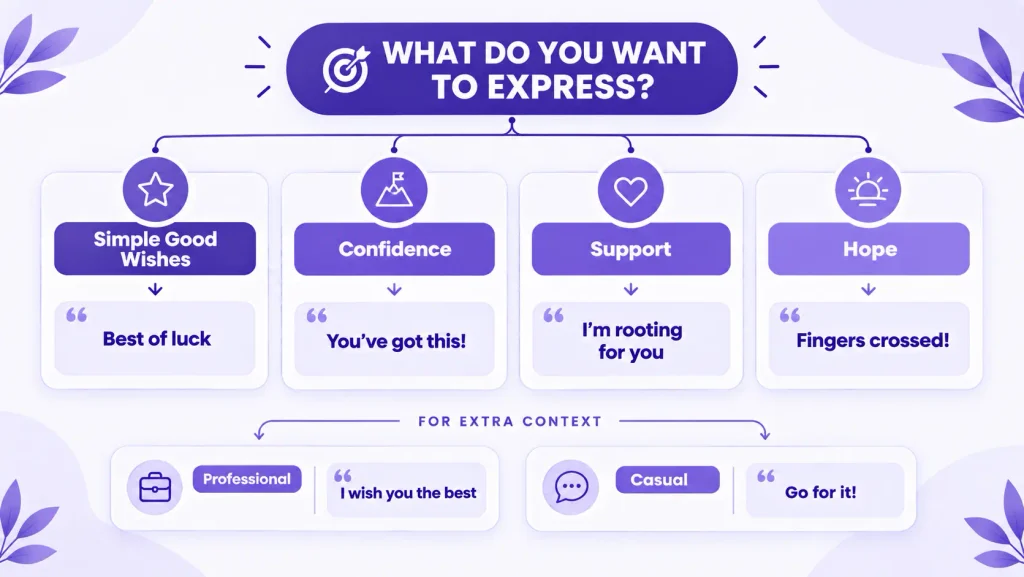
| Alternative | Tone | Best Context |
| Best of luck | Friendly, neutral | Almost any situation |
| You’ve got this! | Encouraging | Challenges and exams |
| I wish you the best | Warm, polite | Personal or professional |
| All the best | Polite, versatile | Messages and emails |
| Wishing you success | Formal | Work and academic settings |
| You can do it! | Encouraging | Friends and family |
| I’m rooting for you | Supportive | Competitions and challenges |
| Fingers crossed! | Casual | Uncertain outcomes |
| Knock ’em dead! | Playful, confident | Performances and presentations |
| Go for it! | Energetic | Decisions and challenges |
| I’m behind you all the way | Strongly supportive | Personal situations |
| Sending you good vibes | Casual, warm | Texts and social media |
| Hope it goes well | Simple, sincere | Everyday situations |
| Wishing you the best of luck | Warm | Important events |
| May everything go your way | Thoughtful | Personal messages |
Formal Ways to Say “Good Luck”
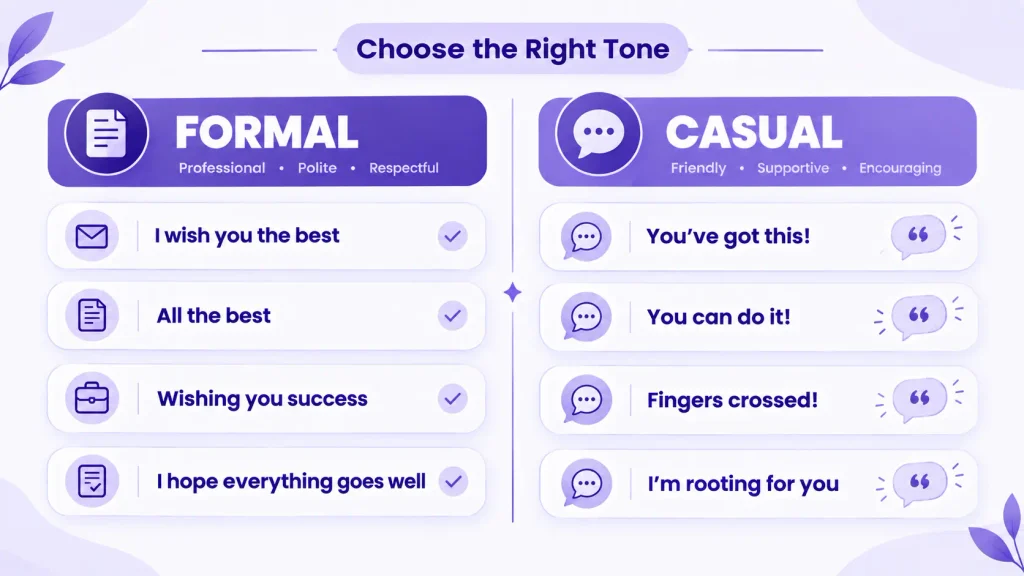
If you’re writing to a coworker, client, student, or professional contact, some alternatives sound more appropriate than casual expressions.
Good choices include:
- I wish you the best.
- All the best.
- Wishing you success.
- Wishing you all the best in your new role.
- I hope everything goes well.
- Best wishes for your upcoming presentation.
For example:
Casual:
Good luck with your interview!
Professional:
Wishing you all the best for your interview.
The second version sounds polished without being overly formal.
Casual Ways to Say “Good Luck”
For friends and family, you can use more energetic expressions:
- You’ve got this!
- You can do it!
- Go for it!
- I’m rooting for you!
- Fingers crossed!
- Knock ’em dead!
- Sending you good vibes!
For example:
Your exam starts in an hour. You’ve got this!
This sounds more personal and encouraging than simply saying “Good luck.”
“Good Luck” vs. “You’ve Got This”
These expressions are related, but they are not identical.
“Good luck” wishes someone a positive outcome.
“You’ve got this!” shows confidence that the person can handle the situation.
Compare:
Good luck with your presentation!
You’ve got this! You know the material really well.
The second sentence provides more personal encouragement because it focuses on the person’s ability rather than luck.
Common Mistakes When Replacing “Good Luck”
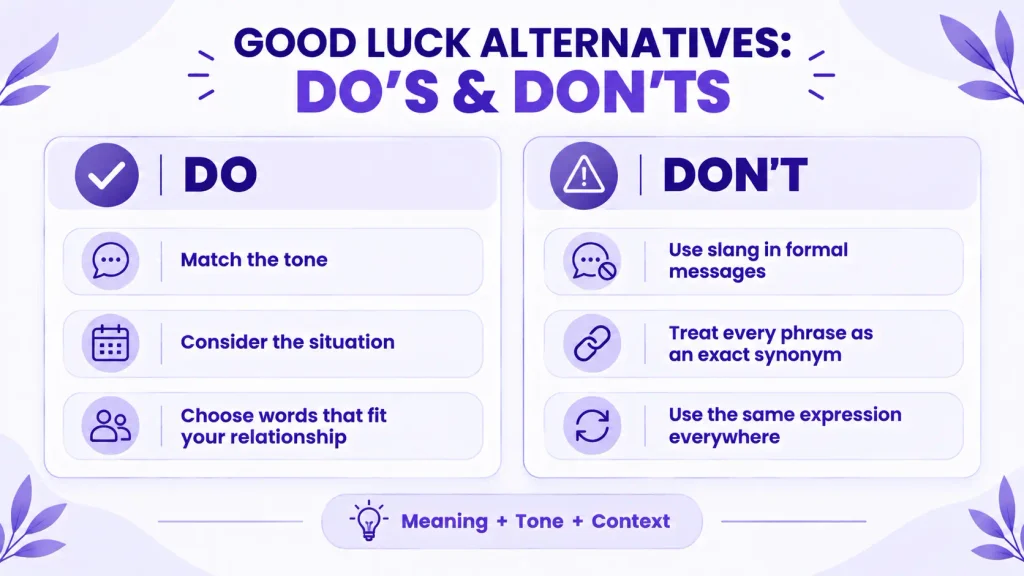
Using slang in a formal message
Expressions such as “Knock ’em dead!” and “Sending you good vibes” may sound too casual in a formal email.
Use:
Wishing you success with your presentation.
instead of:
Knock ’em dead!
Treating every alternative as an exact synonym
Some expressions change the meaning slightly. “I’m rooting for you,” for example, emphasizes support, while “Fingers crossed!” emphasizes hope about an uncertain outcome.
Choose the phrase based on what you actually want to communicate.
Using “Best wishes” for every situation
“Best wishes” is polite, but it can sound more like a general expression of goodwill than a direct wish for success. For an exam or interview, “Best of luck” or “Wishing you success” may be more specific.
FAQs About Another Way to Say “Good Luck”
What is a professional way to say “good luck”?
“I wish you the best,” “All the best,” and “Wishing you success” are professional alternatives. The best choice depends on how formal your relationship is and what the person is doing.
What is a friendly way to say “good luck”?
“You’ve got this!”, “I’m rooting for you,” and “You can do it!” are friendly and encouraging options.
What can I say instead of “good luck” in a text?
For a text message, try “You’ve got this!”, “Fingers crossed!”, “Hope it goes well,” or “I’m rooting for you.”
What is a formal way to wish someone success?
“Wishing you success” is a direct formal option. “I wish you the best” is also appropriate for many professional situations.
Is “best of luck” better than “good luck”?
“Best of luck” and “good luck” have essentially the same purpose. Neither is universally better. “Best of luck” can sound slightly warmer in some contexts.
What does “fingers crossed” mean?
“Fingers crossed” means you hope something will have a positive outcome, especially when the result is uncertain.
Can I say “good luck” in a professional email?
Yes. “Good luck” is not inherently unprofessional. However, “I wish you the best” or “Wishing you success” may sound more polished in a formal message.
Final Thoughts
There are many natural ways to say “good luck,” but the right expression depends on the situation. Use “You’ve got this!” when you want to encourage someone, “I wish you the best” for a warm and polished message, and “Wishing you success” for a more formal setting. For casual conversations, “Best of luck,” “Fingers crossed,” and “I’m rooting for you” all work naturally.

Role: English Content Writer
Maren Whitlock writes practical English language content for RepublicsPress, with a focus on vocabulary, word alternatives, everyday expressions, and clear communication. Her articles are designed to make difficult or confusing language easier to understand, with simple explanations and useful examples readers can apply in real situations.