Another Way to Say Congratulation: 20 Natural Alternatives
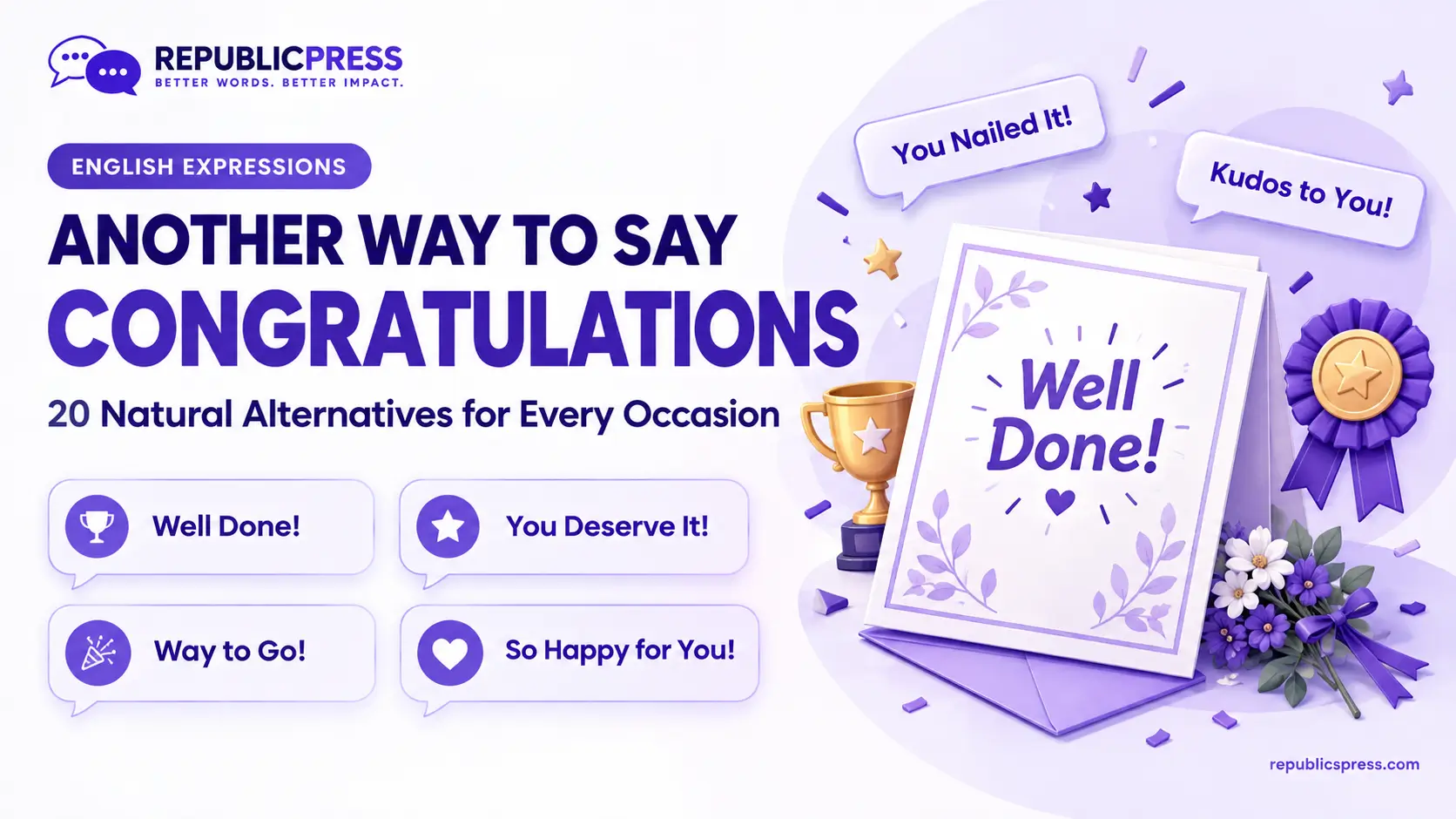
When you want to congratulate someone, you can say “Congratulations!”, “Well done!”, “You deserve it!”, or “I’m so happy for you!” The best alternative depends on the situation, such as a new job, graduation, promotion, wedding, or personal achievement. Some expressions sound professional, while others feel warmer and more casual.
Key Takeaways
- “Well done!” works well for achievements and hard work.
- “You deserve it!” shows that someone has earned their success.
- “I’m so happy for you!” expresses personal joy and support.
- “Kudos to you!” is a casual way to recognize an achievement.
- “Best wishes!” suits future plans and new beginnings, but it is not a direct synonym for congratulations.
- Choose an expression that matches your relationship with the person and the occasion.
What Does “Congratulation” Mean?
A congratulation is an expression of pleasure or praise when someone achieves something, receives good news, or experiences a happy event.
In everyday American English, “Congratulations!” is the standard expression. Although congratulation is a correct singular noun in certain contexts, people usually use the plural form when celebrating someone’s success.
For example:
- “Congratulations on your promotion!”
- “Congratulations on graduating!”
- “Congratulations to the happy couple!”
If you want a different way to express the same feeling, several natural alternatives can help you sound more personal, enthusiastic, or professional.
20 Other Ways to Say Congratulations
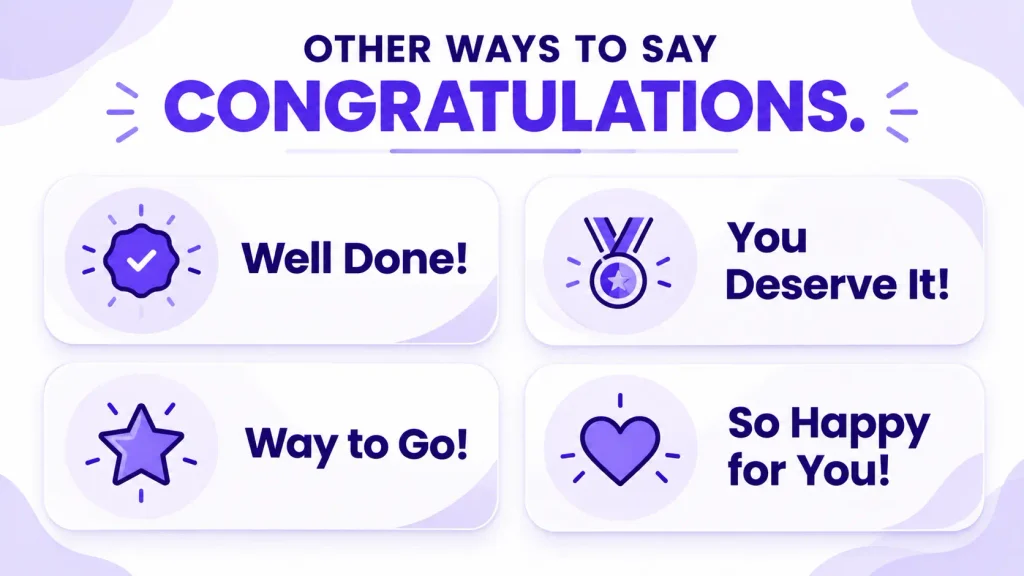
1. Well Done!
Meaning: You have done something successfully, and your effort deserves recognition.
Best for: Work achievements, school results, completed projects, and personal goals.
Example: “Well done on finishing your certification! All that studying paid off.”
This is one of the most natural alternatives when you want to praise someone’s performance or effort.
2. You Deserve It!
Meaning: The person has earned their success through effort, dedication, or good work.
Best for: Promotions, awards, career achievements, and personal milestones.
Example: “You finally got the promotion! You deserve it after everything you’ve done for the team.”
Use this expression when you want to make your congratulations feel personal and sincere.
3. I’m So Happy for You!
Meaning: You feel genuine happiness about another person’s good news.
Best for: Engagements, new jobs, graduations, and exciting life events.
Example: “You got accepted into your dream college? I’m so happy for you!”
This phrase focuses on your feelings rather than simply recognizing the achievement.
4. Way to Go!
Meaning: A cheerful way to praise someone for doing something well.
Best for: Casual conversations, sports, school achievements, and everyday victories.
Example: “You finished the entire project ahead of schedule? Way to go!”
It sounds friendly and enthusiastic, making it a great choice for friends, family, and coworkers you know well.
5. Kudos to You!
Meaning: Praise or recognition for something well done.
Best for: Workplace accomplishments, team contributions, and public recognition.
Example: “Kudos to you for organizing such a successful community event.”
“Kudos” sounds slightly more polished than “Way to go!” while remaining approachable.
6. That’s Amazing!
Meaning: An enthusiastic reaction to impressive or exciting news.
Best for: Personal achievements, unexpected success, and exciting announcements.
Example: “You published your first book? That’s amazing!”
This is a natural conversational alternative, especially when you want to react with excitement rather than offer formal praise.
7. Fantastic Job!
Meaning: Strong praise for excellent work or a successful result.
Best for: Workplace projects, presentations, school assignments, and creative work.
Example: “Fantastic job on the presentation. The client loved your ideas.”
You can also say “Great job!” when you want a shorter, more common expression.
8. You Nailed It!
Meaning: You did something extremely well, often with confidence or skill.
Best for: Presentations, performances, interviews, and challenging tasks.
Example: “Your interview went perfectly. You nailed it!”
This is an informal expression. It works especially well when someone has handled a difficult task successfully.
9. I’m Proud of You!
Meaning: You feel pride in someone’s achievement, growth, or effort.
Best for: Family milestones, personal progress, education, and overcoming challenges.
Example: “I know how hard you worked for this degree. I’m proud of you.”
Unlike a general congratulation, this phrase expresses a personal emotional connection. It is especially meaningful when spoken by someone close to the person.
10. What an Achievement!
Meaning: The accomplishment is impressive or important.
Best for: Major milestones, professional success, and significant personal goals.
Example: “Completing your doctorate while working full-time is quite an achievement.”
This expression puts the focus on the importance of what the person accomplished.
11. Hats Off to You!
Meaning: A way of showing admiration and respect for someone’s effort or success.
Best for: Difficult accomplishments, professional milestones, and impressive performances.
Example: “Hats off to you for leading the team through such a challenging project.”
This idiom is friendly and respectful. It often communicates admiration for the effort behind an achievement.
12. Cheers to Your Success!
Meaning: A celebratory expression that recognizes someone’s success.
Best for: Celebrations, parties, team milestones, and informal messages.
Example: “Cheers to your success and everything that comes next!”
It works particularly well when people are celebrating together. It is less suitable for formal business correspondence.
13. I’m Thrilled for You!
Meaning: You feel extremely happy and excited about someone’s good news.
Best for: Major personal milestones, career breakthroughs, and exciting announcements.
Example: “You landed your dream job? I’m thrilled for you!”
This is warmer and more expressive than “I’m happy for you.”
14. Congratulations on Your Achievement!
Meaning: A direct, slightly more formal expression of praise.
Best for: Professional messages, certificates, award announcements, and formal occasions.
Example: “Congratulations on your achievement and your dedication to the project.”
Although it still uses the original word, this version provides a more formal alternative to a short “Congratulations!”
15. More Power to You!
Meaning: An expression of support or admiration for someone’s determination, choices, or efforts.
Best for: Personal goals, ambitious plans, and independent decisions.
Example: “You’re starting your own business after years of planning? More power to you!”
This is not an exact synonym for congratulations. It communicates encouragement and admiration, so use it when those feelings fit the situation.
16. What a Milestone!
Meaning: A significant stage or achievement worth recognizing.
Best for: Anniversaries, career progress, business growth, and personal development.
Example: “Ten years in business is a huge milestone. Congratulations to your entire team!”
Use this phrase when the occasion marks meaningful progress rather than a small, everyday success.
17. You’ve Earned This!
Meaning: The person deserves the reward or recognition they have received.
Best for: Promotions, awards, scholarships, and achievements that required sustained effort.
Example: “Enjoy your new position. You’ve earned this through years of hard work.”
This phrase emphasizes effort and fairness. It can sound especially sincere when someone has worked toward a goal for a long time.
18. Bravo!
Meaning: A short expression of admiration or approval for an impressive performance or accomplishment.
Best for: Performances, creative achievements, presentations, and successful efforts.
Example: “Bravo! Your speech was clear, moving, and well delivered.”
It is widely understood in American English, though it can sound more theatrical than an ordinary “Great job!”
19. Best Wishes on Your New Journey!
Meaning: A warm expression of support for someone beginning a new stage of life.
Best for: Weddings, new jobs, relocations, and major life changes.
Example: “Best wishes on your new journey as you start your career in California!”
This is a contextual alternative rather than a direct synonym. It focuses on the person’s future instead of celebrating a completed achievement.
20. Here’s to Many More Successes!
Meaning: A wish for continued achievements in the future.
Best for: Business anniversaries, career milestones, team celebrations, and professional achievements.
Example: “Congratulations on opening your third location. Here’s to many more successes!”
This phrase combines recognition of current success with optimism about future accomplishments.
How to Choose the Right Alternative
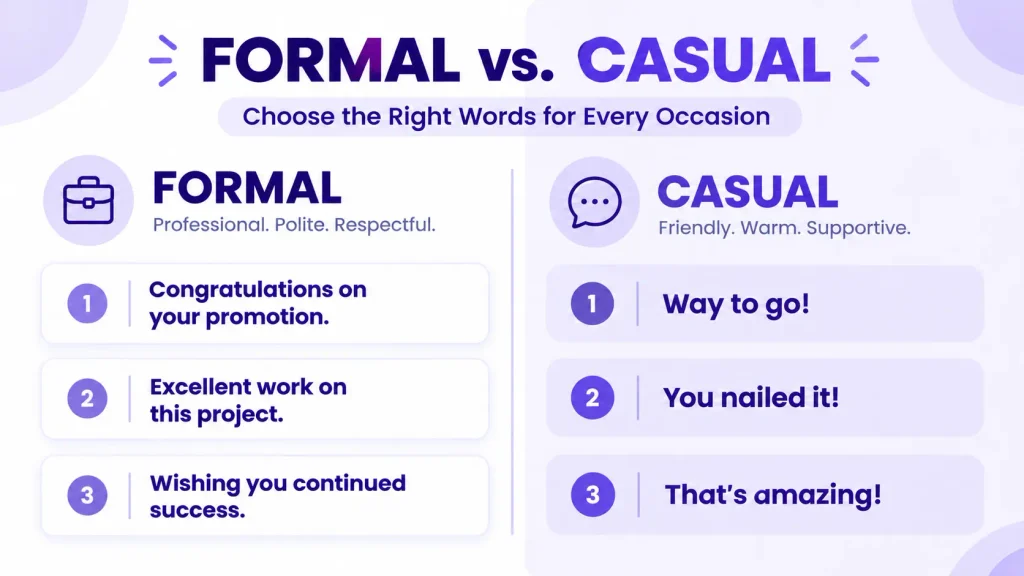
Not every congratulatory phrase fits every situation. Use the occasion, your relationship with the person, and the tone you want to create to guide your choice.
| Situation | Best expression | Why it works |
|---|---|---|
| New job or promotion | You deserve it! | Recognizes hard work |
| Graduation | Well done! | Praises effort and achievement |
| Engagement or wedding | I’m so happy for you! | Expresses personal joy |
| Successful presentation | You nailed it! | Celebrates excellent performance |
| Workplace recognition | Kudos to you! | Sounds positive and professional |
| Major life achievement | I’m proud of you! | Shows personal support |
| New business | Here’s to many more successes! | Celebrates future potential |
| Formal award | Congratulations on your achievement! | Sounds respectful and polished |
| Difficult challenge | Hats off to you! | Shows admiration |
| New chapter in life | Best wishes on your new journey! | Focuses on the future |
Professional Ways to Say Congratulations
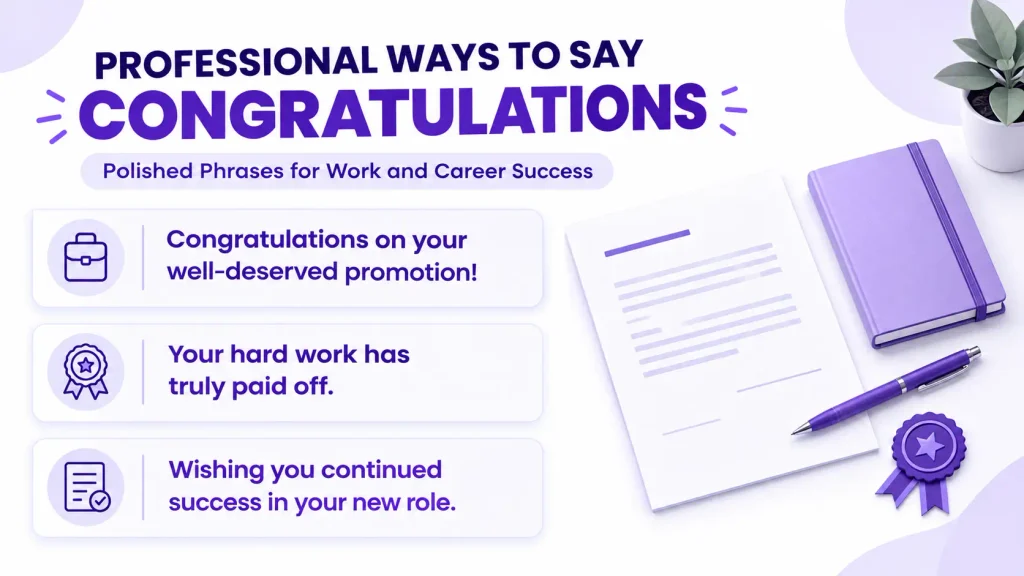
In workplace communication, your message should be positive, clear, and appropriate for the relationship. You can use the following expressions in emails, team chats, and professional announcements.
- “Congratulations on your well-deserved promotion!” — Recognizes career progress.
- “Excellent work on this project.” — Praises a specific professional achievement.
- “Your hard work has truly paid off.” — Highlights effort and results.
- “Wishing you continued success in your new role.” — Offers support for the future.
- “Thank you for your outstanding contribution.” — Recognizes someone’s impact on a team or project.
For example, if a coworker receives a promotion, you could write:
“Congratulations on your well-deserved promotion! Your dedication and hard work have really paid off. Wishing you continued success in your new role.”
This sounds more personal than a short congratulatory message while remaining professional.
Casual Ways to Say Congratulations in a Text
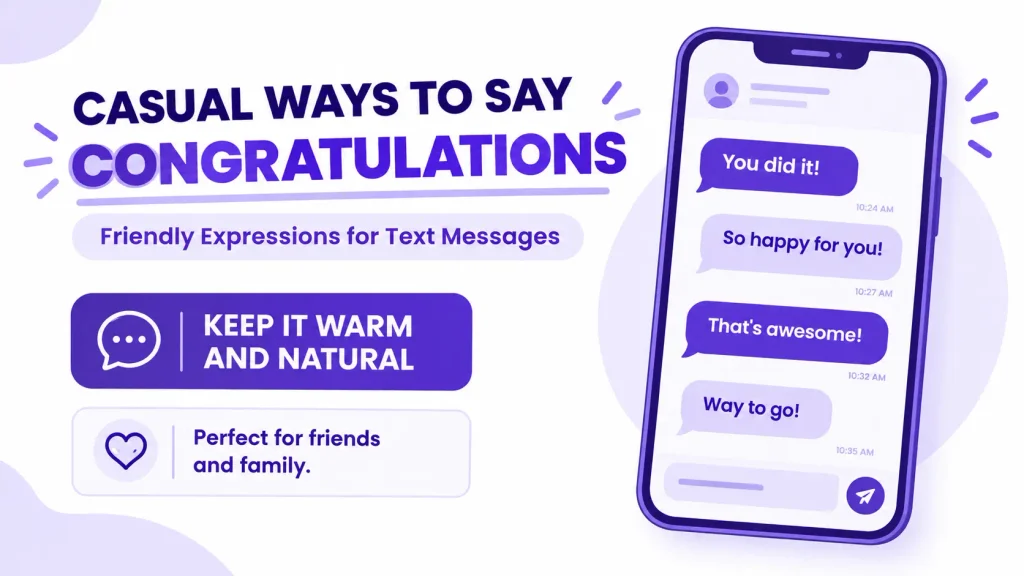
When texting a friend or family member, you can be more relaxed and expressive.
- “That’s awesome!”
- “Way to go!”
- “You did it!”
- “So happy for you!”
- “You’re killing it!”
- “Big win!”
- “You deserve all the good things coming your way!”
For example, if your friend passes an important exam, you might text:
“YOU DID IT! I knew all that studying would pay off. So happy for you!”
“You’re killing it!” is very informal and means someone is doing exceptionally well. It is best for people you know comfortably rather than formal or sensitive situations.
Common Mistakes to Avoid
Choosing the right phrase means understanding what it actually communicates.
- Using “Best wishes” for every achievement: It usually expresses hope for the future rather than direct praise for something already accomplished.
- Using “You nailed it!” in every formal email: This phrase is casual and works better in friendly professional settings than in highly formal correspondence.
- Confusing encouragement with congratulations: “Good luck!” expresses hope for success, while “Congratulations!” usually recognizes good news or an achievement.
- Using “I’m proud of you” with everyone: This expression can feel personal or parental. “Great work!” may be more suitable for a distant colleague.
- Forgetting the occasion: Adding “on your graduation,” “on the promotion,” or “on your new job” makes your message clearer and more thoughtful.
Frequently Asked Questions
What is the most common alternative to congratulations?
“Well done!” is a common alternative when praising an achievement. “Great job!” and “I’m so happy for you!” are also natural choices, depending on whether you want to recognize someone’s performance or share their excitement.
How do you congratulate someone without saying congratulations?
You can say “You deserve it!”, “Way to go!”, “I’m so happy for you!”, or “That’s fantastic news!” These expressions communicate praise or happiness without repeating the word congratulations.
What is a formal way to say congratulations?
“Please accept my sincere congratulations on your achievement” is formal and respectful. “Congratulations on your well-deserved success” is another suitable option for professional messages and award announcements.
What is a short way to congratulate someone?
Use “Well done!”, “Bravo!”, “Great job!”, or “Way to go!” These short expressions work well in conversations, text messages, and brief notes.
Can I say “kudos” instead of congratulations?
Yes. “Kudos to you!” recognizes and praises someone’s achievement. It is especially useful in workplace messages and casual professional communication, although it can sound less celebratory than “Congratulations!”
Is “good luck” the same as “congratulations”?
No. “Good luck” expresses hope that someone will succeed, while “congratulations” recognizes an achievement or happy event. You can say “Good luck with your new job!” before someone starts and “Congratulations on your new job!” when celebrating the news.
How do you congratulate someone on a major achievement?
Choose a phrase that reflects the importance of the occasion, such as “What an achievement!”, “You deserve it!”, or “I’m incredibly proud of you!” Mentioning the person’s effort or the specific milestone can make your message more meaningful.
Conclusion
The best alternative to “congratulations” depends on what you want to express. Use “Well done!” to praise performance, “You deserve it!” to recognize hard work, and “I’m so happy for you!” to share someone’s excitement. For professional messages, choose clear and respectful wording. For friends and family, a warm, personal expression often feels more natural.

Role: Language & Content Specialist
Tessa Holloway creates language-focused content covering phrases, idioms, expressions, vocabulary, and natural American English. Her work helps readers choose words and expressions that fit different everyday, academic, and professional situations.