What Is Another Way to Say Sorry to Hear That?
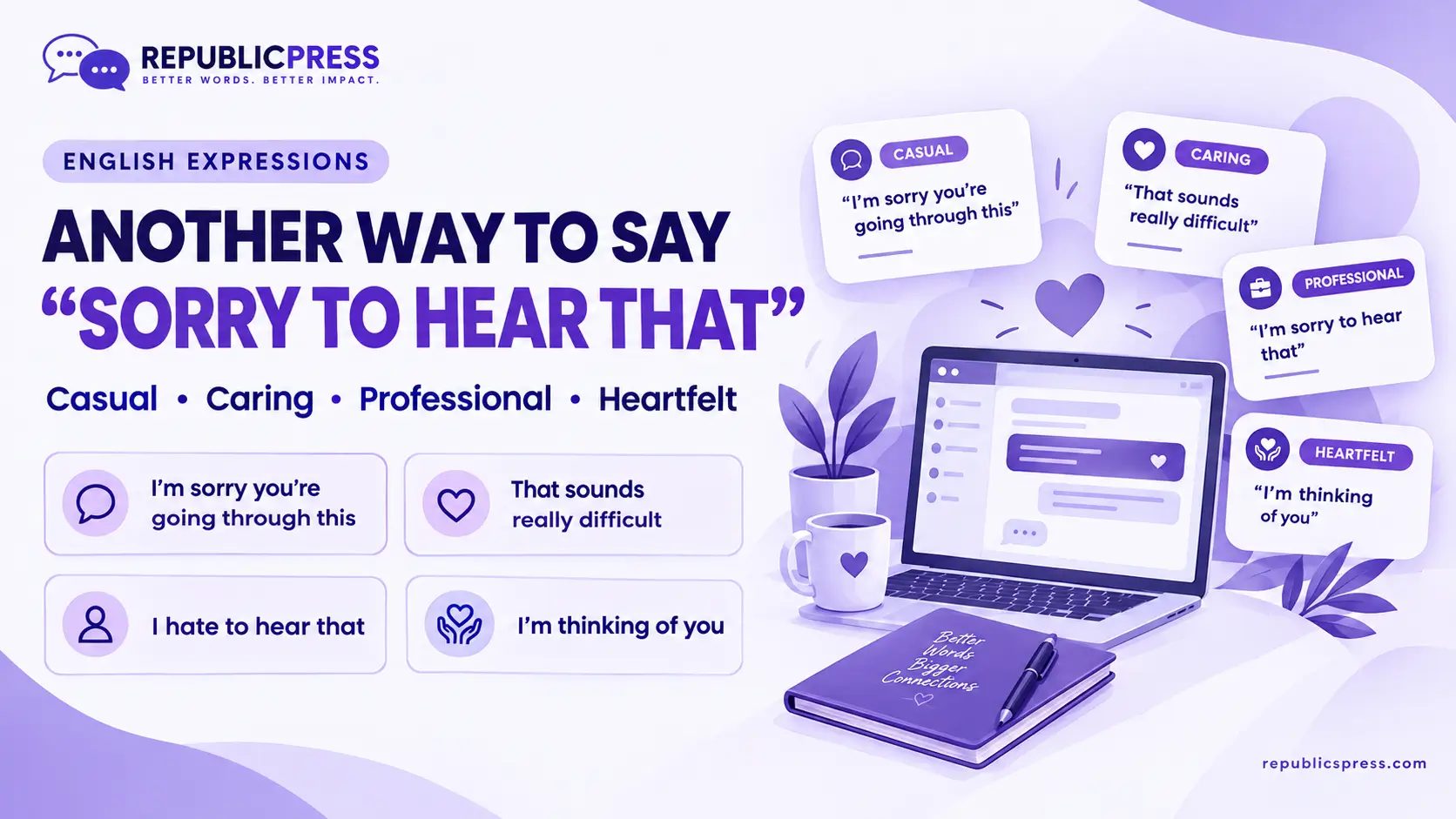
If you want another way to say “sorry to hear that,” you can use phrases such as “I’m sorry you’re going through this,” “That sounds really difficult,” “I hate to hear that,” “That must be hard,” or “I’m thinking of you.” The best choice depends on how serious the situation is and how close you are to the person.
Key Takeaways
- “I’m sorry you’re going through this” sounds warm and supportive.
- “That sounds really difficult” works well when you want to acknowledge someone’s struggle.
- “I hate to hear that” is natural and conversational.
- “That must be hard” shows empathy without sounding overly formal.
- “I’m thinking of you” is a caring choice for serious or emotional situations.
- Choose a phrase that matches the situation instead of treating every expression as an exact synonym.
What Does “Sorry to Hear That” Mean?
“Sorry to hear that” is a common English expression used to show sympathy when someone shares bad news, a problem, disappointment, or a difficult experience.
It does not usually mean that you caused the problem or that you are personally responsible for it. Instead, it communicates that you regret hearing about the person’s situation and care about how they are doing.
For example:
“I didn’t get the job I applied for.”
You might respond:
“I’m sorry to hear that. I know you were really hoping for it.”
The phrase is polite and natural, but sometimes you may want something warmer, more personal, or more specific.
10 Other Ways to Say “Sorry to Hear That”
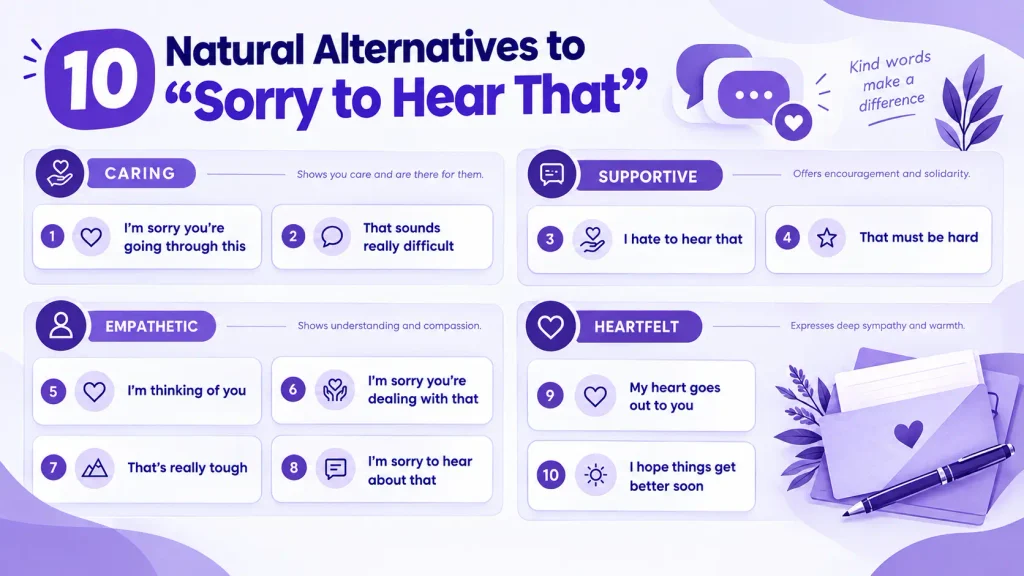
1. I’m Sorry You’re Going Through This
This is one of the warmest alternatives when someone is dealing with a difficult situation.
Example:
“I’m sorry you’re going through this. Let me know if there’s anything I can do.”
Best for: Emotional, personal, or serious situations.
2. That Sounds Really Difficult
Use this phrase when you want to recognize someone’s struggle without making the conversation about yourself.
Example:
“That sounds really difficult. I hope things get easier soon.”
Best for: Problems, stressful experiences, and challenging circumstances.
3. I Hate to Hear That
“I hate to hear that” is a natural, conversational way to express sympathy.
Example:
“I hate to hear that you’ve been having such a rough week.”
Best for: Friends, family, and informal conversations.
4. That Must Be Hard
This phrase acknowledges that the other person’s situation may be painful or stressful.
Example:
“That must be hard, especially after everything you’ve been dealing with.”
Best for: Personal problems and emotional conversations.
5. I’m Thinking of You
This is a caring alternative, especially when someone is facing a serious or emotional situation.
Example:
“I’m thinking of you and hoping things improve soon.”
Best for: Serious problems, loss, illness, or other difficult life events.
6. I’m Sorry You’re Dealing With That
This expression shows empathy while recognizing that the person is facing an unpleasant situation.
Example:
“I’m sorry you’re dealing with that. It sounds like you’ve had a lot on your plate.”
Best for: Work problems, personal difficulties, and stressful situations.
7. That’s Really Tough
“That’s really tough” is short, natural, and supportive. It works especially well in everyday conversation.
Example:
“That’s really tough. I hope you’re able to get some rest this weekend.”
Best for: Casual conversations and everyday problems.
8. I’m Sorry to Hear About That
This is very close in meaning to “sorry to hear that” but can sound slightly more deliberate.
Example:
“I’m sorry to hear about that. Please let me know if you need anything.”
Best for: Polite conversations and messages where you want a gentle tone.
9. My Heart Goes Out to You
This phrase expresses strong sympathy and emotional support. It is more heartfelt than the standard “sorry to hear that.”
Example:
“My heart goes out to you and your family during this difficult time.”
Best for: Grief, loss, and serious emotional situations.
10. I Hope Things Get Better Soon
This expression focuses on encouragement rather than simply acknowledging the bad news.
Example:
“I’m sorry you’re dealing with this. I hope things get better soon.”
Best for: Difficult situations where you want to offer encouragement.
Which Alternative Should You Use?
The right phrase depends on the person’s situation and your relationship with them.
| Alternative | Tone | Best Context |
|---|---|---|
| I’m sorry you’re going through this | Warm and supportive | Difficult personal situations |
| That sounds really difficult | Empathetic | Problems and stressful experiences |
| I hate to hear that | Casual and caring | Friends and informal conversations |
| That must be hard | Gentle | Personal or emotional problems |
| I’m thinking of you | Warm and heartfelt | Serious situations |
| I’m sorry you’re dealing with that | Supportive | Personal or workplace problems |
| That’s really tough | Casual | Everyday difficulties |
| I’m sorry to hear about that | Polite and neutral | General conversations |
| My heart goes out to you | Deeply sympathetic | Grief or serious loss |
| I hope things get better soon | Encouraging | Difficult situations |
How to Say “Sorry to Hear That” in Different Situations
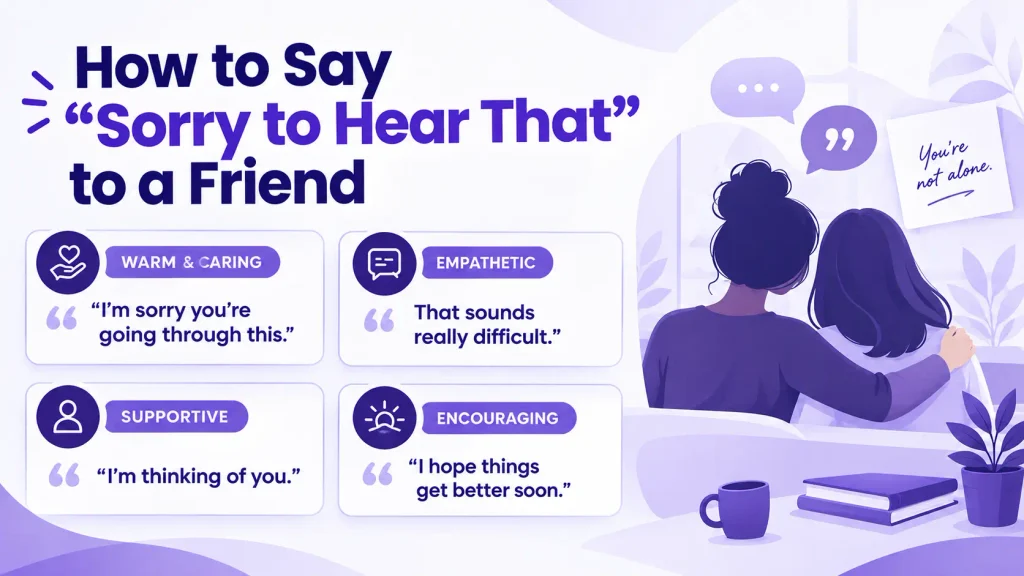
When a Friend Has a Bad Day
For a friend, a relaxed and caring response usually sounds most natural.
Example:
“That’s really tough. I hope tomorrow is a better day.”
You could also say:
- “I hate to hear that.”
- “That sounds rough.”
- “I’m sorry you’re dealing with that.”
When Someone Loses a Job
A job loss can be stressful, so choose a response that recognizes the person’s feelings without minimizing the situation.
Example:
“I’m sorry you’re going through this. I know how much that job meant to you.”
You can also add an offer of support:
“If you want to talk about it, I’m here.”
When Someone Experiences a Loss
More heartfelt language is usually appropriate after a death or major loss.
Example:
“My heart goes out to you and your family. I’m thinking of you during this difficult time.”
For serious situations, a simple and sincere response is often better than trying to find an elaborate phrase.
When Someone Has a Problem at Work
In a professional conversation, avoid language that sounds too casual or overly emotional.
Example:
“I’m sorry you’re dealing with that. I hope the situation gets resolved soon.”
You might also say:
“That sounds like a difficult situation. I hope things improve soon.”
“Sorry to Hear That” vs. “I’m Sorry You’re Going Through This”
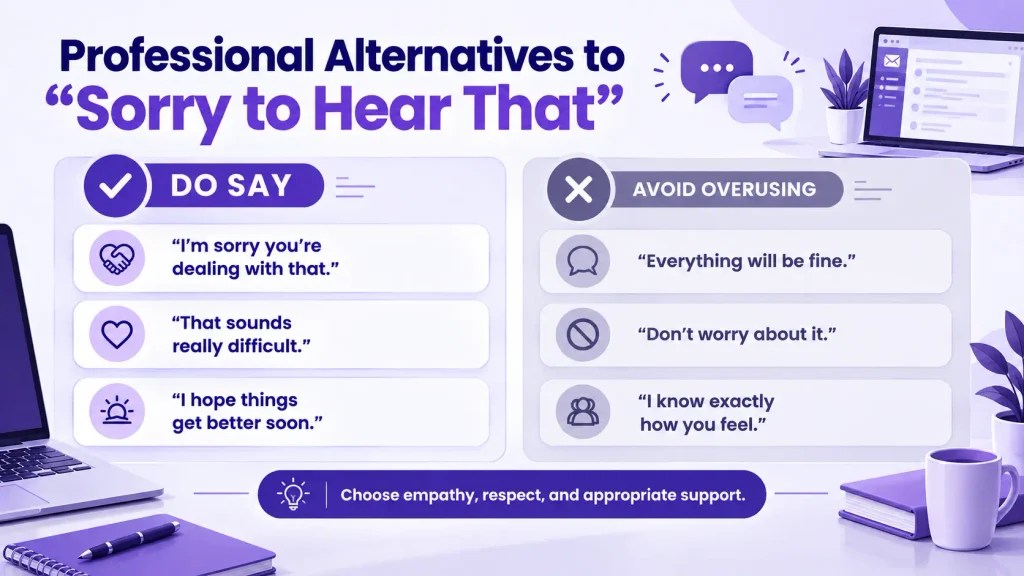
These expressions are similar, but they have slightly different effects.
“Sorry to hear that” is shorter and more general. It can work for anything from a small disappointment to serious bad news.
“I’m sorry you’re going through this” feels more personal. It suggests that you recognize the person is actively dealing with a difficult experience.
Compare:
“I didn’t get the apartment I wanted.”
“Sorry to hear that.”
This is polite and appropriate.
For a more personal response:
“I’m sorry you’re going through this. I know you were excited about the apartment.”
The second response shows more emotional engagement.
Common Mistakes to Avoid
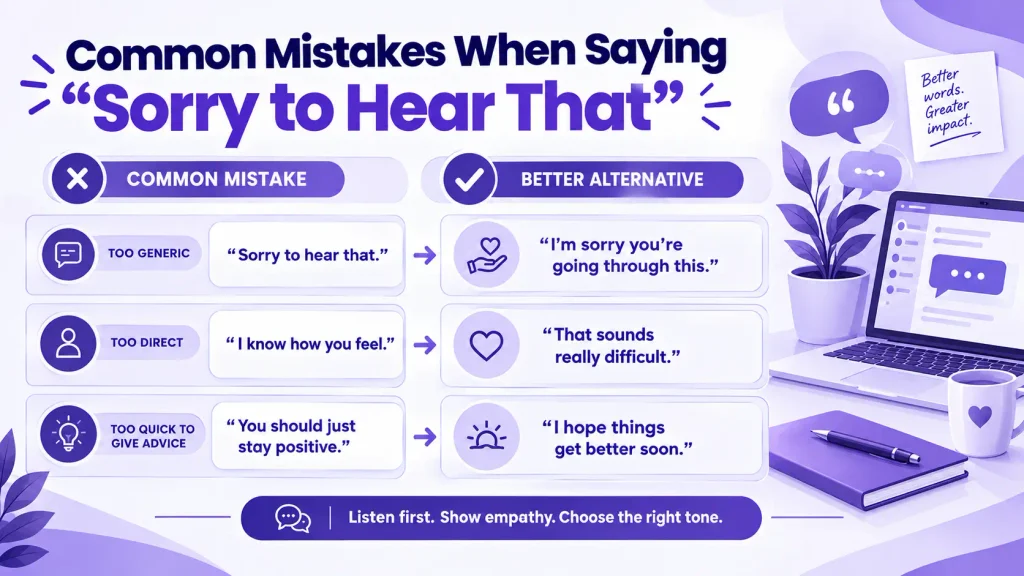
Using an overly cheerful response
If someone shares serious news, avoid responding with language that sounds too upbeat.
Instead of:
“Everything happens for a reason!”
Try:
“I’m sorry you’re dealing with this. That sounds really difficult.”
Making the conversation about yourself
When someone shares bad news, avoid immediately shifting the focus to your own experience.
Instead of:
“That happened to me too. Let me tell you what happened…”
Start by acknowledging their feelings:
“I’m sorry to hear that. How are you holding up?”
Using “my heart goes out to you” for minor problems
This phrase can sound too serious for everyday disappointments.
For example, if someone says they missed their train, “That’s really tough” is more natural than “My heart goes out to you.”
Match the strength of your language to the seriousness of the situation.
Frequently Asked Questions
What is a more caring way to say “sorry to hear that”?
“I’m sorry you’re going through this” is a warm and caring alternative. For a serious situation, “I’m thinking of you” or “My heart goes out to you” may be more appropriate.
What is a casual way to say “sorry to hear that”?
You can say “That’s really tough,” “I hate to hear that,” or “That sounds rough.” These expressions work well in friendly, informal conversations.
What can I say instead of “sorry to hear that” at work?
Try “I’m sorry you’re dealing with that,” “That sounds like a difficult situation,” or “I hope things get resolved soon.” These phrases are professional while still showing empathy.
What should I say when someone is going through a difficult time?
A simple, sincere response is usually best. You can say “I’m sorry you’re going through this,” “I’m thinking of you,” or “Please let me know if there’s anything I can do.”
Is “I hate to hear that” rude?
No. “I hate to hear that” is normally a natural way to express sympathy. However, it is more conversational than formal, so another phrase may be better in a professional or highly formal setting.
Can I say “my heart goes out to you” for any bad news?
You can, but it is strongest in serious situations such as grief, loss, or major hardship. For smaller problems, “That sounds difficult” or “I’m sorry you’re dealing with that” usually sounds more natural.
Final Thoughts
There are many natural ways to say “sorry to hear that,” but the best choice depends on the situation. Use “I’m sorry you’re going through this” for warm support, “that sounds really difficult” for general empathy, and “my heart goes out to you” for serious emotional situations.
The goal is not to find a perfect replacement every time. Choose words that match the person’s experience, your relationship with them, and the level of support you want to express.

Role: Editorial Contributor
Graham Ellis contributes practical English and communication guides to RepublicsPress. His content focuses on vocabulary, writing techniques, word usage, and clear communication, with an emphasis on straightforward explanations and real-world examples.