How Are You? 15 Natural Alternatives for Any Situation
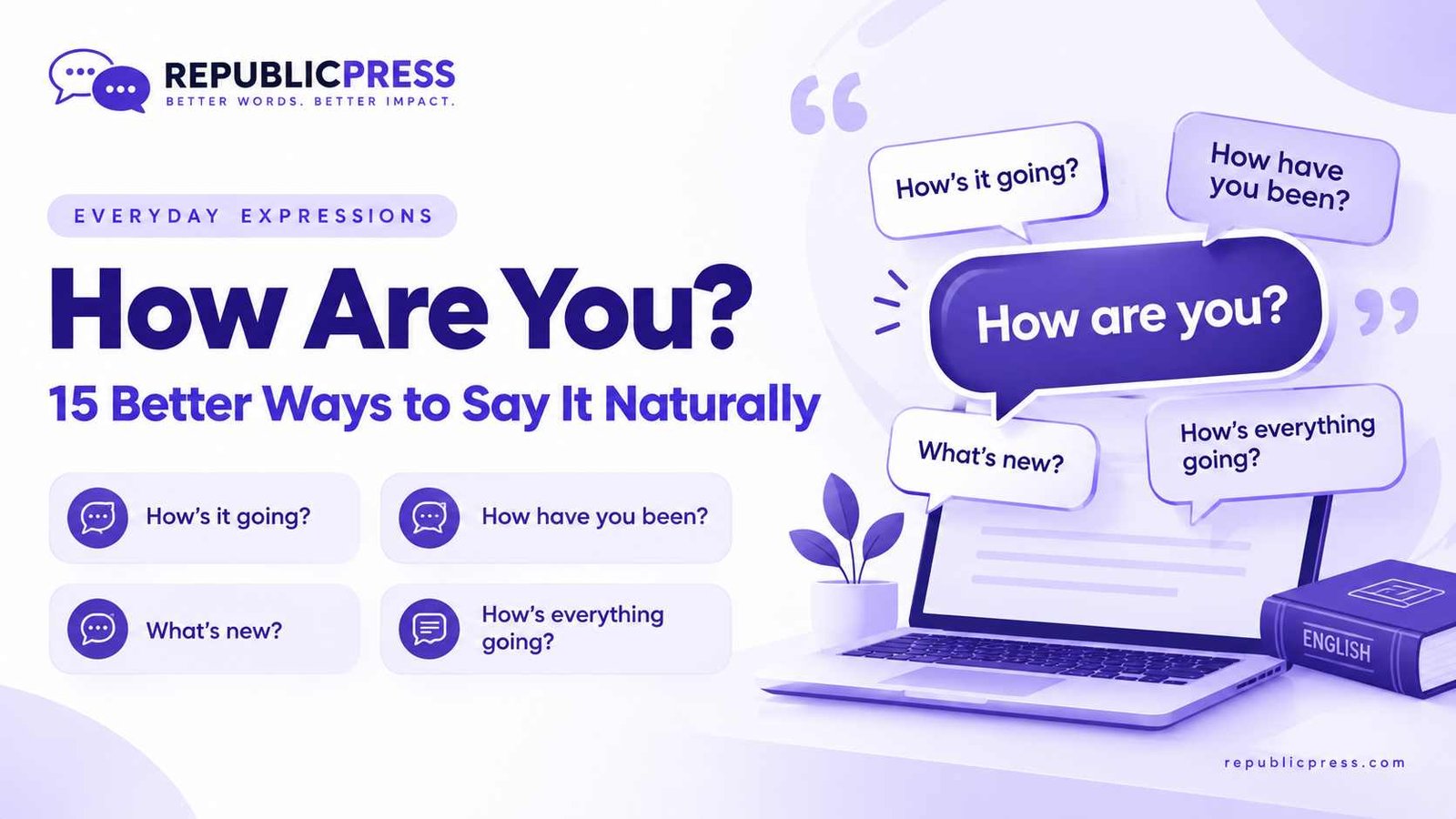
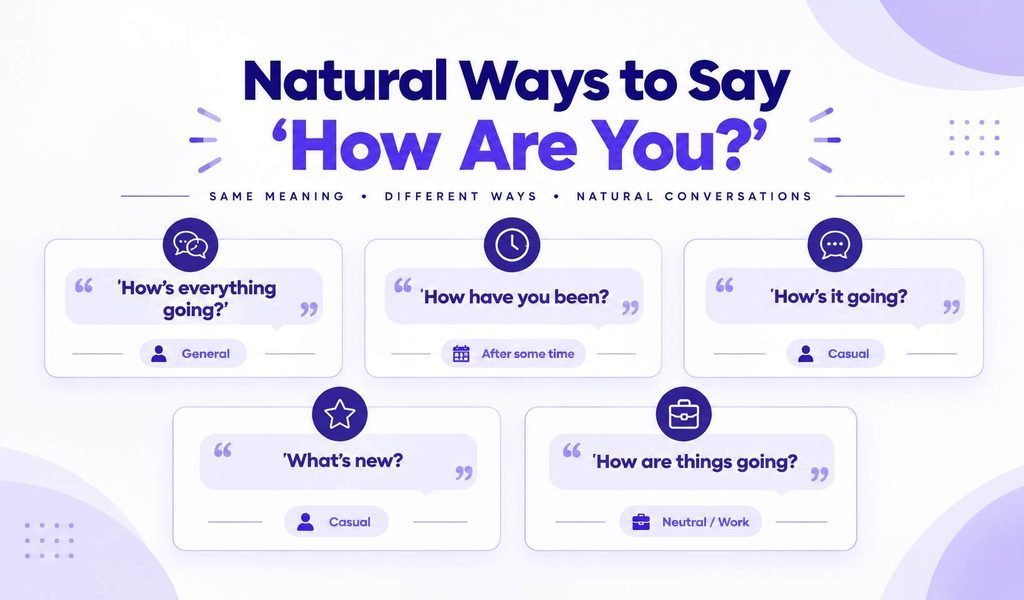
If you’re looking for another way to say “How are you?”, the best choice depends on your relationship with the person and the tone you want. Natural alternatives include “How have you been?”, “How’s everything going?”, “How are things?”, “How’s your day going?”, and “What’s new?” Each one fits a slightly different situation.
Key Takeaways
- “How have you been?” works well when you haven’t seen someone recently.
- “How’s everything going?” is friendly and works in many everyday situations.
- “How are things?” is short, casual, and natural.
- “How’s your day going?” is useful when asking about someone’s current day.
- “What’s new?” sounds relaxed and invites the person to share an update.
- In professional situations, “How are things going?” or “How’s everything going?” usually sounds more natural than overly formal alternatives.
What Does “How Are You?” Mean?
“How are you?” is one of the most common ways to greet someone and ask about their well-being. Depending on the situation, it can be a genuine question about how someone feels or simply a polite part of a greeting.
For example:
“Hi, Sarah. How are you?”
The expected response might be:
“I’m good, thanks. How are you?”
Because the phrase is so common, you may want a different expression to make your conversation sound more natural, personal, or appropriate for a particular situation.
The important point is that not every alternative has exactly the same meaning. Some ask about a person’s general well-being, while others ask about their day, recent experiences, work, or what’s happening in their life.
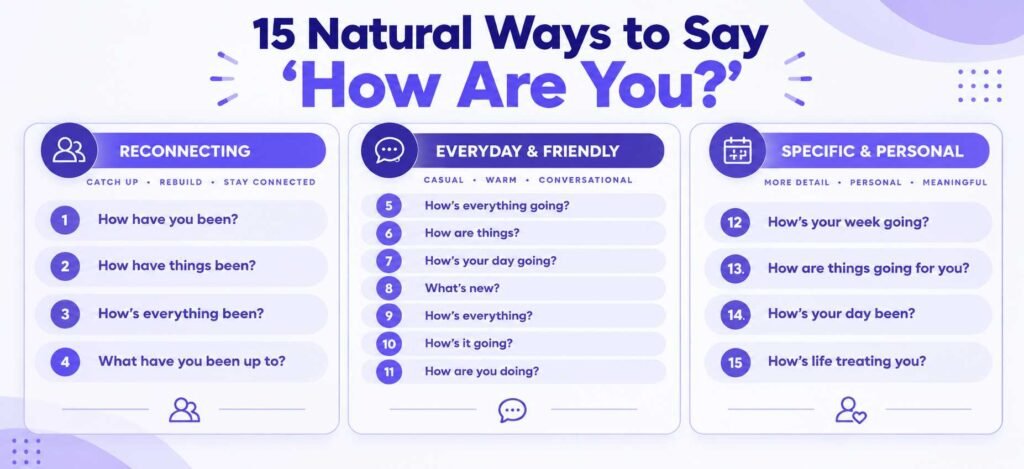
15 Natural Ways to Say “How Are You?”
1. How have you been?
Best for: Someone you haven’t seen or spoken to recently
“How have you been?” is one of the closest natural alternatives to “How are you?” It suggests that some time has passed since your last conversation.
Example:
“It’s been a while! How have you been?”
This sounds warm and conversational without being overly familiar.
2. How’s everything going?
Best for: Friends, coworkers, acquaintances, and everyday conversation
This is a versatile alternative that asks about someone’s life or current situation in general.
Example:
“Hey, Mike. How’s everything going?”
It can also work in a professional setting because it is friendly without sounding too casual.
3. How are things?
Best for: Casual conversations
“How are things?” is short and natural. It generally means “How is everything going in your life?”
Example:
“It’s good to see you again. How are things?”
It is particularly useful when you want something less predictable than “How are you?”
4. How’s your day going?
Best for: Asking about someone’s current day
This question focuses specifically on the person’s day rather than their overall well-being.
Example:
“Hey! How’s your day going so far?”
It works especially well with coworkers, classmates, friends, or someone you have just met.
5. What’s new?
Best for: Friends and casual conversations
“What’s new?” invites someone to tell you about recent events or changes in their life.
Example:
“Hey, it’s been a while. What’s new?”
This doesn’t directly ask whether someone is feeling well, so it is better understood as a conversational alternative rather than an exact synonym.
6. How’s everything?
Best for: Friendly, everyday conversations
“How’s everything?” is a simple way to ask about someone’s general situation.
Example:
“Hi, Alex. How’s everything?”
It can sound slightly more open-ended than “How are you?” because it may encourage the person to talk about work, family, school, or other parts of their life.
7. How’s it going?
Best for: Casual and friendly situations
“How’s it going?” is extremely common in American English.
Example:
“Hey, Jake! How’s it going?”
It is informal, so it fits conversations with friends, classmates, coworkers, and acquaintances better than very formal correspondence.
8. How have things been?
Best for: Reconnecting after some time apart
This phrase is similar to “How have you been?” but focuses more broadly on someone’s circumstances.
Example:
“We haven’t talked in months. How have things been?”
It naturally suggests that you want to hear about what has happened since you last spoke.
9. How’s life treating you?
Best for: Friendly, informal conversations
This expression has a more playful and conversational tone.
Example:
“It’s great to see you again! How’s life treating you?”
It generally means something like “How is your life going?” It should be used in relaxed situations rather than formal business writing.
10. How are you doing?
Best for: Everyday conversations
“How are you doing?” is a very natural alternative to “How are you?”
Example:
“Hi, Emma. How are you doing?”
Depending on context and tone, it can also sound more concerned than a routine “How are you?” For example, someone might ask it when they know another person has been having a difficult time.
11. How’s your week going?
Best for: Asking about someone’s recent experience
This version focuses on the person’s week.
Example:
“How’s your week going so far?”
It is especially natural in workplace conversations or when speaking with someone you see regularly.
12. How’s everything been?
Best for: Checking in after some time
This question asks generally about what has happened since the last time you talked.
Example:
“I haven’t seen you since graduation. How’s everything been?”
It works well when you want to encourage a longer update rather than receive a simple “I’m good.”
13. How are things going for you?
Best for: A more personal check-in
This version puts slightly more emphasis on the person’s situation.
Example:
“You mentioned starting a new job. How are things going for you?”
It can sound thoughtful and supportive, especially when you already know something important is happening in the person’s life.
14. How’s your day been?
Best for: Asking about the person’s day after some time has passed
This question is useful later in the day when you want to know how someone’s day has gone.
Example:
“You look tired. How’s your day been?”
It is more specific than “How are you?” and can naturally lead to a conversation about what happened during the day.
15. What have you been up to?
Best for: Friends, acquaintances, and casual conversations
“What have you been up to?” asks what someone has been doing recently.
Example:
“I haven’t heard from you in a while. What have you been up to?”
It isn’t a direct question about someone’s emotional or physical well-being, but it is a very natural way to reconnect and start a conversation.
“How Are You?” Alternatives at a Glance
| Alternative | Tone | Best Context |
| How have you been? | Warm, neutral | Reconnecting |
| How’s everything going? | Friendly | Everyday or workplace |
| How are things? | Casual | General conversation |
| How’s your day going? | Friendly | Current day |
| What’s new? | Casual | Friends and acquaintances |
| How’s everything? | Friendly | Everyday conversations |
| How’s it going? | Casual | Informal conversations |
| How have things been? | Warm, neutral | After time apart |
| How’s life treating you? | Playful, casual | Friends |
| How are you doing? | Neutral | General conversation |
| How’s your week going? | Friendly | Work or everyday life |
| How’s everything been? | Warm | Checking in |
| How are things going for you? | Supportive | Personal check-ins |
| How’s your day been? | Friendly | Later in the day |
| What have you been up to? | Casual | Reconnecting |
Which Alternative Should You Use?
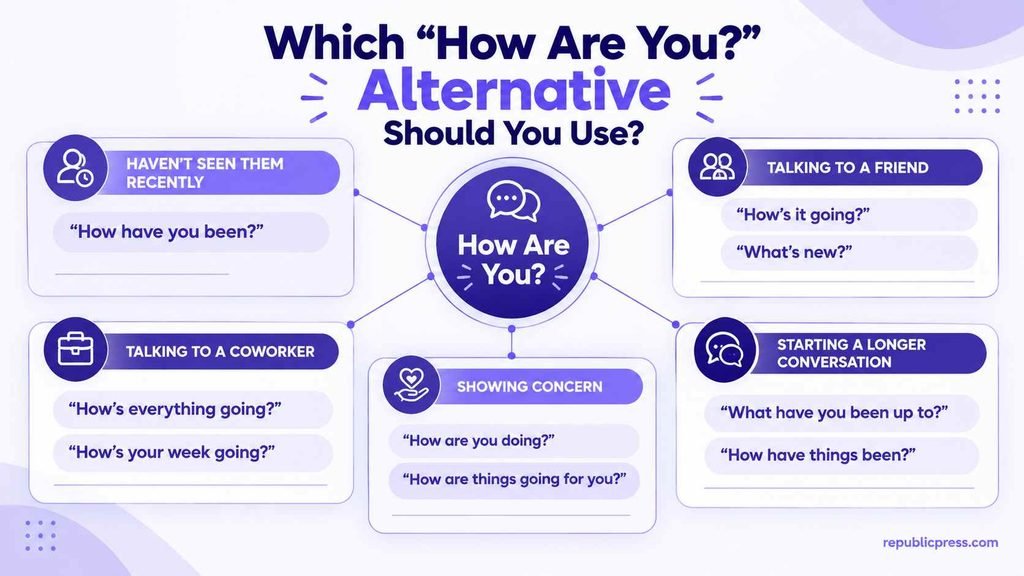
The best replacement depends on what you actually want to know.
If you haven’t seen someone recently
Use:
- How have you been?
- How have things been?
- How’s everything been?
Example:
“It’s been a few months. How have you been?”
If you’re talking to a friend
Use:
- How’s it going?
- What’s new?
- What have you been up to?
- How’s life treating you?
These sound relaxed and conversational.
If you’re talking to a coworker
Use:
- How’s everything going?
- How are things?
- How’s your week going?
- How’s your day going?
These are friendly without sounding excessively personal.
If you want to show concern
Use:
- How are you doing?
- How are things going for you?
- How have you been?
For example:
“I heard you’ve had a rough week. How are you doing?”
Here, “How are you doing?” can carry more emotional weight than a routine greeting.
If you want to start a longer conversation
Try:
- What have you been up to?
- What’s new?
- How have things been?
These questions naturally encourage the other person to give you more than a one-word answer.
“How Are You?” vs. “How Are You Doing?”
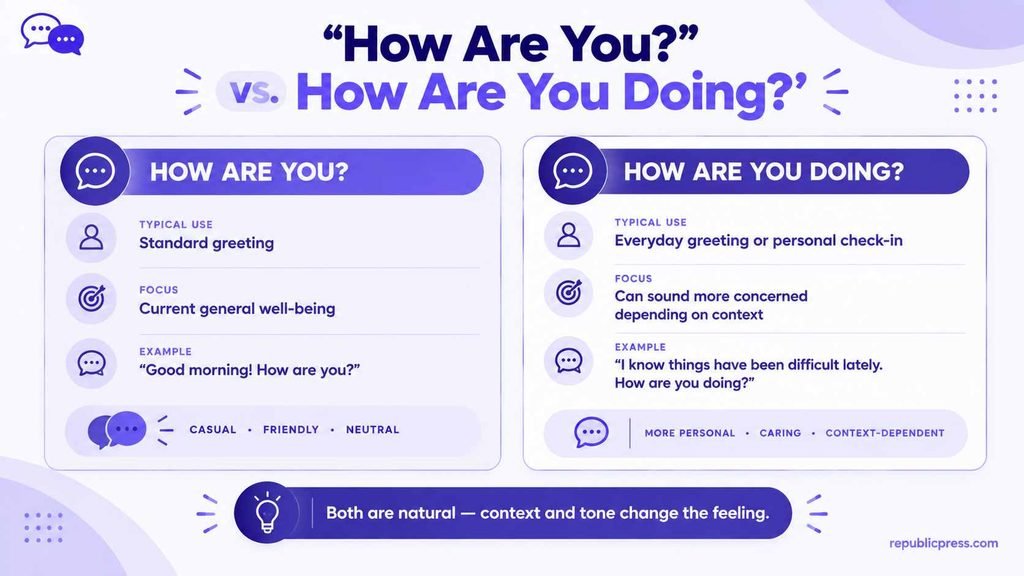
These two expressions are extremely similar, but context can slightly change how they feel.
“How are you?” is often used as a standard greeting:
“Good morning! How are you?”
“How are you doing?” can also be a routine greeting:
“Hey! How are you doing?”
But it can sound more concerned when the context calls for it:
“I know things have been difficult lately. How are you doing?”
So, “How are you doing?” is not necessarily more caring, but it can carry that meaning depending on the situation and tone.
Common Mistakes When Replacing “How Are You?”
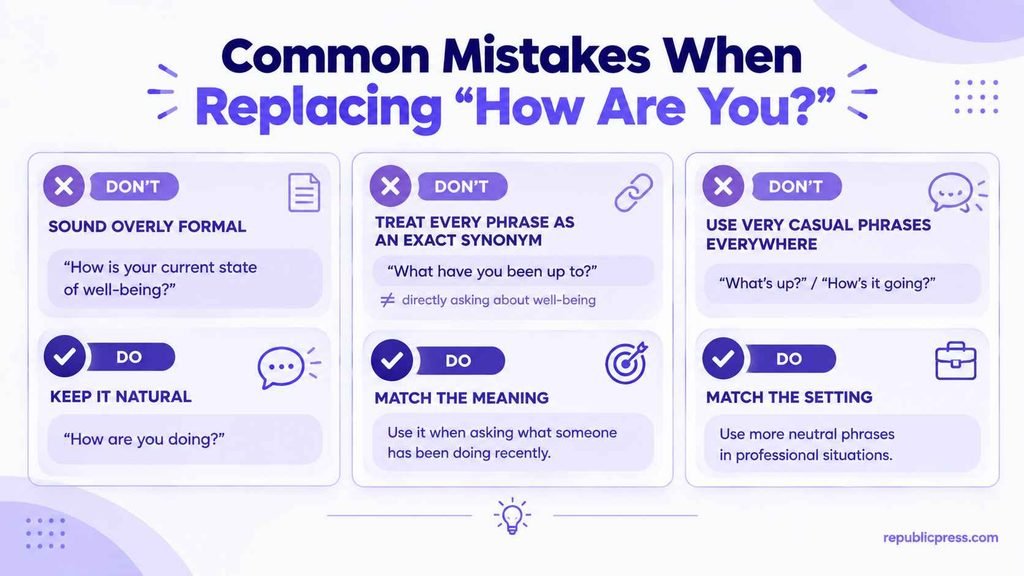
Using an overly formal phrase
Expressions such as “How is your current state of well-being?” may technically communicate the idea, but they do not sound natural in ordinary American conversation.
Simple language is usually better.
Instead of:
“How is your state of well-being?”
Say:
“How are you doing?”
Treating every alternative as an exact synonym
Some alternatives ask about a related topic rather than someone’s well-being.
For example, “What have you been up to?” asks what someone has been doing. It does not directly ask how they feel.
Likewise, “How’s your day going?” focuses on the person’s day, not their overall life.
These are useful alternatives for starting a conversation, but they are not interchangeable in every sentence.
Using very casual phrases in formal situations
Expressions such as “What’s up?” or “How’s it going?” are common in casual American English, but they may not be the best choice in a formal email or professional introduction.
For a professional setting, “How are things going?” is generally safer.
Frequently Asked Questions
What is another way to say “How are you?”
Natural alternatives include “How have you been?”, “How’s everything going?”, “How are things?”, “How’s it going?”, and “How are you doing?” The best option depends on the relationship and situation.
What is a casual way to say “How are you?”
You can say “How’s it going?”, “What’s up?”, “What’s new?”, or “What have you been up to?” These are common in relaxed conversations with friends and acquaintances.
What is a professional way to say “How are you?”
In a workplace setting, “How’s everything going?”, “How are things going?”, or “How’s your week going?” are natural choices. They sound friendly without being overly informal.
What can I say instead of “How are you?” in a text?
For a text message, try “How’s it going?”, “What’s up?”, “What’s new?”, or “How have you been?” If you haven’t talked recently, “How have you been?” is especially natural.
Is “How have you been?” the same as “How are you?”
They are closely related but not identical. “How have you been?” usually refers to the period since you last saw or spoke to someone, while “How are you?” can refer to the person’s current state.
What is a friendly way to check on someone?
“How are you doing?”, “How have you been?”, and “How are things going for you?” can all work. The best choice depends on how well you know the person and why you’re checking in.
Is “What have you been up to?” another way to say “How are you?”
It can serve a similar conversational purpose, especially when reconnecting with someone, but it isn’t an exact synonym. It asks what the person has been doing rather than directly asking about their well-being.
Final Thoughts
There isn’t one perfect replacement for “How are you?” in every situation. For a general conversation, “How’s everything going?” is a versatile choice. If you haven’t spoken to someone recently, “How have you been?” is more appropriate. For casual conversations, “How’s it going?” or “What’s new?” feels natural, while “How are things going?” works well in many professional situations.
The key is to choose a phrase based on what you actually want to ask: someone’s general well-being, their recent experiences, their day, or what’s happening in their life.

Role: English Content Writer
Maren Whitlock writes practical English language content for RepublicsPress, with a focus on vocabulary, word alternatives, everyday expressions, and clear communication. Her articles are designed to make difficult or confusing language easier to understand, with simple explanations and useful examples readers can apply in real situations.