Another Way to Say “As Per My Last Email”: 25+ Professional Alternatives
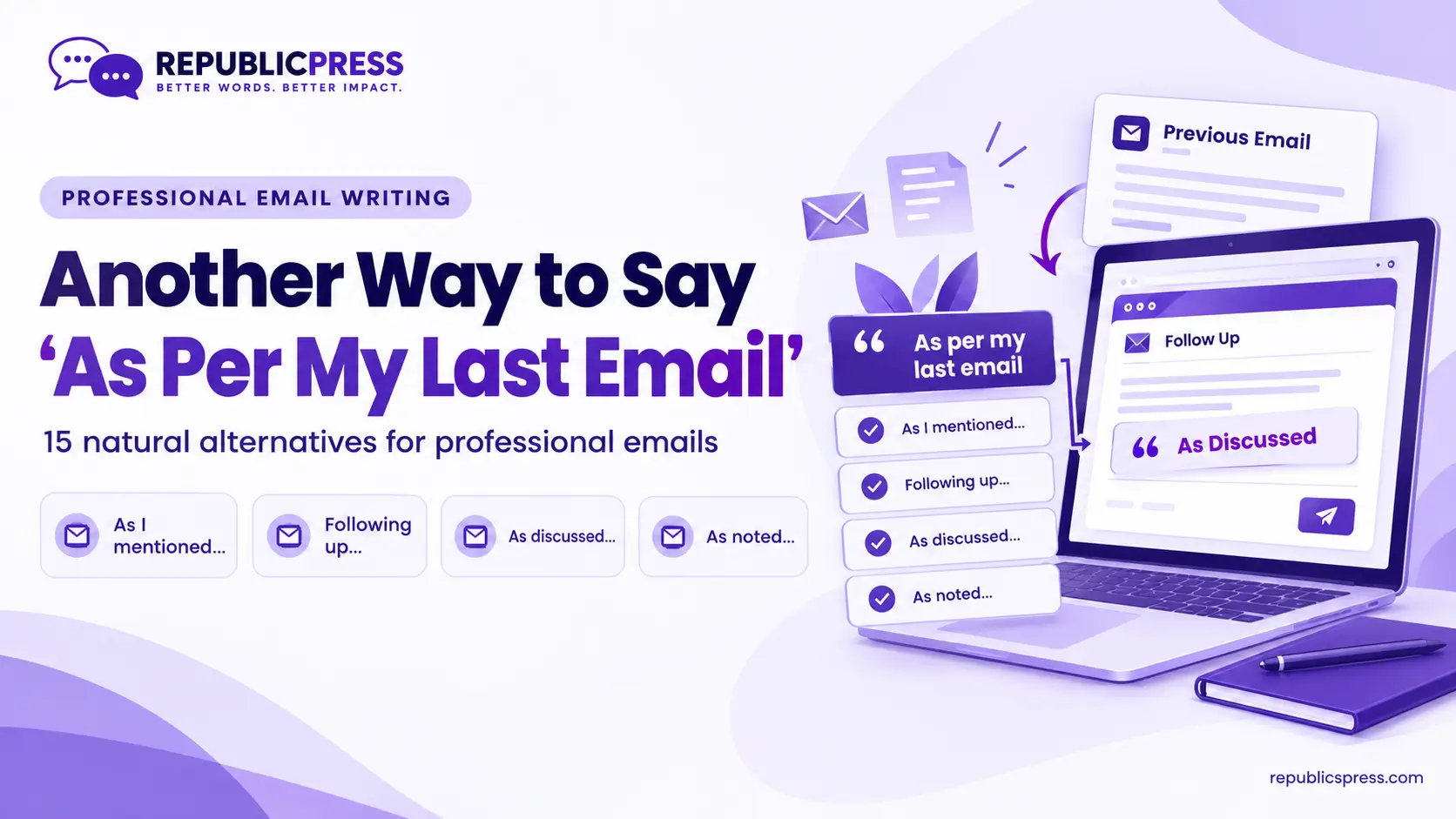
Finding another way to say as per my last email can help you sound more professional, polite, and confident at work. Although this phrase reminds someone about an earlier message, it can sometimes sound impatient or passive-aggressive. Therefore, choosing the right words can make a follow-up email more effective.
For example, you can write “I’m following up on my previous email” when you want a neutral and professional tone. Similarly, “I wanted to revisit my earlier message” sounds friendly, while “Could you please provide an update on my previous email?” clearly asks for a response.
The best expression depends on your relationship with the recipient, the urgency of your request, and the purpose of your message. In this guide, you’ll discover professional alternatives, polite follow-up examples, and practical tips for writing emails that get responses without sounding rude.
What Is Another Way to Say “As Per My Last Email”?
The best alternative to “as per my last email” is “I’m following up on my previous email.” This phrase sounds professional, neutral, and courteous. It reminds the recipient about your earlier message without suggesting that they made a mistake.
Here are some other useful alternatives:
- I’m following up on my previous email.
- Regarding my earlier email.
- I wanted to follow up on my last message.
- As mentioned in my previous email.
- I’m checking in on my earlier message.
- I wanted to revisit my previous email.
- Further to my earlier email.
- I’m writing to follow up on my previous message.
- Could you please provide an update?
- I wanted to bring my earlier email to your attention.
- As discussed in my previous message.
- I’m circling back on my earlier email.
- Have you had a chance to review my previous email?
- I wanted to check whether you received my last message.
- Following up on the email below.
- I’d appreciate your thoughts on my previous message.
- I’m reaching out again regarding my earlier email.
- To build on my previous email.
- As noted in my earlier message.
- I wanted to touch base about my previous email.
- Please see my earlier email for reference.
- I’m checking whether you need any additional information.
- I’d like to revisit the points outlined in my last email.
- Could you let me know your thoughts on my earlier message?
- I’m following up to see whether you have any questions.
Each alternative serves a slightly different purpose. For instance, some phrases simply remind the recipient about an earlier message, while others request an update or encourage a reply.
25+ Alternatives to “As Per My Last Email” With Examples
Choosing the right phrase can improve your professional communication. Below are useful alternatives for different workplace situations.
1. I’m Following Up on My Previous Email
This is one of the safest and most versatile alternatives. It works well when you want to remind someone about an unanswered message without creating tension.
Example: I’m following up on my previous email regarding the project timeline. Could you please share an update when you have a chance?
2. Regarding My Earlier Email
Use this phrase when you want to refer directly to a previous message. It works well in formal business correspondence.
Example: Regarding my earlier email, I’d appreciate your feedback on the proposed changes.
3. I Wanted to Follow Up on My Last Message
This expression sounds friendly and professional. It is particularly useful when you want to maintain a positive relationship with a colleague or client.
Example: I wanted to follow up on my last message about the upcoming meeting.
4. As Mentioned in My Previous Email
Choose this phrase when you need to refer to information you have already shared. It works well when continuing a discussion or clarifying an earlier point.
Example: As mentioned in my previous email, the revised document is ready for your review.
5. I’m Checking In on My Earlier Message
This alternative creates a relaxed and approachable tone. Use it when you want to ask for an update without putting pressure on the recipient.
Example: I’m checking in on my earlier message to see whether you’ve had time to review the proposal.
6. I Wanted to Revisit My Previous Email
This phrase works well when you want to reopen a discussion or return to an issue that still needs attention.
Example: I wanted to revisit my previous email about the budget approval.
7. Further to My Earlier Email
This formal expression is common in business correspondence, especially when you want to add information to an earlier message.
Example: Further to my earlier email, please find the updated schedule attached.
8. I’m Writing to Follow Up on My Previous Message
This direct alternative suits professional emails when you want to make the purpose of your message clear from the beginning.
Example: I’m writing to follow up on my previous message regarding the outstanding invoice.
9. Could You Please Provide an Update?
Use this phrase when you need a clear response or progress report. It focuses on the action you want rather than the unanswered email.
Example: Could you please provide an update on the application review?
10. I Wanted to Bring My Earlier Email to Your Attention
This expression gently reminds the recipient about a message they may have missed. It works well when you want to avoid sounding demanding.
Example: I wanted to bring my earlier email to your attention in case it got buried in your inbox.
11. As Discussed in My Previous Message
Choose this phrase when your earlier email records a conversation, agreement, or decision.
Example: As discussed in my previous message, we’ll begin the next phase on Monday.
12. I’m Circling Back on My Earlier Email
“Circling back” is a popular expression in modern business communication. It sounds natural when you want to return to a topic after some time has passed.
Example: I’m circling back on my earlier email about the partnership opportunity.
13. Have You Had a Chance to Review My Previous Email?
This polite question invites a response without assuming that the recipient deliberately ignored your message.
Example: Have you had a chance to review my previous email about the proposed contract?
14. I Wanted to Check Whether You Received My Last Message
Sometimes, a message gets lost among other emails. This phrase checks receipt without blaming the recipient.
Example: I wanted to check whether you received my last message with the project files.
15. Following Up on the Email Below
This concise expression works particularly well when you reply within the same email thread.
Example: Following up on the email below, could you confirm the delivery date?
16. I’d Appreciate Your Thoughts on My Previous Message
Use this alternative when you need feedback, opinions, or approval rather than a simple acknowledgment.
Example: I’d appreciate your thoughts on my previous message about the new marketing strategy.
17. I’m Reaching Out Again Regarding My Earlier Email
This phrase is suitable when you have already contacted someone and need to follow up again.
Example: I’m reaching out again regarding my earlier email about the interview schedule.
18. To Build on My Previous Email
Choose this expression when you want to add new information instead of merely reminding someone about an unanswered message.
Example: To build on my previous email, I’ve included two additional options for the launch campaign.
19. As Noted in My Earlier Message
This phrase refers to information already recorded in an earlier email. It works well in formal updates and project discussions.
Example: As noted in my earlier message, the final report requires approval before publication.
20. I Wanted to Touch Base About My Previous Email
This friendly expression works well when communicating with coworkers, clients, and professional contacts.
Example: I wanted to touch base about my previous email and see whether you had any questions.
21. Please See My Earlier Email for Reference
Use this phrase when the recipient needs to consult an earlier message for details, instructions, or supporting information.
Example: Please see my earlier email for reference regarding the agreed project requirements.
22. I’m Checking Whether You Need Any Additional Information
This approach offers help instead of simply asking why the recipient has not responded.
Example: I’m checking whether you need any additional information before making a decision.
23. I’d Like to Revisit the Points Outlined in My Last Email
This expression works well when your earlier message contained several issues that still need discussion.
Example: I’d like to revisit the points outlined in my last email, particularly the proposed delivery schedule.
24. Could You Let Me Know Your Thoughts on My Earlier Message?
Use this phrase when you want feedback while maintaining a polite, collaborative tone.
Example: Could you let me know your thoughts on my earlier message about the revised proposal?
25. I’m Following Up to See Whether You Have Any Questions
This alternative shows that you’re available to help. It is especially useful when sharing proposals, instructions, or documents.
Example: I’m following up to see whether you have any questions about the onboarding documents.
26. I Wanted to Check In Regarding My Previous Email
This phrase sounds considerate and works well when you want to check the status of an earlier request.
Example: I wanted to check in regarding my previous email about the upcoming appointment.
27. As Outlined in My Previous Email
Use this expression when referring to steps, requirements, or details you previously explained.
Example: As outlined in my previous email, please submit the completed form by Thursday.
28. I’m Reconnecting Regarding My Earlier Message
This alternative works when some time has passed since your last communication.
Example: I’m reconnecting regarding my earlier message about the consulting opportunity.
Polite Ways to Say “As Per My Last Email”
If you want to preserve a positive professional relationship, choose wording that focuses on the next step rather than the lack of a reply.
Here are some especially polite options:
- I wanted to follow up in case my previous email got overlooked.
- When you have a moment, could you share an update?
- I’d appreciate your feedback whenever you’re available.
- I’m checking in to see whether you need anything else from me.
- Have you had a chance to look over my earlier message?
- I wanted to bring this back to your attention.
- Please let me know if I can clarify anything.
- I’d be grateful for an update when convenient.
Example:
Instead of writing, “As per my last email, you haven’t responded,” try this:
“I wanted to follow up in case my previous email got overlooked. When you have a moment, could you please share an update?”
This version remains professional and gives the recipient an opportunity to respond without feeling criticized.
Professional Alternatives for Different Situations
The right expression depends on your goal. Use the following table to select an alternative quickly.
| Situation | Recommended phrase | Tone |
|---|---|---|
| General follow-up | I’m following up on my previous email. | Professional |
| Friendly reminder | I’m checking in on my earlier message. | Friendly |
| Requesting an update | Could you please provide an update? | Direct |
| Asking for feedback | I’d appreciate your thoughts on my previous message. | Courteous |
| Adding new details | To build on my previous email. | Collaborative |
| Referring to an agreement | As discussed in my previous message. | Formal |
| Checking receipt | I wanted to check whether you received my last message. | Neutral |
| Following up with a client | I wanted to touch base about my previous email. | Friendly |
| Requesting approval | Have you had a chance to review my previous email? | Polite |
| Repeating an urgent request | I’m following up because we need your confirmation by Friday. | Firm |
As this table shows, you can adjust your wording to suit the relationship and the urgency of the request.
How to Follow Up Without Sounding Rude
A follow-up email should remind the recipient about your request while maintaining a respectful tone. Fortunately, a few simple techniques can make your message more effective.
1. Focus on the Next Step
Instead of highlighting the absence of a reply, explain what you need from the recipient.
For example, write, “Could you please confirm whether the revised proposal meets your requirements?” This gives the recipient a clear action to complete.
2. Assume the Recipient Is Busy
People often overlook messages because of full inboxes, competing priorities, or unexpected work. Therefore, avoid language that suggests they intentionally ignored you.
Try saying, “I wanted to follow up in case my earlier email got buried in your inbox.”
3. Keep Your Message Brief
A follow-up does not need to repeat every detail from the original email. Instead, mention the topic, explain what you need, and provide a reasonable deadline if necessary.
For instance, “I’m following up on the contract approval. Could you share an update by Thursday?”
4. Offer Additional Help
Sometimes, the recipient needs more information before responding. You can make the process easier by offering assistance.
Write, “Please let me know if you need any additional details to move forward.”
This approach encourages collaboration and keeps the conversation positive.
5. Adjust Your Tone to the Situation
A friendly reminder suits an ordinary request. However, an urgent deadline may require firmer wording.
For example, “I’m following up because we need your approval by 3 p.m. today to meet the submission deadline.”
This message explains the urgency without attacking the recipient.
Examples of Complete Follow-Up Emails
Below are ready-to-use email examples for common workplace situations.
Example 1: Polite Follow-Up Email
Subject: Following Up on My Previous Email
Hi [Name],
I hope you’re doing well. I’m following up on my previous email regarding [topic]. When you have a moment, could you please share your thoughts?
Please let me know if you need any additional information.
Best regards,
[Your Name]
Example 2: Professional Follow-Up With a Client
Subject: Follow-Up on the Project Proposal
Hi [Name],
I’m checking in on the project proposal I sent earlier this week. Have you had a chance to review it?
I’d appreciate any feedback you can share. In the meantime, I’m happy to clarify any details or discuss the next steps.
Best regards,
[Your Name]
Example 3: Firm but Respectful Follow-Up
Subject: Follow-Up on Pending Approval
Hi [Name],
I’m following up on my previous email regarding the pending approval. We need confirmation by Thursday to keep the project on schedule.
Could you please provide an update by the end of the day tomorrow? Let me know if you need any further information.
Thank you,
[Your Name]
Example 4: Second Follow-Up After No Response
Subject: Second Follow-Up Regarding [Topic]
Hi [Name],
I wanted to follow up again regarding my earlier message about [topic]. I understand you may have a busy schedule, but I’d appreciate an update when possible.
If someone else handles this request, please let me know whom I should contact.
Best regards,
[Your Name]
Example 5: Follow-Up After Sending Documents
Subject: Checking In on the Documents
Hi [Name],
I’m checking in to confirm that you received the documents I sent earlier. Please let me know if everything looks good or if you need any additional information.
Thank you for your time.
Best regards,
[Your Name]
When Should You Avoid Saying “As Per My Last Email”?
Although the phrase is grammatically acceptable, it can sound sharp in certain situations. In particular, avoid using it when you want to maintain a friendly relationship or encourage cooperation.
Consider these examples.
Potentially confrontational: As per my last email, I need your response today.
More professional: I’m following up on my previous email because we need your response today.
Potentially impatient: As per my last email, I already explained the requirements.
More constructive: I’ve included the requirements in my earlier email for easy reference.
Potentially accusatory: As per my last email, you still haven’t approved the request.
More courteous: Could you please share an update on the approval request?
The revised versions focus on the task instead of the recipient’s behavior. As a result, they help you communicate firmly without creating unnecessary tension.
Common Mistakes to Avoid in Follow-Up Emails
Even a polite phrase can become ineffective when you use it incorrectly. Keep these common mistakes in mind.
Repeating the Same Message Without Adding Value
Sending the same email repeatedly can frustrate the recipient. Instead, briefly summarize your request or explain why you need an update.
Using Passive-Aggressive Language
Phrases such as “as I already stated” and “as I clearly explained” can suggest irritation. Unless you need to document a disagreement, choose neutral wording.
Forgetting to State Your Request
A follow-up should explain what you want the recipient to do. Therefore, ask a clear question, request approval, or provide a deadline when appropriate.
Following Up Too Frequently
Give the recipient a reasonable amount of time to respond, unless your deadline requires quicker action. For ordinary business emails, waiting two or three business days may be appropriate, depending on the situation.
Making the Email Too Long
Keep your message focused. Include only the background information the recipient needs to understand your request and respond.
Frequently Asked Questions
What is the most professional way to say “as per my last email”?
“I’m following up on my previous email” is a professional and neutral alternative. It reminds the recipient about your earlier message without sounding confrontational.
How can I say “as per my last email” without sounding rude?
Use phrases such as “I wanted to follow up on my previous message” or “Have you had a chance to review my earlier email?” These expressions maintain a courteous tone.
Is “as per my last email” passive-aggressive?
It can sound passive-aggressive in some contexts, particularly when you use it to express frustration about an unanswered message. However, the phrase is not inherently rude. Your tone, wording, and relationship with the recipient all matter.
What is a polite way to remind someone about an unanswered email?
You can write, “I wanted to follow up in case my previous email got overlooked.” Alternatively, ask, “When you have a moment, could you please share an update?”
How do you follow up on an email without repeating yourself?
Briefly mention the subject of your earlier email and state your current request. For example, “I’m checking in on the proposal I sent Monday. Could you share your feedback by Friday?”
What is a formal alternative to “as per my last email”?
Formal alternatives include “further to my earlier email,” “regarding my previous correspondence,” and “as outlined in my previous message.” Choose the one that fits your workplace and audience.
How long should I wait before following up on an email?
For routine business communication, waiting two or three business days is often reasonable. However, urgent requests, agreed deadlines, and time-sensitive projects may require an earlier follow-up.
Can I use “following up on the below email”?
Yes. “Following up on the email below” is a common expression in email threads. It sounds more natural when you want to refer directly to the previous message.
What should I write if someone ignores my email twice?
Remain professional and make your request clear. For example, “I’m following up again regarding [topic]. Could you please confirm the status by Thursday? If someone else handles this request, I’d appreciate a referral.”
Is “as mentioned in my previous email” better than “as per my last email”?
It often sounds more neutral because it refers to previously shared information rather than emphasizing that you already sent an email. However, “I’m following up on my previous email” is usually better when you want a response.
Conclusion
Finding another way to say “as per my last email” can help you communicate more professionally and maintain positive working relationships. Expressions such as “I’m following up on my previous email,” “I wanted to check in,” and “could you please provide an update?” work well in most business situations.
For a friendly reminder, choose conversational wording. For a formal message, consider “further to my earlier email” or “as outlined in my previous message.” Meanwhile, a time-sensitive request may need a clear deadline and a direct question.
Most importantly, focus on what you need rather than the fact that someone has not replied. With the right wording, you can follow up confidently, encourage a response, and keep your professional communication respectful.

Role: English Content Writer
Maren Whitlock writes practical English language content for RepublicsPress, with a focus on vocabulary, word alternatives, everyday expressions, and clear communication. Her articles are designed to make difficult or confusing language easier to understand, with simple explanations and useful examples readers can apply in real situations.