Another Way to Say Throughout My Life: 15 Natural Alternatives
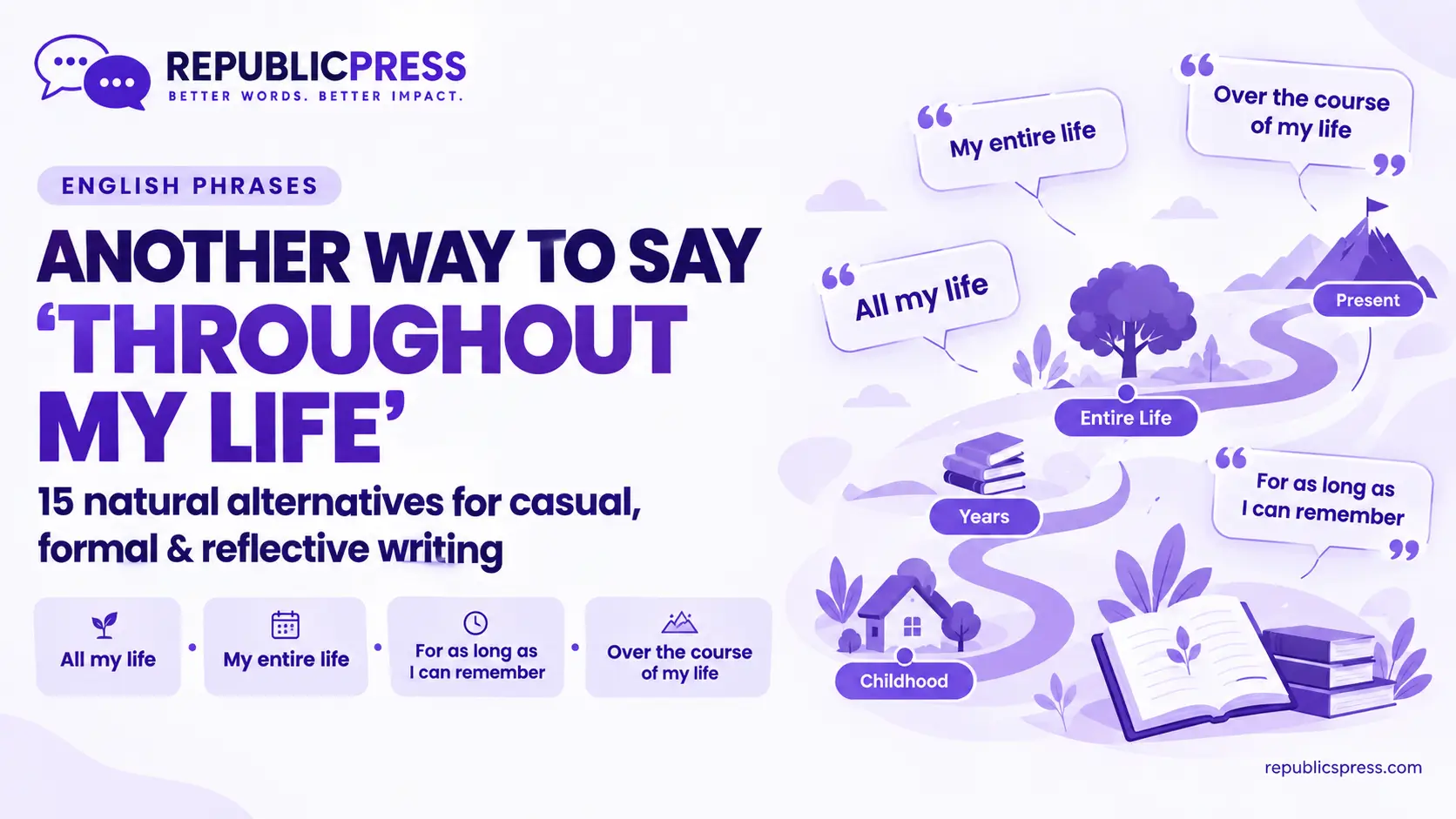
If you’re looking for another way to say “throughout my life,” good alternatives include “all my life,” “for as long as I can remember,” “over the course of my life,” “in my lifetime,” and “ever since I was young.” The best choice depends on whether you want a casual, formal, reflective, or more specific tone.
Key Takeaways
- “All my life” is the most natural casual alternative.
- “For as long as I can remember” works well when describing something that has been true for a very long time.
- “Over the course of my life” has a more formal or reflective tone.
- “In my lifetime” focuses on the period from birth to the present.
- “Ever since I was young” is useful when you want to identify childhood as the starting point.
- Not every alternative has exactly the same meaning, so context matters.
What Does “Throughout My Life” Mean?
“Throughout my life” means during all or most of the period from when I was born until now, or during the entire period of life being discussed.
For example:
Throughout my life, I have always enjoyed reading.
This means reading has been an ongoing part of the speaker’s life.
The phrase can sound neutral, personal, or reflective depending on the sentence. It works well in everyday conversation, personal writing, essays, speeches, and other contexts.
Another Way to Say “Throughout My Life”
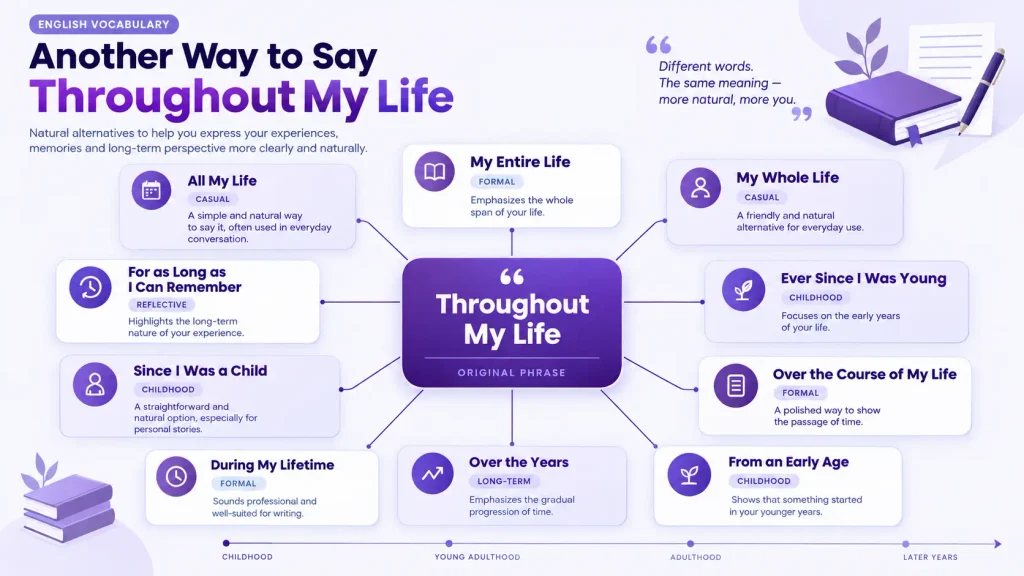
Here are some natural alternatives:
1. All My Life
“All my life” is probably the closest and most natural everyday alternative to “throughout my life.”
Example:
I have loved animals all my life.
Best for: Casual, conversational, and personal writing.
This phrase is often more natural in everyday speech than the slightly more formal “throughout my life.”
2. For as Long as I Can Remember
This phrase means something has been true for as much of your remembered life as you can recall.
Example:
For as long as I can remember, I have wanted to become a writer.
Best for: Personal stories, memories, and reflective writing.
It is not always an exact replacement. Someone may have experienced something throughout their life without actually remembering the earliest part of it.
3. Over the Course of My Life
“Over the course of my life” emphasizes the passage of time and the experiences that happened during it.
Example:
I have learned many valuable lessons over the course of my life.
Best for: Formal, reflective, and professional writing.
This alternative can sound more thoughtful than “throughout my life.”
4. In My Lifetime
“In my lifetime” refers to the period during which the speaker has been alive.
Example:
I have seen many changes in technology in my lifetime.
Best for: Discussions about personal experiences, historical changes, and major developments.
It often works especially well when talking about things that have changed or happened during a person’s lifetime.
5. Ever Since I Was Young
This phrase identifies youth as the starting point.
Example:
Ever since I was young, I have enjoyed helping others.
Best for: Personal stories and explanations about long-term interests.
It is not identical to “throughout my life” because it specifically suggests that something began when the person was young.
6. Since I Was a Child
“Since I was a child” is another useful option when childhood is the clear starting point.
Example:
I have been interested in science since I was a child.
Best for: Personal statements, essays, biographies, and reflective writing.
This phrase is more specific than “throughout my life.”
7. From a Young Age
“From a young age” means something started when the person was young and continued afterward.
Example:
From a young age, I developed a strong interest in music.
Best for: Personal statements, biographies, essays, and formal writing.
Unlike “throughout my life,” it emphasizes the beginning of an experience rather than the entire duration.
8. For My Entire Life
“For my entire life” strongly emphasizes the complete length of the speaker’s life.
Example:
I have lived in this town for my entire life.
Best for: Situations where you want to emphasize that something has lasted from birth until now.
This wording can sound slightly more emphatic than “throughout my life.”
9. All Through My Life
“All through my life” has a similar meaning to “throughout my life,” although it is somewhat less common in polished formal writing.
Example:
All through my life, my parents encouraged me to follow my dreams.
Best for: Personal and conversational writing.
For most situations, “throughout my life” or “all my life” will sound more natural.
10. Across My Life
“Across my life” can describe experiences or changes occurring at different points in someone’s life, but it is less natural as a direct replacement for “throughout my life.”
Example:
I have met many inspiring people across my life.
Best for: Reflective or literary writing, when the wording fits the context.
Because it is less common, use it carefully. In ordinary American English, “throughout my life” or “over the course of my life” is usually a better choice.
11. During My Lifetime
“During my lifetime” refers to events or experiences that occurred while the speaker was alive.
Example:
Technology has changed dramatically during my lifetime.
Best for: Historical, factual, and reflective contexts.
It is particularly useful when discussing changes that happened within one generation.
12. Since I Was Little
“Since I was little” is a warm, conversational way to describe something that began during childhood.
Example:
Since I was little, I have loved spending time outdoors.
Best for: Casual conversation and personal writing.
This is less formal than “since I was a child.”
13. For Most of My Life
This phrase is useful when something has been true for a large part of your life but not necessarily all of it.
Example:
I have lived in the city for most of my life.
Best for: Situations where “throughout” would be too absolute.
This distinction is important: “for most of my life” does not mean the same thing as “throughout my life.”
14. As Long as I Have Been Alive
This phrase strongly emphasizes the entire period of a person’s existence.
Example:
This tradition has been part of my family as long as I have been alive.
Best for: Strong emphasis and personal reflection.
It can sound more emphatic and less concise than “throughout my life,” so it is usually better when that emphasis is intentional.
15. From Childhood to the Present
This is a more explicit way to describe something that began in childhood and continued until now.
Example:
From childhood to the present, my interest in art has continued to grow.
Best for: Formal, academic, biographical, or highly reflective writing.
It is more descriptive than conversational.
Quick Comparison of Alternatives
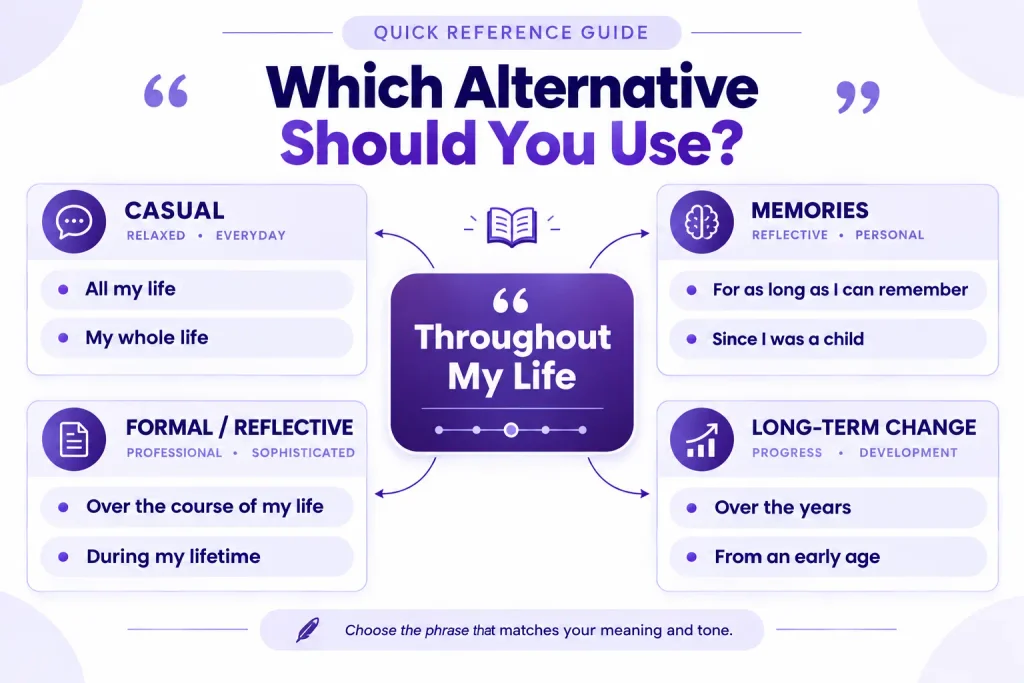
| Alternative | Tone | Best Context | Exact Match? |
| All my life | Casual/neutral | Everyday conversation | Yes |
| For as long as I can remember | Personal | Memories and reflection | Close |
| Over the course of my life | Formal/reflective | Essays and formal writing | Close |
| In my lifetime | Neutral/formal | Personal or historical changes | Close |
| Ever since I was young | Personal | Childhood experiences | Context-dependent |
| Since I was a child | Neutral/formal | Essays and personal writing | Context-dependent |
| From a young age | Neutral/formal | Personal statements | Context-dependent |
| For my entire life | Emphatic | Long-term experiences | Yes |
| During my lifetime | Formal/neutral | Historical or factual contexts | Close |
| For most of my life | Neutral | Partial duration | No |
| Since I was little | Casual | Personal conversation | Context-dependent |
| From childhood to the present | Formal | Biographical writing | Context-dependent |
Which Alternative Should You Use?
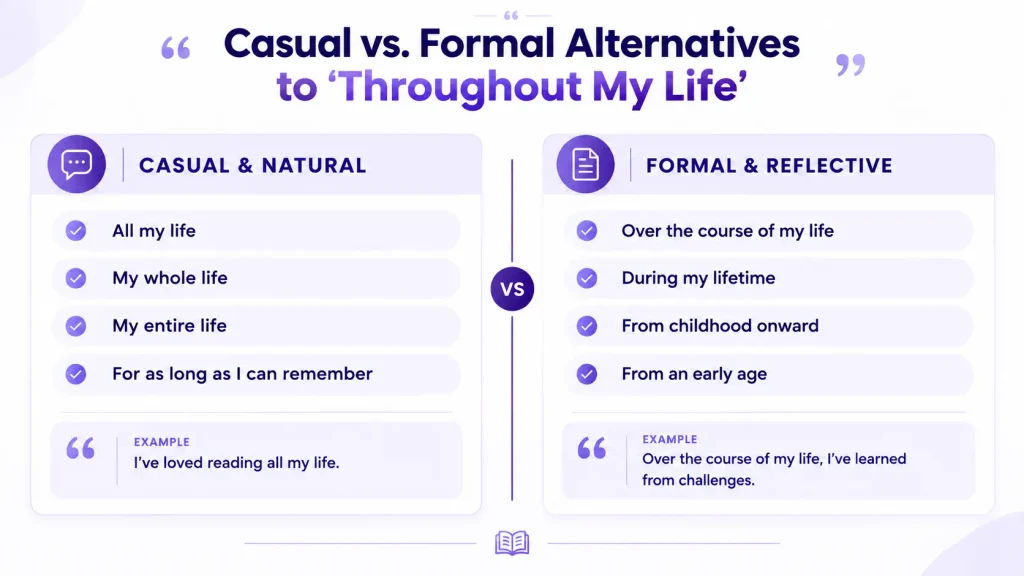
The best replacement depends on what you are trying to emphasize.
For everyday conversation
Choose:
- All my life
- Since I was little
- For as long as I can remember
Example:
“I’ve loved dogs all my life.”
This sounds natural and conversational.
For formal or reflective writing
Choose:
- Over the course of my life
- During my lifetime
- From childhood to the present
- For my entire life
Example:
“Over the course of my life, I have learned the importance of patience.”
These options can sound more deliberate and polished.
When talking about childhood
Choose:
- Since I was a child
- Ever since I was young
- From a young age
- Since I was little
Example:
“From a young age, I developed an interest in photography.”
These phrases are better when the childhood starting point is important.
When you do not mean literally your entire life
Choose:
- For most of my life
- For much of my life
- For many years
Example:
“I have lived near the coast for most of my life.”
This is more accurate than saying “throughout my life” if there were periods when you did not live there.
“Throughout My Life” vs. “All My Life”
These two phrases are very similar, but their tone is slightly different.
“All my life” is more conversational:
I’ve wanted to travel all my life.
“Throughout my life” can sound more reflective or formal:
Throughout my life, I have learned from the people around me.
Both are grammatically correct. In casual conversation, “all my life” will often sound more natural.
“Throughout My Life” vs. “For as Long as I Can Remember”
These phrases are related but not identical.
“Throughout my life” covers the entire period being discussed.
“For as long as I can remember” refers specifically to the period the speaker can recall.
For example:
Throughout my life, I have enjoyed music.
This does not necessarily mean the speaker remembers enjoying music as a baby.
By contrast:
For as long as I can remember, I have enjoyed music.
This emphasizes that the speaker has no remembered period when music was not important to them.
“Throughout My Life” vs. “For Most of My Life”
This is an important distinction.
Throughout my life suggests the experience continued across the whole period.
For most of my life means it lasted for a large portion of the person’s life, but not necessarily all of it.
Compare:
I have lived here throughout my life.
with:
I have lived here for most of my life.
The second sentence leaves room for periods when the speaker lived somewhere else.
Common Mistakes to Avoid
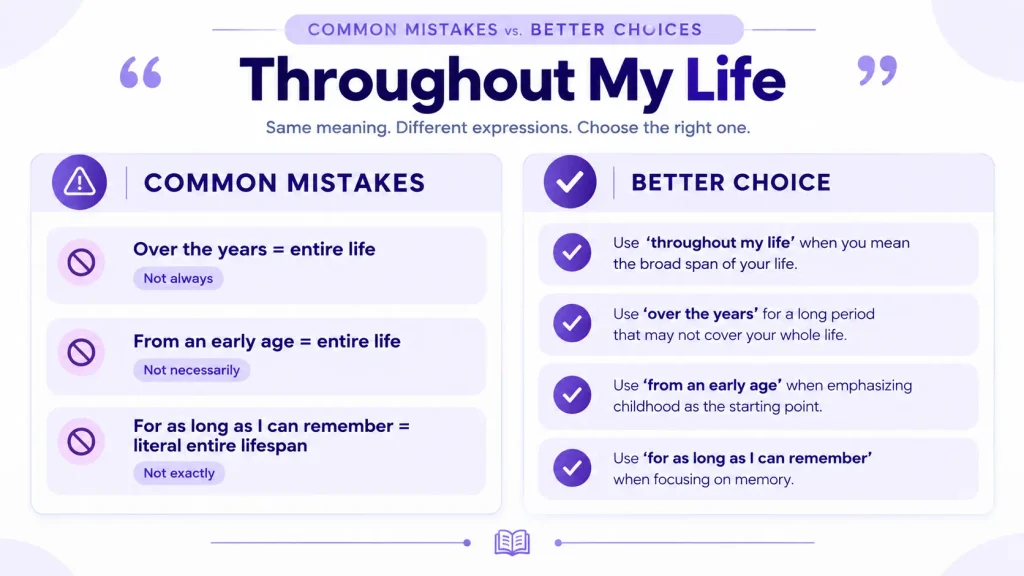
Using “for most of my life” when you mean the entire period
These phrases are not interchangeable.
If something has genuinely been true for your whole life, use “throughout my life,” “all my life,” or “for my entire life.”
Using “ever since I was young” without a continuing idea
This phrase normally suggests something started in youth and continued afterward.
Ever since I was young, I have enjoyed painting.
works naturally.
But if you are only describing something that happened once during childhood, another construction may be better.
Assuming every alternative has the same tone
“All my life” sounds natural and conversational, while “over the course of my life” sounds more reflective.
Choosing an alternative based only on its dictionary meaning can make a sentence sound unnecessarily formal or unnatural.
Using “across my life” as a standard replacement
Although “across my life” can work in certain reflective contexts, it is not one of the most natural everyday substitutes for “throughout my life.”
For general writing, “throughout my life” or “over the course of my life” is usually clearer.
Frequently Asked Questions
What is the most natural way to say “throughout my life”?
“All my life” is usually the most natural casual alternative. For example, “I have loved books all my life” sounds very natural in American English.
What is a formal way to say “throughout my life”?
“Over the course of my life,” “during my lifetime,” and “throughout my life” can all work in formal writing. The best option depends on the sentence.
Is “all my life” grammatically correct?
Yes. “All my life” is a standard and very common English expression.
Is “for as long as I can remember” the same as “throughout my life”?
Not exactly. “For as long as I can remember” refers to the period the speaker can remember, while “throughout my life” can refer to the speaker’s entire life.
What is another way to say “throughout my life” in an essay?
For an essay, consider “over the course of my life,” “during my lifetime,” “from a young age,” or simply “throughout my life.” Choose the phrase that best matches the meaning you want.
What is a casual way to say “throughout my life”?
“All my life” and “since I was little” are natural casual alternatives.
Can I say “for my entire life”?
Yes. “For my entire life” is grammatically correct and emphasizes that something has continued for the whole duration of your life.
Final Thoughts
The best alternative to “throughout my life” depends on the meaning and tone of your sentence. For everyday American English, “all my life” is an excellent choice. For reflective writing, “over the course of my life” works well. If you want to emphasize childhood, try “from a young age” or “since I was a child.”
When the experience lasted only for a large portion of your life, “for most of my life” is more accurate. Choosing the phrase that matches the exact meaning will make your writing sound more natural and precise.

Role: Language Editor
Caleb Mercer is a Language Editor at RepublicsPress, focusing on grammar, sentence structure, professional writing, and English usage. He helps ensure that language guides are clear, accurate, natural, and easy to follow.