10 Natural and Professional Ways to Say “I Like Something” in English
Featured Snippet
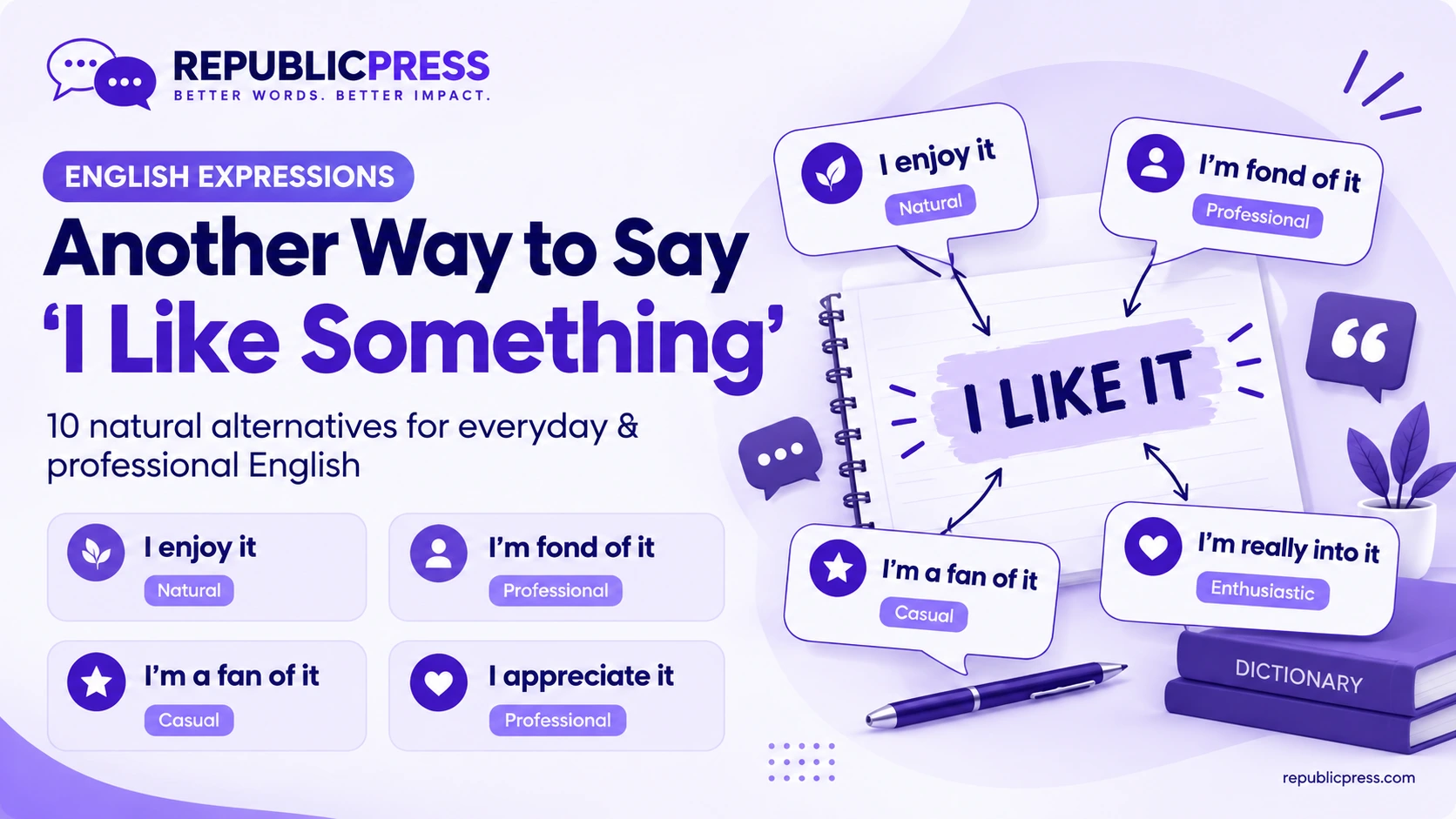
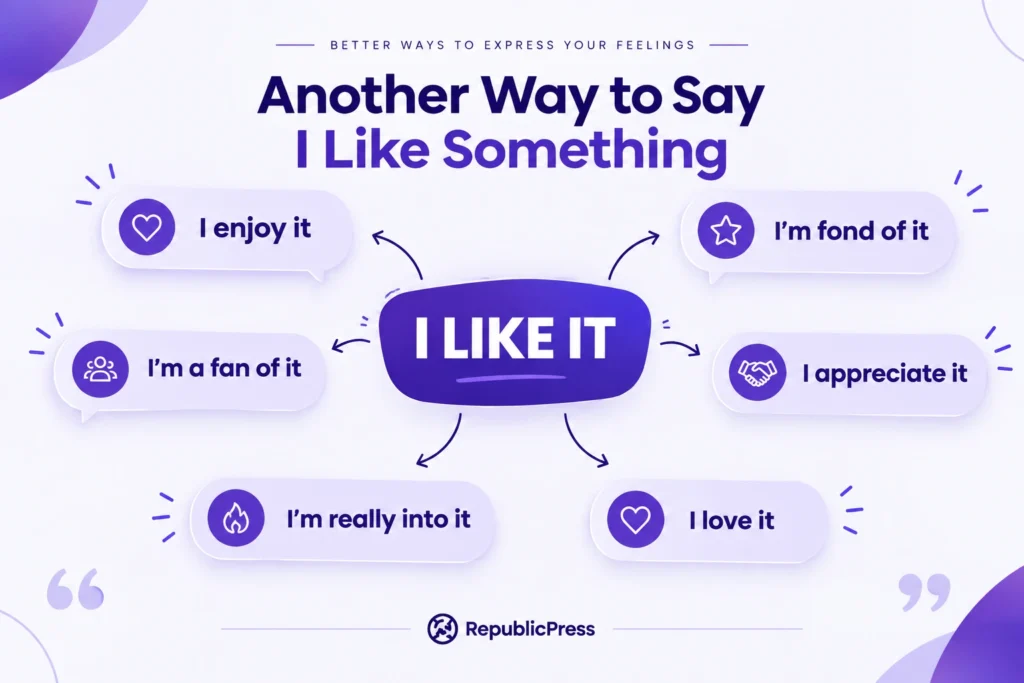
If you are looking for another way to say “I like something,” you can use phrases such as “I enjoy it,” “I’m fond of it,” “I’m a fan of it,” “I appreciate it,” or “I’m really into it.” The best choice depends on whether you want to sound casual, friendly, professional, warm, or more enthusiastic.
Key Takeaways
- There are many natural alternatives to “I like something.”
- “I enjoy it” works well in everyday conversations.
- “I’m fond of it” sounds warm and slightly more formal.
- “I’m a fan of it” is casual and enthusiastic.
- The right phrase depends on your relationship, setting, and level of interest.
another way to say i like something
Sometimes, saying “I like something” feels too simple. You may want to sound more natural, expressive, professional, or enthusiastic without changing the basic meaning.
Fortunately, English offers many alternatives. You can say that you enjoy something, appreciate it, are fond of it, or are a big fan of it. Each expression has a slightly different tone, so choosing the right one can make your communication sound more natural.
What Does “Another Way to Say I Like Something” Mean?
The phrase “another way to say I like something” refers to different expressions that communicate enjoyment, approval, interest, or appreciation.
For example, instead of saying, “I like this book,” you could say, “I really enjoyed this book,” “I’m a fan of this book,” or “I appreciate the way this book is written.”
People commonly look for alternatives when they want to avoid repetition or express their feelings more clearly. These alternatives are useful in conversations, emails, school writing, social media, reviews, and professional communication.
Why Use Other Ways to Say “I Like Something”?
Using different expressions can make your English more interesting and precise. The phrase you choose can also show how strongly you feel about something.
You might use an alternative to:
- Avoid repeating “I like.”
- Sound more natural in conversation.
- Show stronger enthusiasm.
- Express appreciation.
- Match a professional or casual situation.
- Make your writing more engaging.
10 Best Other Ways to Say “I Like Something”
1. I Enjoy It
Meaning
“I enjoy it” is one of the most natural alternatives to “I like it.” It suggests that something gives you pleasure or that you have a good experience with it.
Best For
- Casual
- Friendly
- Professional
- Polite
Example 1
“I really enjoy reading mystery novels in my free time.”
Example 2
“I enjoy working with this team because everyone is supportive.”
Quick Tip
Use “I enjoy it” when you want to describe genuine pleasure without sounding overly enthusiastic.
2. I’m Fond of It
Meaning
“I’m fond of it” means that you have a warm or positive feeling toward something. It can sound a little more thoughtful than simply saying “I like it.”
Best For
- Friendly
- Warm
- Formal
- Polite
Example 1
“I’m quite fond of this old neighborhood.”
Example 2
“She’s always been fond of classical music.”
Quick Tip
This phrase works especially well when talking about people, places, memories, hobbies, or things you have a lasting connection with.
3. I’m a Fan of It
Meaning
“I’m a fan of it” is a casual way to show that you strongly like or support something. It is common in everyday American English.
Best For
- Casual
- Friendly
Example 1
“I’m a big fan of this coffee shop.”
Example 2
“He’s a huge fan of science-fiction movies.”
Quick Tip
Add “big” or “huge” when you want to show stronger enthusiasm.
4. I Appreciate It
Meaning
“I appreciate it” communicates that you recognize the value or quality of something. It often sounds more thoughtful than “I like it.”
Best For
- Professional
- Formal
- Polite
- Warm
Example 1
“I really appreciate the attention to detail in this design.”
Example 2
“I appreciate how clearly you explained the process.”
Quick Tip
Use “appreciate” when you want to highlight the value, effort, quality, or benefit of something.
5. I’m Really Into It
Meaning
“I’m really into it” is an informal expression that means you are very interested in or enthusiastic about something.
Best For
- Casual
- Friendly
Example 1
“I’m really into photography these days.”
Example 2
“She’s really into fitness and outdoor activities.”
Quick Tip
This expression is best for casual conversations rather than formal emails or business writing.
6. I Love It
Meaning
“I love it” is a stronger version of “I like it.” It shows clear enthusiasm and positive emotion.
Best For
- Casual
- Friendly
- Warm
Example 1
“I love the new layout of your website.”
Example 2
“I absolutely love this song.”
Quick Tip
Use “I love it” when your positive feeling is strong. Avoid using it in formal situations where a more measured expression may be better.
7. It’s One of My Favorites
Meaning
“It’s one of my favorites” shows that something is among the things you like the most. It communicates stronger preference than a basic “I like it.”
Best For
- Casual
- Friendly
- Warm
Example 1
“Blue is one of my favorite colors.”
Example 2
“That restaurant is one of my favorites in the city.”
Quick Tip
This phrase is useful when comparing something with other things you already enjoy.
8. I’m Really Enjoying It
Meaning
“I’m really enjoying it” emphasizes that you are currently having a positive experience with something. It is especially useful for activities, events, books, courses, and experiences.
Best For
- Casual
- Friendly
- Polite
Example 1
“I’m really enjoying the photography course so far.”
Example 2
“We’re really enjoying our trip.”
Quick Tip
Use this phrase when your enjoyment is happening now or has continued over a recent period.
9. It’s Right Up My Alley
Meaning
“It’s right up my alley” is an informal American expression meaning that something suits your interests, personality, or preferences very well.
Best For
- Casual
- Friendly
Example 1
“A documentary about space is right up my alley.”
Example 2
“If you enjoy creative projects, this workshop should be right up your alley.”
Quick Tip
Because this is an idiom, use it mainly in relaxed conversations rather than formal writing.
10. I Have a Soft Spot for It
Meaning
“I have a soft spot for it” means you have a special affection for something. It often suggests a personal or emotional connection.
Best For
- Casual
- Friendly
- Warm
Example 1
“I have a soft spot for classic cartoons.”
Example 2
“She has a soft spot for small independent bookstores.”
Quick Tip
Use this expression when your liking comes from nostalgia, memories, personal experiences, or affection.
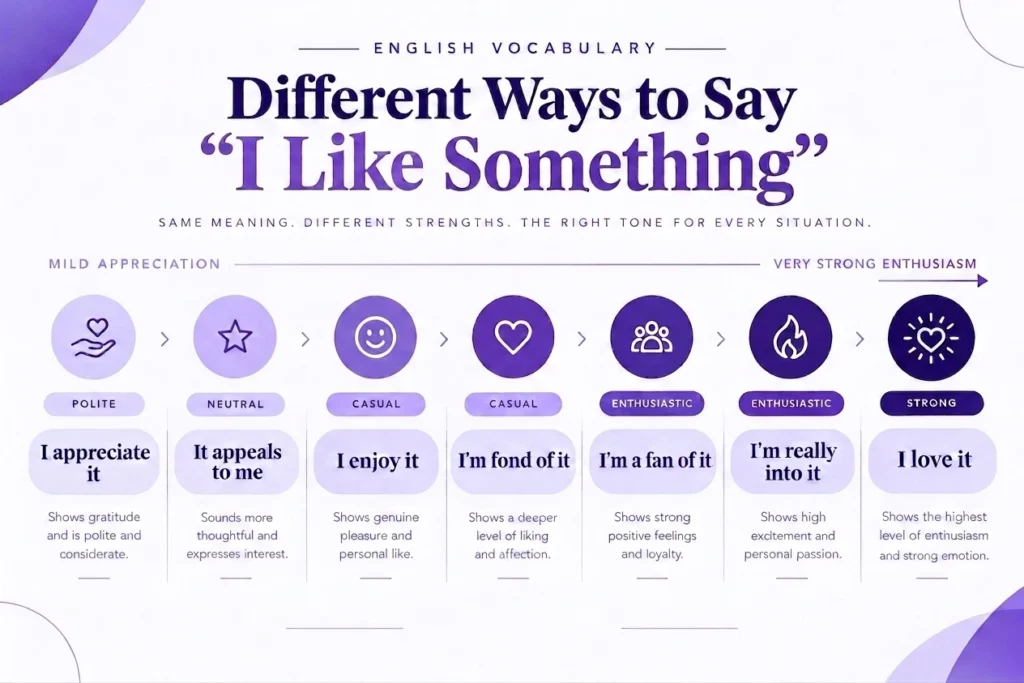
Comparison Table
| Alternative | Best Used In | Tone |
|---|---|---|
| I enjoy it | Everyday and professional situations | Natural |
| I’m fond of it | Personal conversations and writing | Warm |
| I’m a fan of it | Casual conversations | Enthusiastic |
| I appreciate it | Work and formal situations | Thoughtful |
| I’m really into it | Casual conversations | Enthusiastic |
| I love it | Informal conversations | Strong |
| It’s one of my favorites | Everyday conversations | Positive |
| I’m really enjoying it | Current experiences | Friendly |
| It’s right up my alley | Casual conversations | Informal |
| I have a soft spot for it | Personal conversations | Affectionate |
Common Mistakes
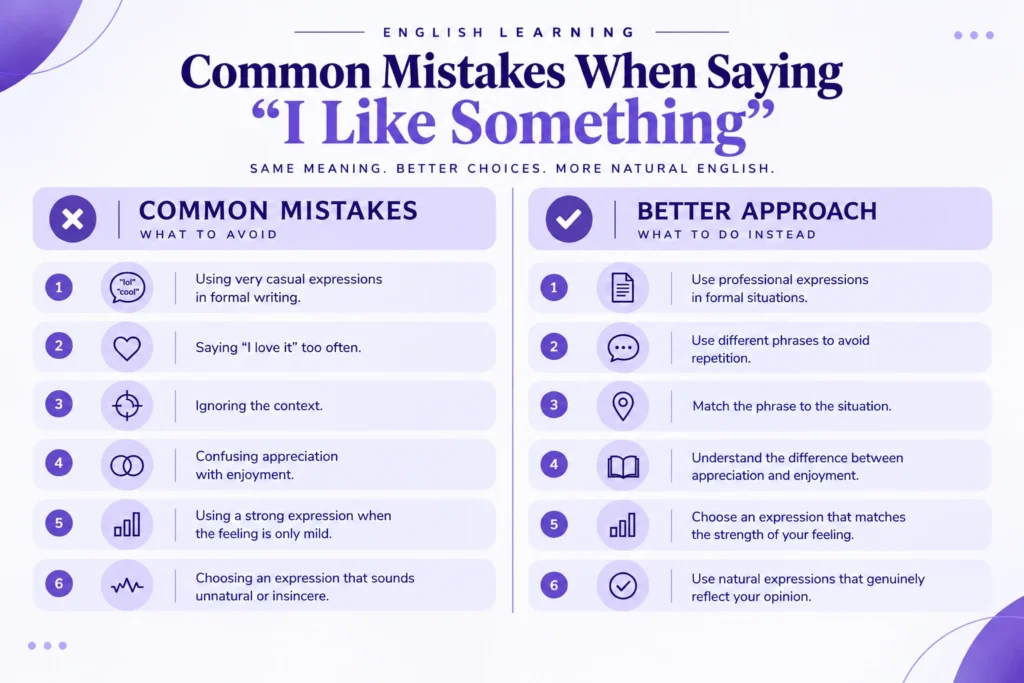
1. Using Very Casual Expressions in Formal Writing
2. Using “I Love It” Too Often
Expressions such as “I’m really into it” and “right up my alley” may sound too informal in a business email or academic paper. Choose “I appreciate it” or “I enjoy it” when a professional tone is needed.
“I love it” expresses strong enthusiasm. If you use it for everything, your writing may lose some variety and impact.
3. Ignoring Context
Not every alternative works in every situation. Think about who you are speaking to and how formal the conversation is before choosing an expression.
4. Confusing Appreciation With Enjoyment
“I appreciate it” often focuses on value or quality, while “I enjoy it” focuses more on personal pleasure. They are related but do not always mean exactly the same thing.
5. Choosing an Expression That Sounds Insincere
Very strong phrases can feel exaggerated if your feelings are only mildly positive. If you simply enjoy something, “I enjoy it” may sound more genuine than “I absolutely love it.”
Frequently Asked Questions
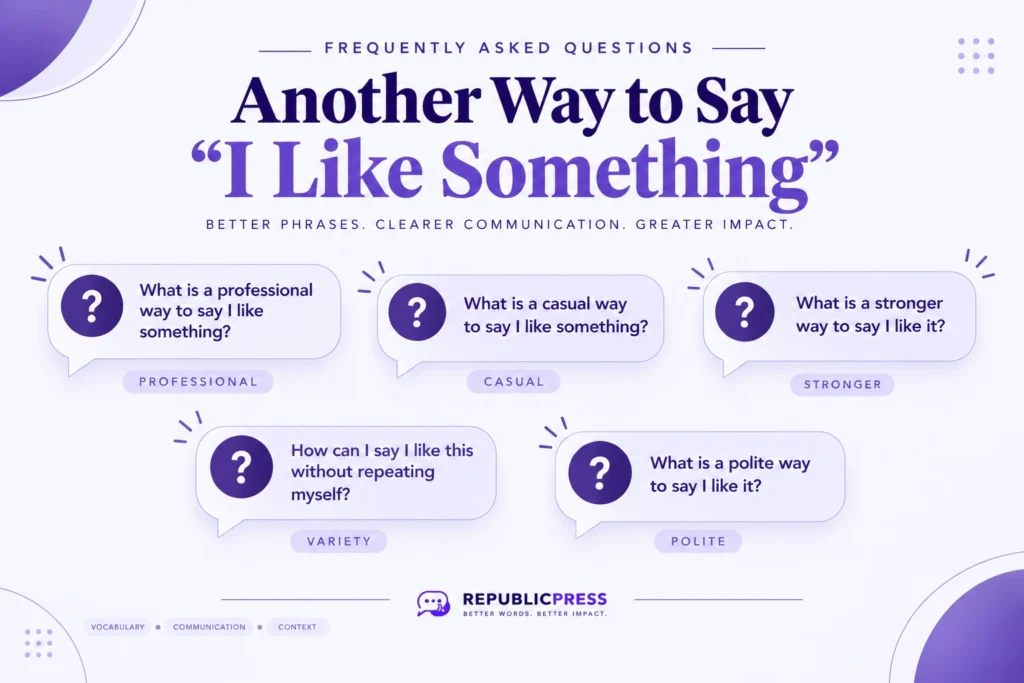
What is a professional way to say “I like something”?
A professional way to say “I like something” is “I appreciate it” or “I enjoy it.” For example, instead of saying, “I like your presentation,” you could say, “I appreciate the clarity of your presentation.” This sounds more specific and professional while still communicating a positive opinion.
What is a casual way to say “I like something”?
“I’m a fan of it” and “I’m really into it” are natural casual alternatives. For example, you could say, “I’m a big fan of this show” or “I’m really into photography.” These expressions are common in relaxed conversations with friends, classmates, and people you know well.
What is a stronger way to say “I like it”?
“I love it” is a simple and strong alternative. You can also say “I absolutely love it” when you want to express even more enthusiasm. However, the stronger expression should match your actual feelings so your statement sounds natural rather than exaggerated.
How can I say “I like this” without repeating myself?
You can replace “I like this” with phrases such as “I enjoy this,” “I’m fond of this,” “I’m a fan of this,” or “I really appreciate this.” Choose based on the context. For example, “I appreciate this design” sounds more professional, while “I’m a fan of this design” sounds more casual.
What is a polite way to say “I like it”?
“I appreciate it” is a polite and thoughtful option. “I really enjoy it” also works well in many situations. If you are giving feedback, being specific can sound even more natural, such as “I really appreciate the clean design” instead of simply saying “I like it.”
What does “I’m fond of it” mean?
“I’m fond of it” means that you have a positive or affectionate feeling toward something. It can suggest a deeper or more personal connection than simply saying “I like it.” For example, someone might say, “I’m fond of this little café,” because they have good memories associated with it.
Is “I’m really into it” grammatically correct?
Yes. “I’m really into it” is a common informal English expression. It means that you are very interested in or enthusiastic about something. For example, “I’m really into graphic design” means that graphic design is currently a strong interest of yours.
What is the best alternative to “I like something”?
There is no single best alternative because the right phrase depends on your situation. “I enjoy it” is a safe, natural choice for many situations. “I appreciate it” works well professionally, while “I’m a fan of it” is better for casual conversations and “I love it” expresses stronger enthusiasm.
Conclusion
There are many natural ways to say “I like something,” and each one can communicate a slightly different feeling. “I enjoy it” is a simple and flexible choice, while “I’m fond of it” adds warmth. If you want to sound enthusiastic, “I’m a fan of it” or “I’m really into it” works well in casual conversations.
For professional communication, “I appreciate it” is often the better choice because it focuses on value and quality. When you have a strong emotional response, “I love it” makes your enthusiasm clear.
The key is to match the expression with the situation and your actual level of interest. Instead of relying on “I like” every time, choose a phrase that communicates exactly how you feel. This small change can make your English sound more natural, expressive, and confident.

Role: Language Editor
Caleb Mercer is a Language Editor at RepublicsPress, focusing on grammar, sentence structure, professional writing, and English usage. He helps ensure that language guides are clear, accurate, natural, and easy to follow.