Another Way to Say Want: 25 Easy Alternatives
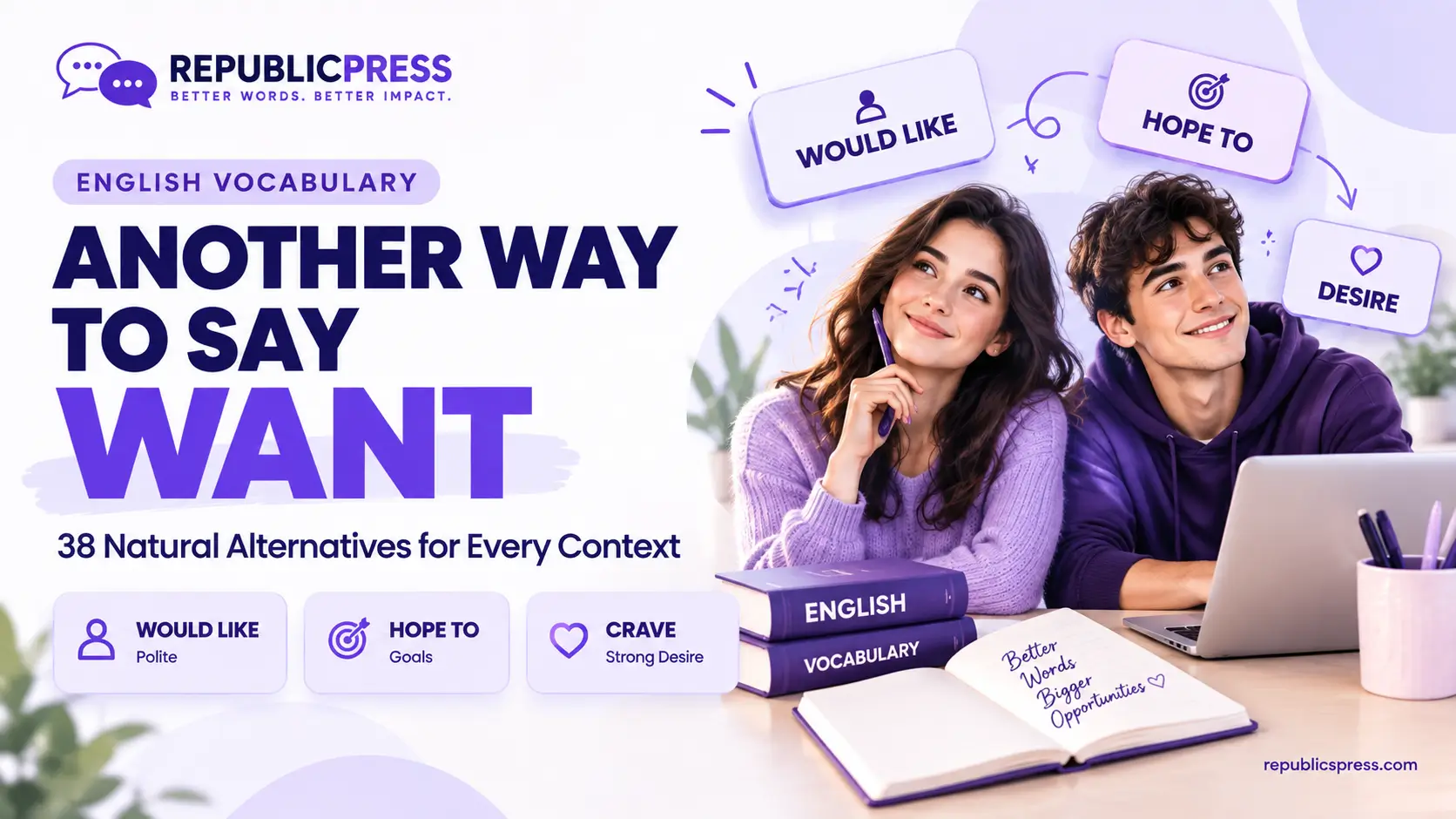
Looking for another way to say want? Several words and phrases can express the same idea. For example, use would like to sound polite, hope to to talk about future plans, or need when something is necessary. For casual conversations, try feel like or would love to. The best choice depends on what you mean and who you’re talking to.
Key Takeaways
- Use would like for polite requests.
- Choose hope to when talking about future plans.
- Use need when something is necessary.
- Try feel like in casual conversations.
- Choose aim to when talking about goals.
- Remember that some alternatives have different meanings from want.
What Does Want Mean?
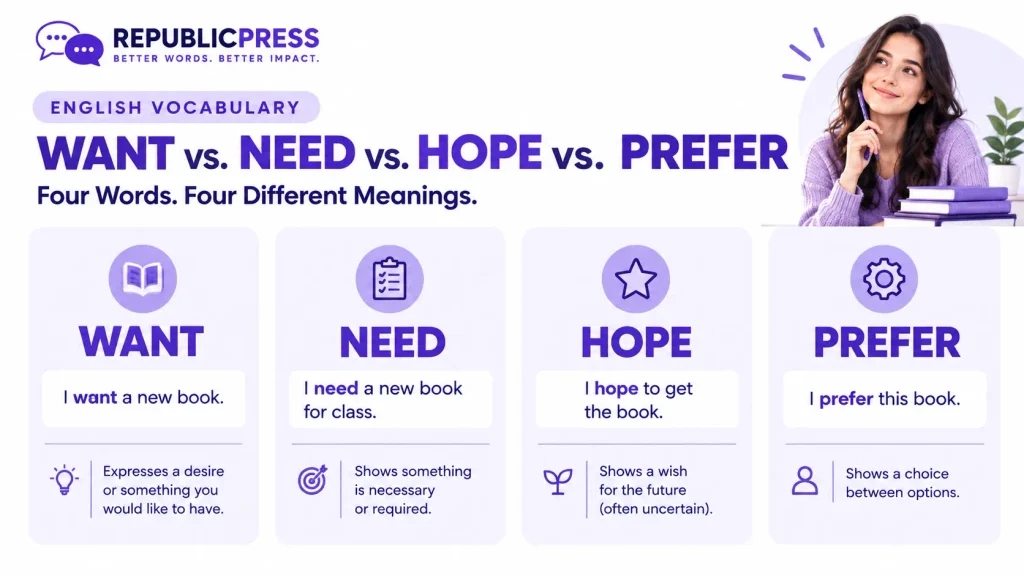
The word want means to wish to have something or to do something. It can describe a simple choice, a personal goal, or a strong desire.
For example:
- I want a cup of coffee.
- She wants to learn Spanish.
- They want to start a business.
However, the word you choose can change the tone of your sentence. A polite request may sound better with would like. In the same way, a future goal may be clearer with hope to or aim to.
25 Other Ways to Say Want
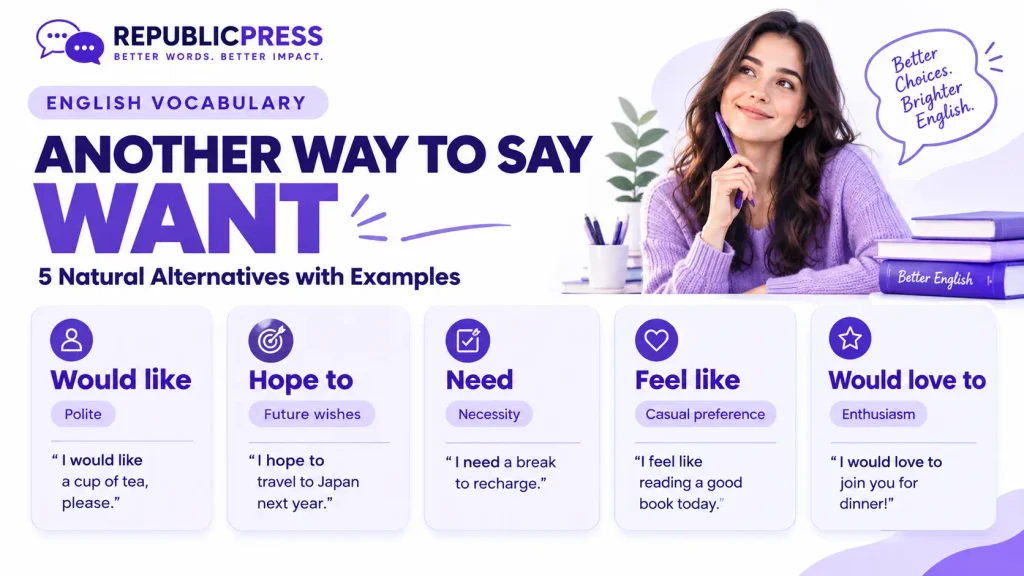
Here are 25 alternatives with simple meanings and examples. Each phrase works best in a particular situation.
1. Would Like
Best for: Polite requests and everyday conversations.
Would like is a polite way to express what you want. It works well at work, in shops, and when talking to people you don’t know well.
Example: “I would like a cup of tea, please.”
2. Hope to
Best for: Future plans and wishes.
Use hope to when you want something to happen in the future. It often suggests that the result is not certain.
Example: “I hope to visit New York next year.”
3. Need
Best for: Things that are necessary.
Need is stronger than want because it suggests that something is required.
Example: “I need to finish this report today.”
Use it carefully. Wanting a new phone is a preference, but needing one for work may be a real requirement.
4. Would Love to
Best for: Friendly and enthusiastic responses.
This phrase shows that you really want to do something or take part in an activity.
Example: “I would love to join you for dinner.”
5. Feel Like
Best for: Casual conversations.
Use feel like when talking about something you want to do or have at the moment.
Example: “I feel like watching a movie tonight.”
It is especially useful when talking about food, entertainment, or plans with friends.
6. Desire
Best for: Formal writing and strong wishes.
Desire is more formal than want. It can describe a strong wish for something.
Example: “She desires to improve her writing skills.”
In everyday American English, want usually sounds more natural.
7. Be Interested In
Best for: Opportunities, activities, and new ideas.
This phrase shows that something appeals to you or that you want to learn more about it.
Example: “I’m interested in applying for the job.”
It can sound more professional than saying, “I want the job.”
8. Be Eager to
Best for: Excitement and enthusiasm.
Use be eager to when you really want to do something and look forward to it.
Example: “The students are eager to begin the project.”
This phrase shows more excitement than a simple statement of wanting.
9. Prefer
Best for: Choices and personal preferences.
Prefer means to like one option more than another.
Example: “I prefer coffee over tea.”
It works best when you are comparing choices rather than expressing a general desire.
10. Aim to
Best for: Goals and plans.
Use aim to when you want to achieve a specific result.
Example: “We aim to improve our customer service.”
This phrase is useful in business writing because it focuses on a clear goal.
11. Intend to
Best for: Plans and decisions.
Intend to means that you plan to do something.
Example: “I intend to complete the course this year.”
Unlike hope to, it puts more focus on your plan or decision.
12. Would Appreciate
Best for: Polite requests at work.
This phrase helps you ask for something in a courteous way.
Example: “I would appreciate your feedback on the report.”
It does not directly mean want. Instead, it expresses that you would value someone’s help or response.
13. Be Looking For
Best for: Finding or choosing something.
Use be looking for when you want to find, buy, or obtain something.
Example: “I’m looking for a reliable web developer.”
This phrase is especially natural when discussing products, services, or job opportunities.
14. Crave
Best for: Strong urges and intense desires.
Crave expresses a strong desire, often for food or a particular experience.
Example: “I crave chocolate after dinner.”
Because it suggests a stronger urge, it does not fit every sentence that uses want.
15. Long For
Best for: Deep emotional wishes.
Long for describes a strong desire for something that may feel far away or difficult to get.
Example: “After years abroad, she longed for home.”
This phrase often carries more emotion than want.
16. Dream Of
Best for: Big goals and personal wishes.
Use dream of when talking about something you deeply hope to achieve or experience.
Example: “He dreams of opening his own restaurant.”
It is a good choice for ambitions that matter to you.
17. Aspire to
Best for: Long-term ambitions.
Aspire to means to aim for something important, often through effort and hard work.
Example: “She aspires to become a successful writer.”
This phrase is more formal than want to and works well in career-related writing.
18. Seek
Best for: Opportunities, help, and solutions.
Seek means to try to find or obtain something. It is common in formal and professional writing.
Example: “The company seeks to improve its services.”
For casual conversation, look for may sound more natural.
19. Be Willing to
Best for: Showing readiness or agreement.
This phrase means you are prepared to do something. However, it does not always mean you want to do it.
Example: “I’m willing to help with the project.”
Use it when you want to show that you agree or are ready to help.
20. Wouldn’t Mind
Best for: Casual and relaxed preferences.
Wouldn’t mind suggests that something sounds pleasant or acceptable.
Example: “I wouldn’t mind going out for pizza.”
It is usually softer than saying that you really want something.
21. Be Hoping For
Best for: Desired results and uncertain outcomes.
Use this phrase when you want a particular result to happen.
Example: “We’re hoping for good news this week.”
It works well when the outcome depends on other people or events.
22. Wish For
Best for: Personal wishes and desired outcomes.
Wish for describes something you would like to have or experience. It can suggest that the outcome is uncertain.
Example: “She wishes for a peaceful life.”
For a practical plan, hope for or aim for may be a better choice.
23. Be Keen to
Best for: Expressing strong interest.
Be keen to means to be very interested in doing something. Although Americans understand it, be eager to is often more natural in everyday US English.
Example: “He’s keen to learn more about the project.”
24. Be After
Best for: Informal conversations.
In casual English, be after can mean trying to get something.
Example: “He’s after a promotion.”
The phrase may sound informal or suggest a determined effort, so it is not the best choice for every setting.
25. Have a Preference for
Best for: Formal discussions and professional settings.
Use this phrase when you favor one option over others.
Example: “I have a preference for remote work.”
In casual conversation, simply saying “I prefer remote work” is shorter and more natural.
Which Alternative Should You Use?
The best replacement depends on the message you want to send.
| Situation | Best alternative | Example |
|---|---|---|
| Polite request | Would like | I’d like some water. |
| Future plan | Hope to | I hope to graduate soon. |
| Necessary action | Need | I need to call the client. |
| Casual preference | Feel like | I feel like going out. |
| Strong enthusiasm | Would love to | I’d love to help. |
| Personal choice | Prefer | I prefer tea. |
| Career goal | Aspire to | I aspire to lead a team. |
| Business goal | Aim to | We aim to reduce costs. |
| Strong urge | Crave | I crave chocolate. |
| Finding something | Be looking for | I’m looking for a new job. |
How to Say Want in Different Situations
In Everyday Conversations
For casual situations, choose phrases that sound friendly and natural.
- “I feel like getting ice cream.”
- “I’d love to watch a movie.”
- “I’d like to try that restaurant.”
- “I wouldn’t mind taking a walk.”
For example, I’d love to shows more excitement than I’d like to. Choose the one that matches how you feel.
In Professional Emails
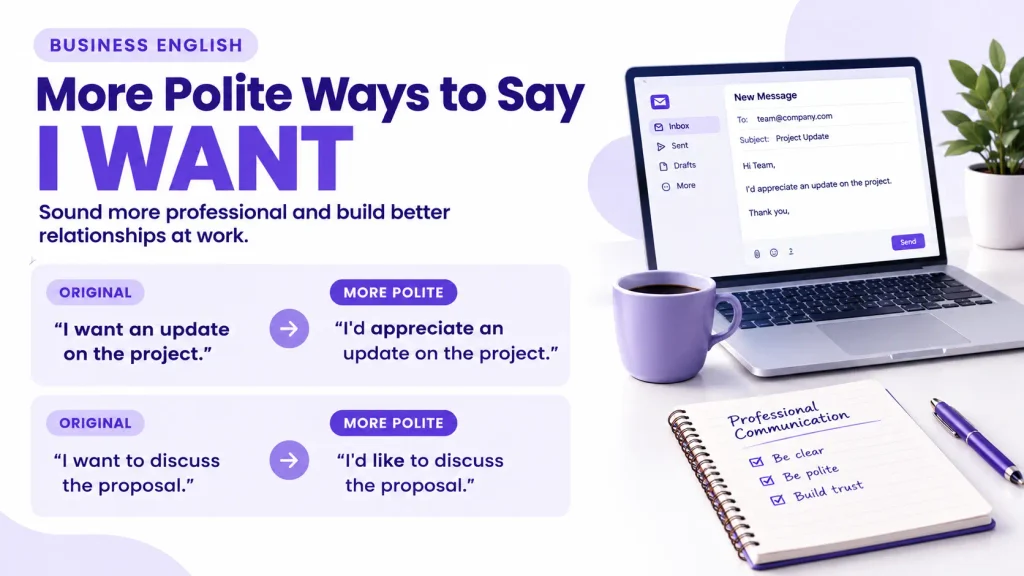
At work, polite and clear language can make requests sound more respectful.
Instead of “I want an update on the project,” write:
“I’d appreciate an update on the project.”
Likewise, replace “I want to discuss the proposal” with:
“I’d like to discuss the proposal.”
When describing a business goal, you could write:
“We aim to improve the process this year.”
These phrases sound professional without making your message too formal.
In Academic and Formal Writing
Formal writing often needs clear and precise words. Therefore, choose an alternative that explains your meaning.
- Use aim to for a goal.
- Use seek to for an effort to achieve something.
- Use intend to for a plan.
- Use aspire to for a long-term ambition.
- Use desire when a formal expression of wanting fits the sentence.
For example, “The study seeks to explain the results” sounds more suitable for academic writing than “The study wants to explain the results.”
For more writing advice, see Purdue OWL’s guide to clear writing.
Common Mistakes When Replacing Want
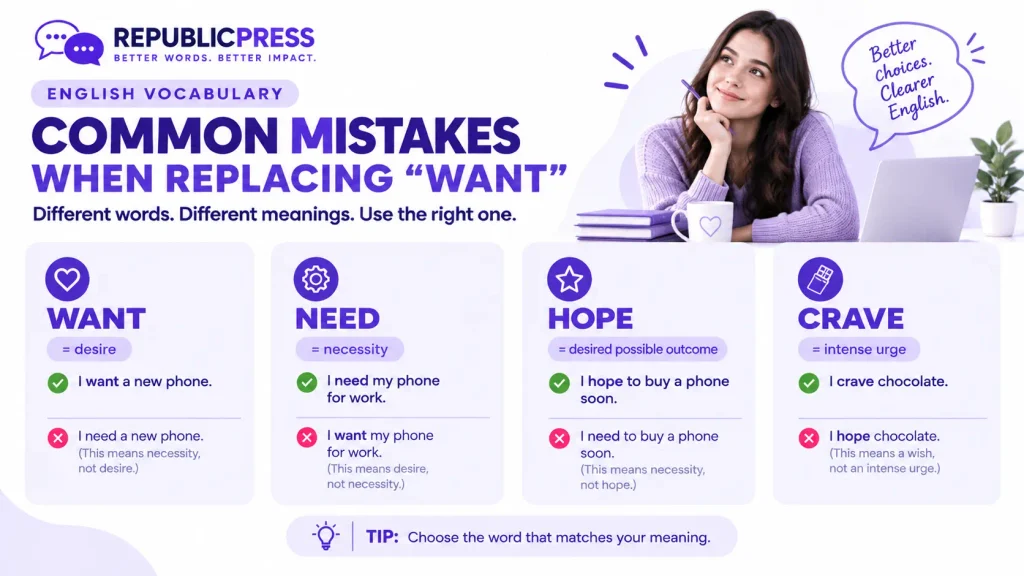
Some alternatives are close in meaning, but they are not exact matches. Keep these differences in mind.
- Want vs. need: Want expresses a desire, while need suggests necessity.
- Want vs. hope: Hope often focuses on a possible future result.
- Want vs. prefer: Prefer compares choices.
- Want vs. be willing to: Being willing means being ready or agreeable, not necessarily eager.
- Want vs. crave: Crave expresses a much stronger urge.
- Want vs. appreciate: Appreciate is useful in polite requests, but it expresses value or gratitude rather than desire itself.
For clearer writing, choose words that match your meaning. Can i also help you explore related words.
Frequently Asked Questions
What is the most polite way to say want?
Would like is one of the most polite and useful alternatives. For example, “I’d like to ask a question” sounds more courteous than “I want to ask a question.”
What is a professional word for want?
Depending on the context, use seek, aim to, or intend to. For polite requests, would like and would appreciate often work better.
What is a casual way to say want?
Feel like, would love to, and wouldn’t mind are common choices. For example, “I feel like ordering takeout” sounds natural in casual conversation.
What is a stronger word for want?
Crave expresses an intense urge, while long for suggests a deep emotional desire. Desire can also express a strong wish in formal writing.
Is it rude to say want?
No. Want is a normal English word. However, “I want you to send this today” may sound demanding. “Could you send this today?” is often more polite.
Can desire replace want in every sentence?
No. Desire sounds more formal and may feel unnatural in casual conversation. Most Americans would say “I want a burger” rather than “I desire a burger.”
Final Thoughts
The best alternative depends on what you want to express. Use would like for polite requests, hope to for future plans, and need for necessary actions. Meanwhile, feel like works well in casual conversations, while aim to fits goals. Choose the phrase that matches your meaning, and your English will sound clearer and more natural.

Role: English Content Writer
Maren Whitlock writes practical English language content for RepublicsPress, with a focus on vocabulary, word alternatives, everyday expressions, and clear communication. Her articles are designed to make difficult or confusing language easier to understand, with simple explanations and useful examples readers can apply in real situations.