
What’s Another Way to Say Quality of Life? 15 Better Alternatives
A natural way to say “quality of life” depends on what you mean. Common alternatives include “well-being,” “life satisfaction,” “standard of living,” “living conditions,” “overall wellness,” and “quality of living.” These phrases are related, but they are not always interchangeable, so the best choice depends on the context.
Key Takeaways
- “Well-being” is one of the closest general alternatives to “quality of life.”
- “Life satisfaction” focuses more on how satisfied someone feels about their life.
- “Standard of living” usually refers to financial and material conditions.
- “Living conditions” emphasizes a person’s physical or social environment.
- “Overall wellness” works well when discussing physical, mental, and emotional health.
- Some alternatives are better suited to academic, professional, health, or everyday contexts.
What Does “Quality of Life” Mean?
“Quality of life” refers to how good or satisfactory a person’s life is overall. It can include physical health, emotional well-being, relationships, financial security, living conditions, independence, safety, and access to things that contribute to a satisfying life.
For example:
Moving closer to family greatly improved her quality of life.
The phrase is broad, which is why there is no single replacement that works perfectly in every sentence. If you want to emphasize health, happiness, money, living conditions, or personal satisfaction, a more specific alternative may be better.
15 Natural Ways to Say “Quality of Life”
1. Well-Being
“Well-being” is one of the most useful general alternatives. It describes a person’s overall state of health, happiness, comfort, and life satisfaction.
Best for: General, health, professional, and formal writing
Example:
Regular exercise can have a positive effect on your overall well-being.
Unlike “quality of life,” “well-being” often puts more emphasis on a person’s state of health and happiness.
2. Life Satisfaction
“Life satisfaction” focuses on how content or satisfied someone feels about their life as a whole.
Best for: Personal, psychological, academic, and social contexts
Example:
Spending more time with family has increased her life satisfaction.
Use this phrase when the emotional or subjective side of life matters more than material conditions.
3. Standard of Living
“Standard of living” refers mainly to material and economic conditions, such as income, housing, goods, services, and access to resources.
Best for: Economics, social issues, government, and financial discussions
Example:
Higher wages can improve a family’s standard of living.
This is not a perfect synonym for “quality of life.” Someone may have a high standard of living but still experience stress, loneliness, or poor health.
4. Living Conditions
“Living conditions” focuses on the environment in which a person lives, including housing, safety, sanitation, infrastructure, and access to basic services.
Best for: Housing, communities, public health, and social issues
Example:
The new housing project is expected to improve living conditions for local families.
It is more specific than “quality of life” because it concentrates on external circumstances.
5. Overall Wellness
“Overall wellness” is useful when discussing physical, emotional, and mental health together.
Best for: Health, fitness, lifestyle, and wellness content
Example:
Getting enough sleep is important for your overall wellness.
This phrase works particularly well when “quality of life” is being discussed in relation to healthy habits.
6. General Well-Being
“General well-being” is a slightly broader and more neutral expression for a person’s overall state.
Best for: Formal, professional, and health-related writing
Example:
The program was designed to support the general well-being of older adults.
It is a good choice when you want to avoid repeating “quality of life” without changing the basic idea too much.
7. Quality of Living
“Quality of living” is a close alternative to “quality of life” and can sometimes be used when discussing living environments and conditions.
Best for: Housing, communities, cities, and lifestyle discussions
Example:
The city offers a high quality of living for families.
The phrase is understandable and natural, although “quality of life” is generally more common in American English.
8. Overall Happiness
“Overall happiness” emphasizes how happy a person feels about their life.
Best for: Personal, casual, and emotional contexts
Example:
Financial security can affect your overall happiness, but it isn’t the only factor.
This is narrower than “quality of life” because happiness is only one part of overall life quality.
9. Life Fulfillment
“Life fulfillment” emphasizes a sense that life is meaningful, satisfying, or personally rewarding.
Best for: Personal development, relationships, careers, and reflective writing
Example:
She left a stressful job in search of greater life fulfillment.
This works especially well when the original sentence is about purpose and personal satisfaction rather than material circumstances.
10. Personal Well-Being
“Personal well-being” puts the focus directly on an individual’s physical, emotional, and mental state.
Best for: Health, self-care, workplace wellness, and personal development
Example:
A healthy work-life balance can protect your personal well-being.
It is useful when “quality of life” feels too broad for the specific point you are making.
11. Overall Life Experience
“Overall life experience” focuses on what someone’s life is like as a whole, including positive and negative experiences.
Best for: Reflective, personal, and general writing
Example:
Access to reliable transportation can improve a person’s overall life experience.
This is a paraphrase rather than an exact synonym, so use it when the broader experience of living is what you want to emphasize.
12. Life Circumstances
“Life circumstances” refers to the conditions and situations that shape someone’s life.
Best for: Social, personal, professional, and formal contexts
Example:
Changes in her life circumstances affected her ability to work full time.
This phrase describes the factors surrounding someone’s life rather than directly measuring how good their life is.
13. Living Standards
“Living standards” is closely related to “standard of living” and usually refers to material and economic conditions.
Best for: Economic, social, and policy discussions
Example:
The development project aims to raise living standards in rural communities.
Like “standard of living,” this phrase should not be treated as a complete synonym for “quality of life.”
14. Life Satisfaction and Well-Being
This combined phrase works when you want to make both emotional satisfaction and broader well-being clear.
Best for: Formal reports, research-oriented writing, and health discussions
Example:
Strong social connections can contribute to life satisfaction and well-being.
Because it combines two concepts, it can be useful when “quality of life” feels too broad.
15. Overall Quality of Living
“Overall quality of living” is a descriptive alternative that emphasizes the conditions and experiences that shape everyday life.
Best for: Lifestyle, housing, community, and general discussions
Example:
Access to parks and public transportation can improve the overall quality of living in a community.
It is understandable, but “quality of life” remains the more established expression in many contexts.
Which Alternative Should You Use?
The best replacement depends on the meaning you want to emphasize.
| Alternative | Main Meaning | Tone | Best Context |
| Well-being | Overall health and happiness | Neutral | General, health |
| Life satisfaction | How satisfied someone feels | Neutral/Formal | Personal, academic |
| Standard of living | Material and financial conditions | Formal | Economics, finance |
| Living conditions | Physical and social environment | Neutral/Formal | Housing, communities |
| Overall wellness | Physical and mental health | Neutral | Health, lifestyle |
| Quality of living | General living experience | Neutral | Lifestyle, communities |
| Overall happiness | Level of happiness | Casual/Neutral | Personal |
| Life fulfillment | Meaning and personal satisfaction | Reflective | Personal development |
| Personal well-being | Individual health and welfare | Neutral | Health, work |
| Life circumstances | Conditions affecting someone’s life | Formal | Social, personal |
“Quality of Life” vs. “Standard of Living”
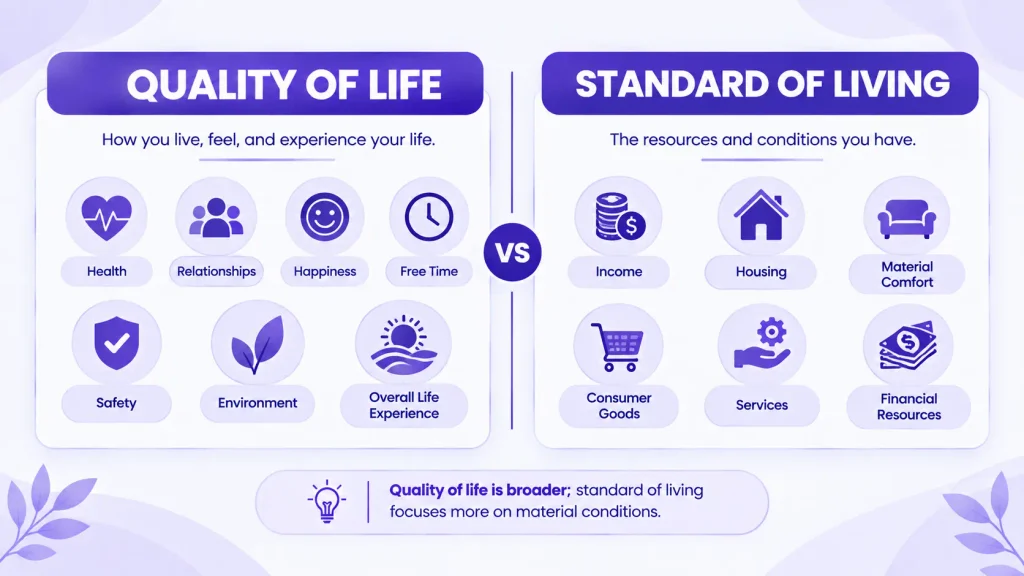
These two phrases are often confused, but they describe different ideas.
“Standard of living” generally focuses on material resources and economic conditions. Income, housing, employment, possessions, and access to services can all affect someone’s standard of living.
“Quality of life” is broader. It can include financial security, but it may also cover health, relationships, independence, safety, emotional well-being, leisure, and personal satisfaction.
For example:
The family’s standard of living improved after they received higher salaries.
But:
Moving closer to family improved their quality of life.
The first sentence emphasizes money and material circumstances. The second describes a broader improvement in life.
“Quality of Life” vs. “Well-Being”
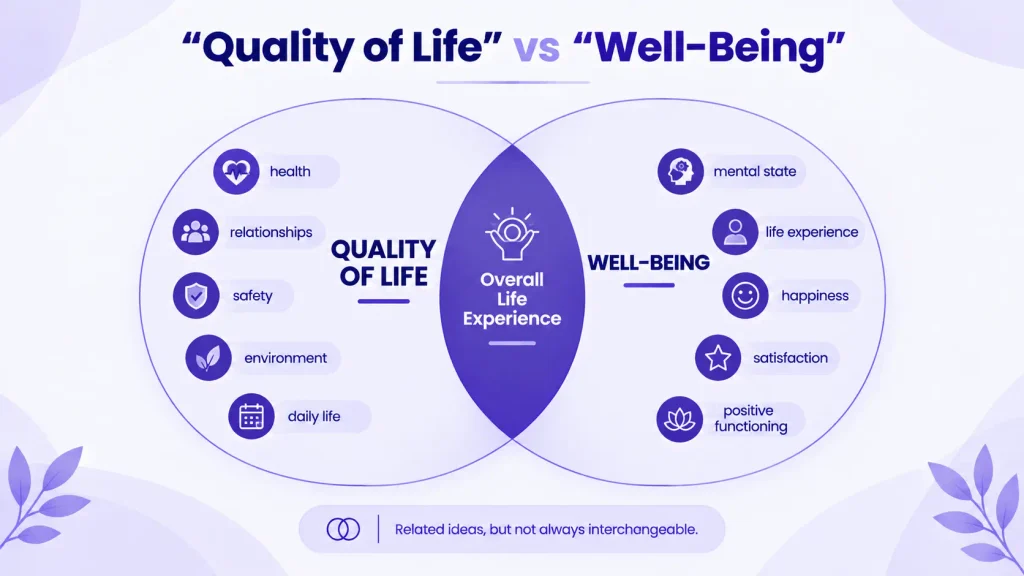
“Well-being” is often the easiest replacement when you want a natural alternative.
Compare:
The new schedule improved the employees’ quality of life.
The new schedule improved the employees’ well-being.
Both can work, but the second sentence places more emphasis on employees’ overall health and welfare. “Quality of life” can include those things while also covering practical circumstances such as commuting, housing, relationships, and leisure time.
“Quality of Life” vs. “Life Satisfaction”
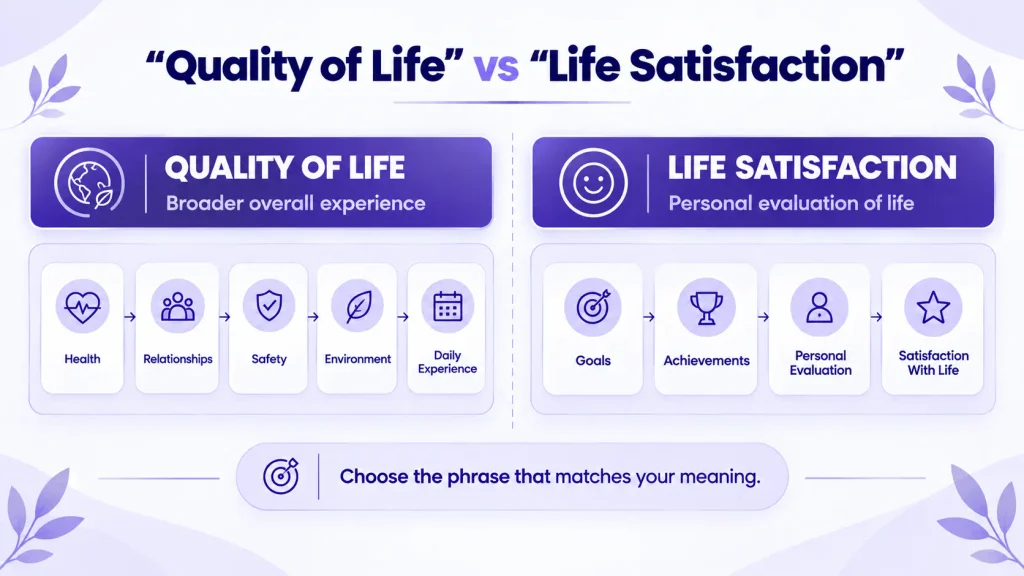
“Life satisfaction” is more specifically about how pleased someone feels with their life.
For example:
Having more free time improved his quality of life.
This could refer to sleep, hobbies, family time, stress, or many other factors.
By contrast:
Having more free time improved his life satisfaction.
This directly emphasizes his personal feeling of being satisfied with his life.
How to Choose the Right Phrase
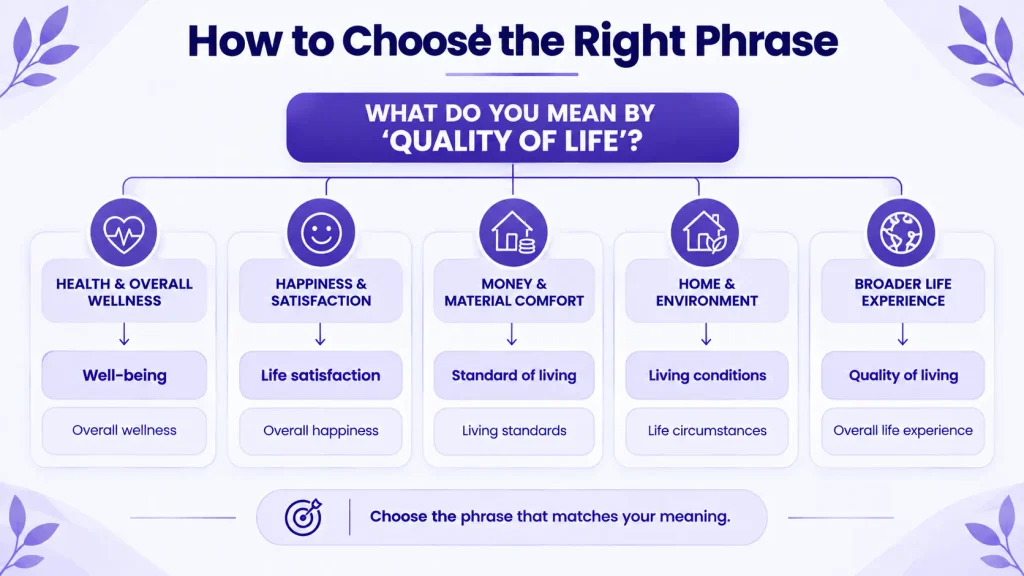
Before replacing “quality of life,” ask yourself what you are actually describing.
If you mean health and happiness
Use:
- Well-being
- Overall wellness
- Personal well-being
Example:
A balanced routine can improve your overall well-being.
If you mean happiness or satisfaction
Use:
- Life satisfaction
- Overall happiness
- Life fulfillment
Example:
Meaningful relationships can increase life satisfaction.
If you mean money and material comfort
Use:
- Standard of living
- Living standards
Example:
Stable employment can raise a household’s standard of living.
If you mean someone’s environment
Use:
- Living conditions
- Life circumstances
Example:
Better housing can significantly improve living conditions.
If you mean the broader experience of living
Use:
- Quality of living
- Overall life experience
Example:
Reliable public transportation can improve the overall life experience of residents.
Common Mistakes to Avoid
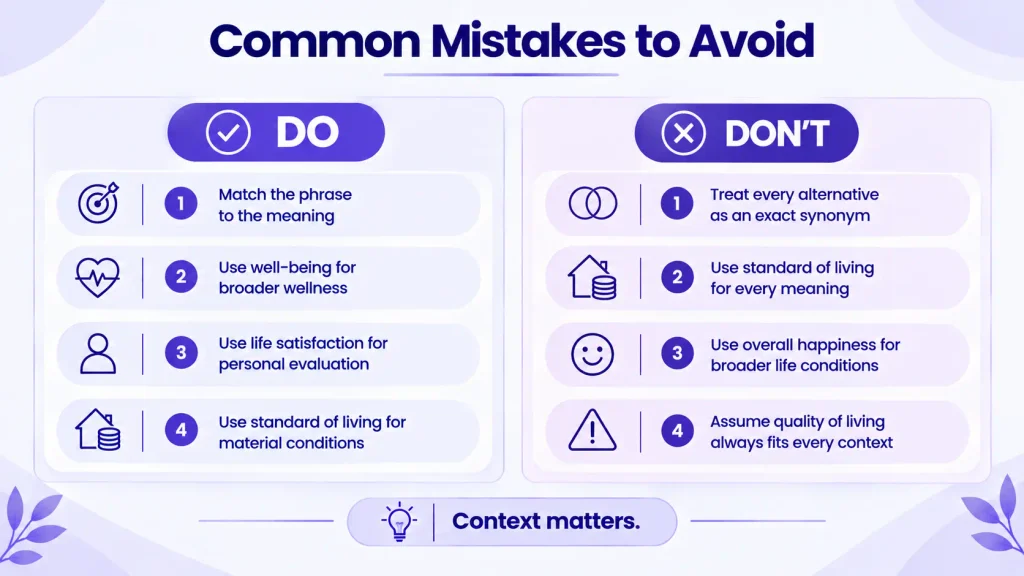
Treating every alternative as an exact synonym
“Standard of living,” “life satisfaction,” and “well-being” overlap with “quality of life,” but they are not identical.
Choose the phrase that matches the specific idea you are trying to express.
Using “standard of living” when discussing happiness
If your sentence is about relationships, emotional health, or personal fulfillment, “standard of living” may sound too focused on money and material resources.
Using “overall happiness” for a broad social issue
If you are discussing healthcare, housing, safety, transportation, and income together, “quality of life” or “well-being” may communicate the broader concept more accurately.
Assuming “quality of living” is always more natural
“Quality of living” is understandable, but “quality of life” is generally the more familiar phrase in American English.
Frequently Asked Questions
What is the best synonym for “quality of life”?
“Well-being” is one of the closest general alternatives. Depending on the context, “life satisfaction,” “living conditions,” or “standard of living” may be more precise.
What is another way to say “improve quality of life”?
You can say “improve well-being,” “enhance living conditions,” “increase life satisfaction,” or “make life more fulfilling.” The best choice depends on what is being improved.
Is “well-being” the same as “quality of life”?
Not exactly. The terms overlap, but “quality of life” is broader and can include living conditions, finances, relationships, health, independence, and personal satisfaction. “Well-being” usually emphasizes a person’s overall state of health and welfare.
Is “standard of living” the same as “quality of life”?
No. “Standard of living” mainly concerns material and economic conditions, while “quality of life” covers a wider range of factors.
What is a formal way to say “quality of life”?
“Overall well-being,” “life satisfaction,” and “living conditions” can work in formal writing, depending on the intended meaning.
What is a simple way to say “quality of life”?
You could use “well-being,” “how well someone lives,” or “overall happiness,” depending on the sentence.
Can I use “quality of living” instead of “quality of life”?
Yes, but it is less established than “quality of life” in many contexts. If you want the most familiar expression in American English, “quality of life” is usually the safer choice.
Conclusion
There isn’t one perfect replacement for “quality of life.” The right alternative depends on the idea you want to emphasize. Use “well-being” for a broad focus on health and welfare, “life satisfaction” for personal contentment, “standard of living” for material conditions, and “living conditions” for someone’s physical or social environment.
Choosing a more specific phrase can make your writing clearer because it tells the reader exactly which part of life you are discussing.

Role: Editorial Contributor
Graham Ellis contributes practical English and communication guides to RepublicsPress. His content focuses on vocabulary, writing techniques, word usage, and clear communication, with an emphasis on straightforward explanations and real-world examples.