Another Way to Say Testimonials: 10 Website-Friendly Alternatives
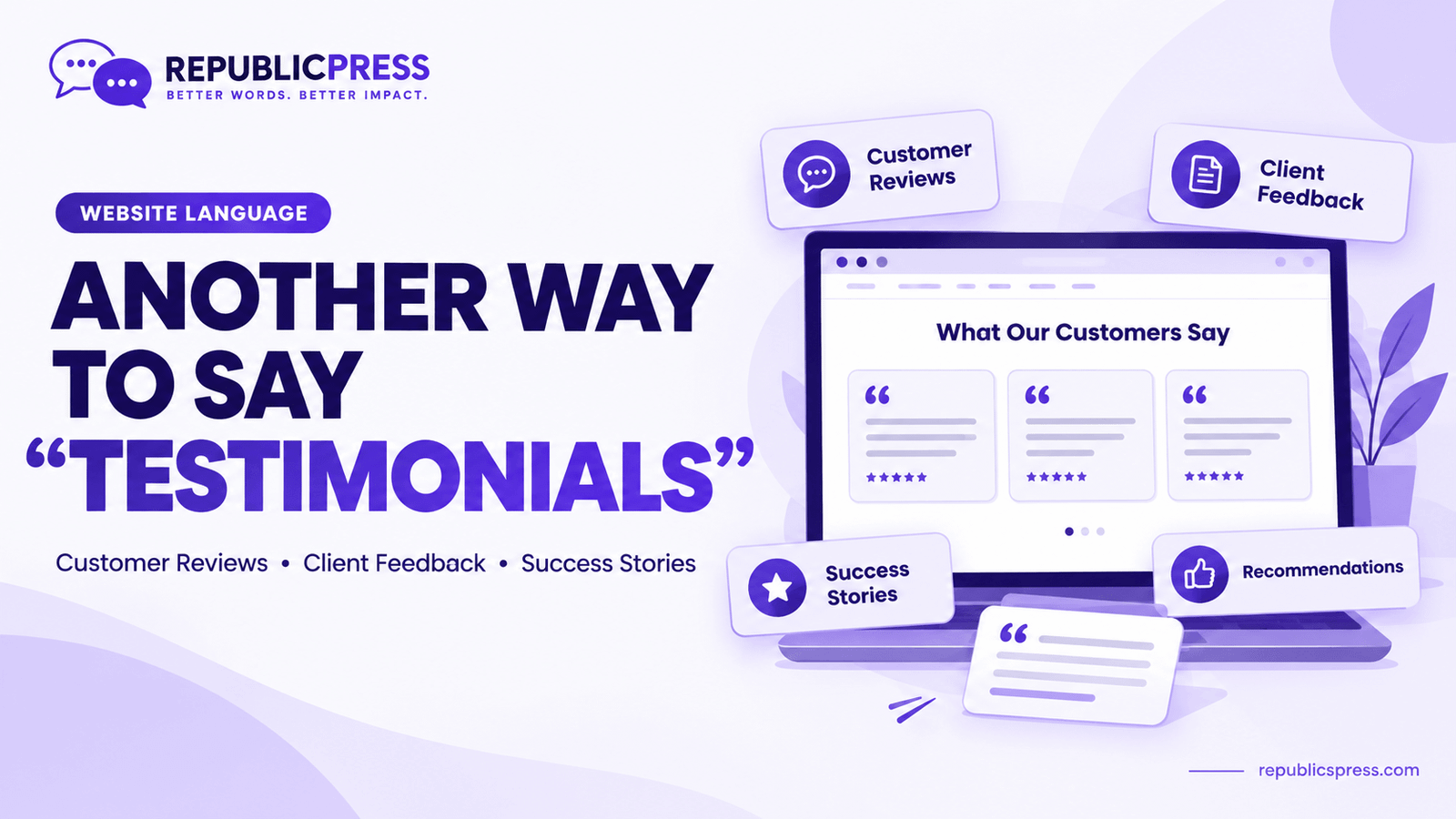
If you’re looking for another way to say “testimonials” on a website, useful alternatives include customer reviews, client feedback, customer experiences, success stories, endorsements, recommendations, and client reviews. The best choice depends on what the section contains and whether you want the wording to sound professional, conversational, or marketing-focused.
Key Takeaways
- Customer Reviews is the clearest general alternative.
- Client Feedback works especially well for professional services and B2B websites.
- Success Stories is better when the section explains specific customer results.
- Customer Experiences sounds warm and people-focused.
- Endorsements suggests stronger public support or approval.
- Recommendations works well when customers are actively recommending a business.
- Case Studies should only be used when the content provides detailed information about a customer’s situation and results.
What Does “Testimonials” Mean on a Website?
On a website, testimonials are statements from customers or clients describing their experience with a business, product, or service.
For example:
“The team completely redesigned our website and helped us increase online inquiries.”
A testimonial typically communicates trust, satisfaction, credibility, or results. Because of this, the best alternative depends on exactly what your website visitors will see in that section.
If the section contains short quotes from customers, Customer Reviews or Client Feedback may be more natural. If it tells detailed stories about how customers achieved results, Success Stories or Case Studies may be more appropriate.
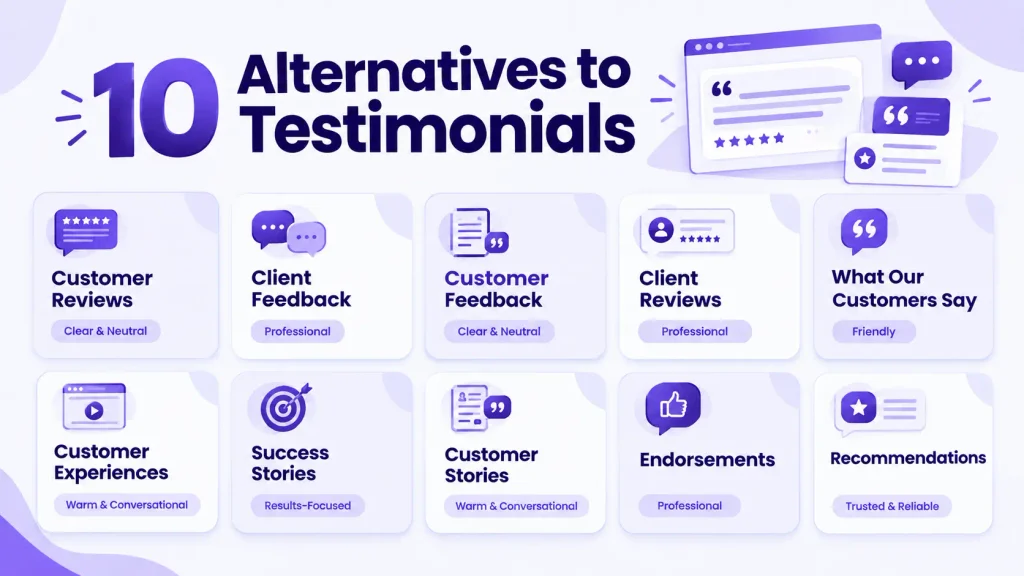
10 Alternatives to “Testimonials” on a Website
1. Customer Reviews
Customer Stories is one of the most straightforward alternatives to “Testimonials.”
It works particularly well when visitors are sharing their opinions about a product, service, restaurant, store, or company.
Example website heading:
Customer Reviews
“The service was fast, professional, and exactly what we needed.”
Best for: E-commerce, local businesses, service providers, and general business websites.
2. Client Feedback
Client Feedback is a strong choice for professional service businesses.
It sounds polished without being overly promotional and works well for agencies, consultants, freelancers, designers, developers, and other service providers.
Example:
Client Feedback
“They understood our requirements immediately and delivered an excellent website.”
Best for: Agencies, consultants, freelancers, B2B services, and professional websites.
3. Customer Feedback
Customer Feedback has a slightly broader and more conversational feel than “client feedback.”
It can refer to comments, opinions, suggestions, or experiences shared by customers.
Example:
What Our Customers Say
“The ordering process was simple, and the product arrived exactly as described.”
Best for: Retail, e-commerce, SaaS, and consumer-focused businesses.
4. Client Reviews
Client Reviews is especially useful when your business works with clients rather than individual shoppers.
It immediately tells visitors that the statements come from people who have actually used your professional services.
Example:
Client Reviews
“Their SEO strategy helped us improve our visibility and attract more qualified leads.”
Best for: Marketing agencies, web developers, consultants, accountants, lawyers, and other professional services.
5. What Our Customers Say
What Our Customers Say is a friendly, natural alternative that works particularly well as a website section heading.
It feels less formal than “Testimonials” while making the purpose of the section immediately clear.
Example:
What Our Customers Say
“I couldn’t be happier with the quality and customer service.”
Best for: Consumer brands, online stores, restaurants, service businesses, and friendly brand websites.
6. Customer Experiences
Customer Experiences focuses on what customers experienced rather than simply presenting their statements.
It can make a website section feel more personal and story-driven.
Example:
Customer Experiences
“From the first consultation to the final delivery, the entire process was smooth.”
Best for: Hospitality, travel, wellness, services, and experience-based businesses.
7. Success Stories
Success Stories is a good choice when customer comments highlight a specific achievement or transformation.
It is not always an exact synonym for testimonials. A success story usually provides more context than a short customer quote.
Example:
Success Stories
“After working with the team, we increased qualified leads and built a much stronger online presence.”
Best for: Marketing agencies, SaaS companies, consultants, coaches, and businesses selling results-driven services.
8. Customer Stories
Customer Stories is a warm and approachable alternative to “testimonials.”
It works especially well when your website includes more than a single sentence from each customer.
Example:
Customer Stories
“Here’s how one of our customers transformed their online ordering process.”
Best for: SaaS, technology, agencies, nonprofits, and brands using storytelling.
9. Endorsements
Endorsements communicates public approval or support for a person, business, product, or service.
It can sound more formal and promotional than “reviews,” so it isn’t appropriate for every website.
Example:
Industry Endorsements
“Their attention to detail and technical expertise made a significant difference.”
Best for: Professional services, personal brands, experts, and businesses featuring recommendations from recognized professionals.
10. Recommendations
Recommendations emphasizes that customers or clients are recommending the business to others.
It can feel more personal than the word “testimonial.”
Example:
Client Recommendations
“I’d recommend this team to anyone looking for a reliable web development partner.”
Best for: Freelancers, agencies, consultants, local businesses, and referral-based services.
Which Alternative Should You Use?
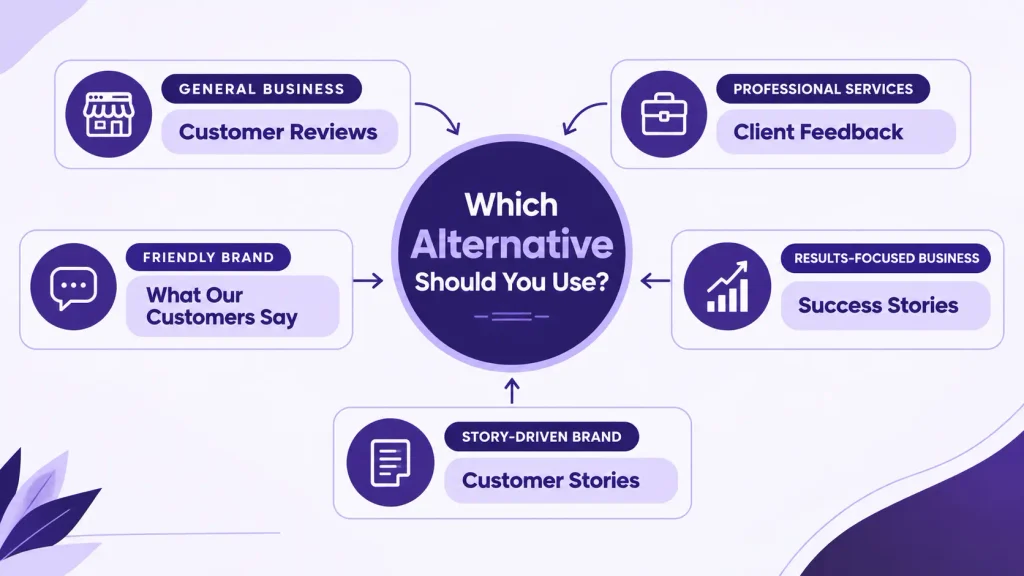
The right wording depends on the type of content on your page.
| Alternative | Tone | Best Context |
| Customer Reviews | Clear, neutral | Products and general businesses |
| Client Feedback | Professional | Agencies and service providers |
| Customer Feedback | Friendly, neutral | Consumer businesses |
| Client Reviews | Professional | B2B and professional services |
| What Our Customers Say | Warm, conversational | General business websites |
| Customer Experiences | Personal | Experience-based businesses |
| Success Stories | Results-focused | Agencies, SaaS, consultants |
| Customer Stories | Warm, narrative | Story-driven brands |
| Endorsements | Formal, promotional | Experts and professional brands |
| Recommendations | Personal, trust-focused | Services and referral businesses |
“Testimonials” vs. “Reviews” vs. “Feedback”
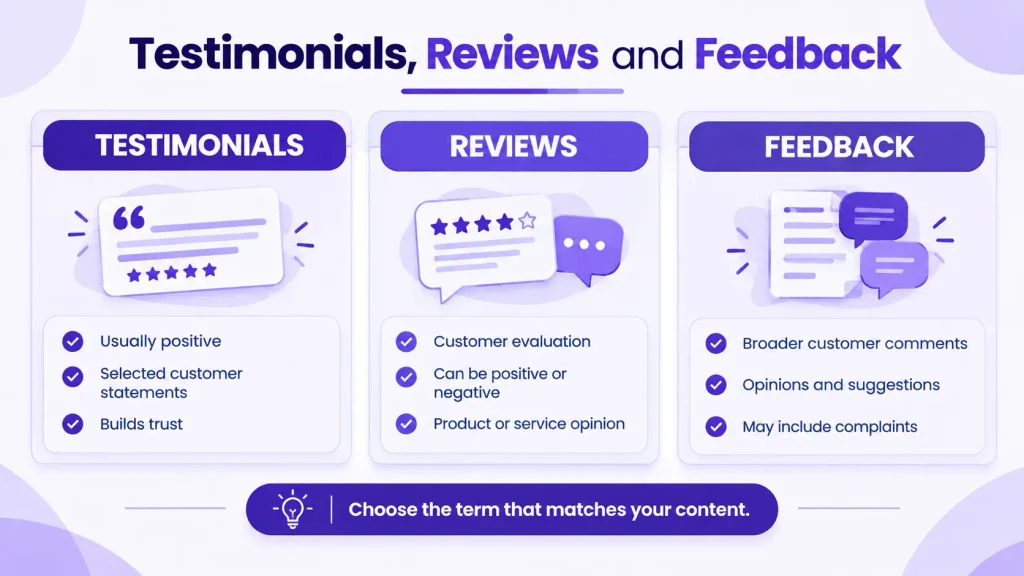
These terms overlap, but they’re not always interchangeable.
Testimonials usually refer to positive statements specifically presented by a business to demonstrate customer satisfaction.
Reviews generally refer to customers evaluating a product or service. They can be positive, neutral, or negative.
Feedback is broader. It can include opinions, suggestions, complaints, or general comments about a customer’s experience.
So, if your website displays selected positive quotes, Testimonials or What Our Customers Say may fit better than Customer Feedback.
If you’re displaying ratings and customer-written evaluations, Customer Reviews is usually clearer.
Best Website Headings Instead of “Testimonials”
If you’re specifically looking for a replacement for the section heading, these options sound natural in American English:
- What Our Customers Say
- Customer Reviews
- Client Reviews
- Client Feedback
- What Clients Say
- Customer Stories
- Success Stories
- Customer Experiences
- Why Customers Choose Us
- Loved by Our Customers
The last option is more marketing-oriented, so it works best when the overall brand voice is friendly and promotional.
Common Mistakes to Avoid
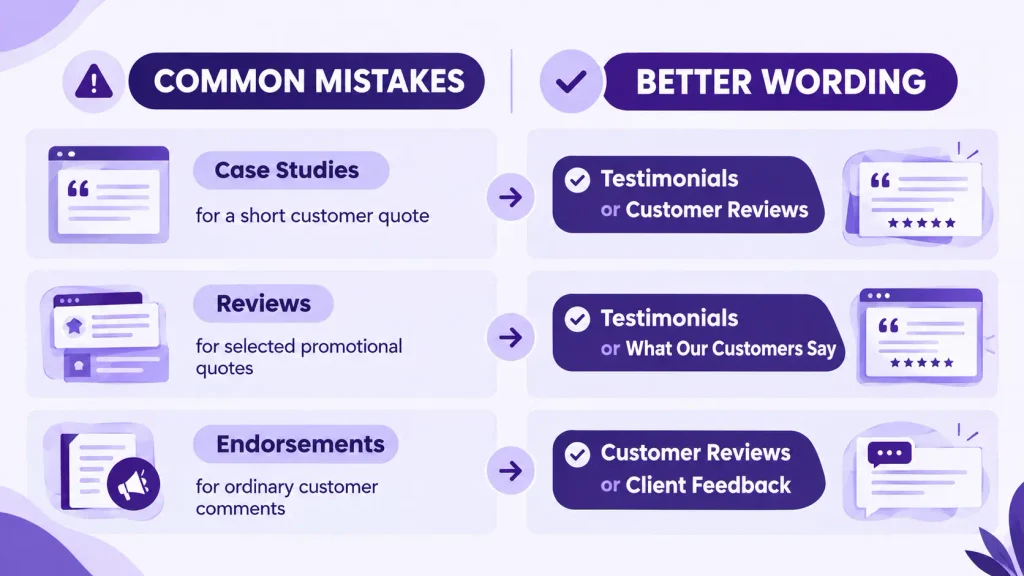
Don’t use “Case Studies” for short quotes
A case study normally provides substantially more detail, such as the customer’s problem, the solution, and the outcome. A two-sentence customer quote is usually not a case study.
Don’t use “Reviews” if the content isn’t really a review
If the section contains carefully selected marketing quotes rather than independent customer reviews, Testimonials or What Our Customers Say may describe it more accurately.
Don’t use “Endorsements” casually
“Endorsement” can imply a stronger or more formal expression of support. It may sound unnatural for ordinary customer comments.
Don’t choose a phrase just because it sounds more professional
A simple heading such as Customer Reviews can be more effective than a complicated alternative because visitors immediately understand what they’ll find.
Frequently Asked Questions
What is the best alternative to “testimonials” on a website?
Customer Experiences is one of the clearest alternatives, while Client Feedback, What Our Customers Say, and Success Stories can be better depending on the type of website and content.
What can I call a testimonials section?
You can call it Customer Reviews, Client Feedback, What Our Customers Say, Customer Stories, Success Stories, or Client Reviews.
Is “customer reviews” the same as “testimonials”?
Not exactly. Reviews are customer evaluations and can be positive, neutral, or negative. Testimonials are generally positive statements selected to demonstrate satisfaction or trust.
What is a professional word for testimonials?
For a professional website, Client Feedback, Client Reviews, Recommendations, or Success Stories can work well, depending on what the section contains.
What is a friendly alternative to “testimonials”?
What Our Customers Say and Customer Stories have a warmer, more conversational feel.
What should I call testimonials on a business website?
For most businesses, Customer Reviews, Client Reviews, or What Our Customers Say are clear and natural choices. For results-focused businesses, Success Stories may be more appropriate.
Can I use “success stories” instead of “testimonials”?
Yes, if the content describes a customer’s results or transformation. If it consists only of short quotes, Testimonials, Customer Reviews, or What Our Customers Say may be more precise.
Final Recommendation
If you want a simple replacement for “Testimonials” on a website, Customer Reviews is a clear choice. For a professional service website, Client Feedback or Client Reviews may sound more appropriate. If you want a warmer, more engaging heading, What Our Customers Say is a natural option. For detailed customer results, use Success Stories rather than treating it as a direct synonym for testimonials.

Role: English Content Writer
Maren Whitlock writes practical English language content for RepublicsPress, with a focus on vocabulary, word alternatives, everyday expressions, and clear communication. Her articles are designed to make difficult or confusing language easier to understand, with simple explanations and useful examples readers can apply in real situations.